If you’ve been putting off your General upgrade because the nearest in-person session is across town, across the county, or only offered once in a while, you’re not alone. Many hams decide to upgrade to general license remotely because it removes one of the biggest barriers in the process: getting to a test session at the right time and place.
For a lot of operators, the General Class license is where amateur radio opens up in a much bigger way. It gives you expanded HF privileges, more room to experiment, and more ways to connect beyond local repeaters. If you’ve been active on VHF or UHF and feel ready for more, remote testing can make that next step a lot easier.
Why operators choose to upgrade to General license remotely
The biggest advantage is convenience, but convenience is not the whole story. Remote exam sessions also help people test sooner, while their study momentum is still strong. When you do not have to wait weeks for a local seat or rearrange your entire Saturday around travel, it becomes much easier to move from “I should upgrade someday” to “I’m scheduled and ready.”
That matters more than it may seem. Many candidates know the material well enough to pass, but delays create hesitation. The longer you wait, the more likely it is that confidence slips, study habits fade, or everyday life gets in the way.
Remote testing is also a strong fit for working professionals, retirees who prefer not to drive far, emergency communications volunteers with tight schedules, and anyone in an area where in-person sessions are limited. The appeal is simple: you can take a legitimate, standards-based amateur radio exam from home while still following the same rules and integrity requirements expected at any official session.
What the remote General exam process actually looks like
Some candidates assume online testing must be informal or less structured than an in-person exam. In practice, a well-run remote session is highly organized. The difference is location, not legitimacy.
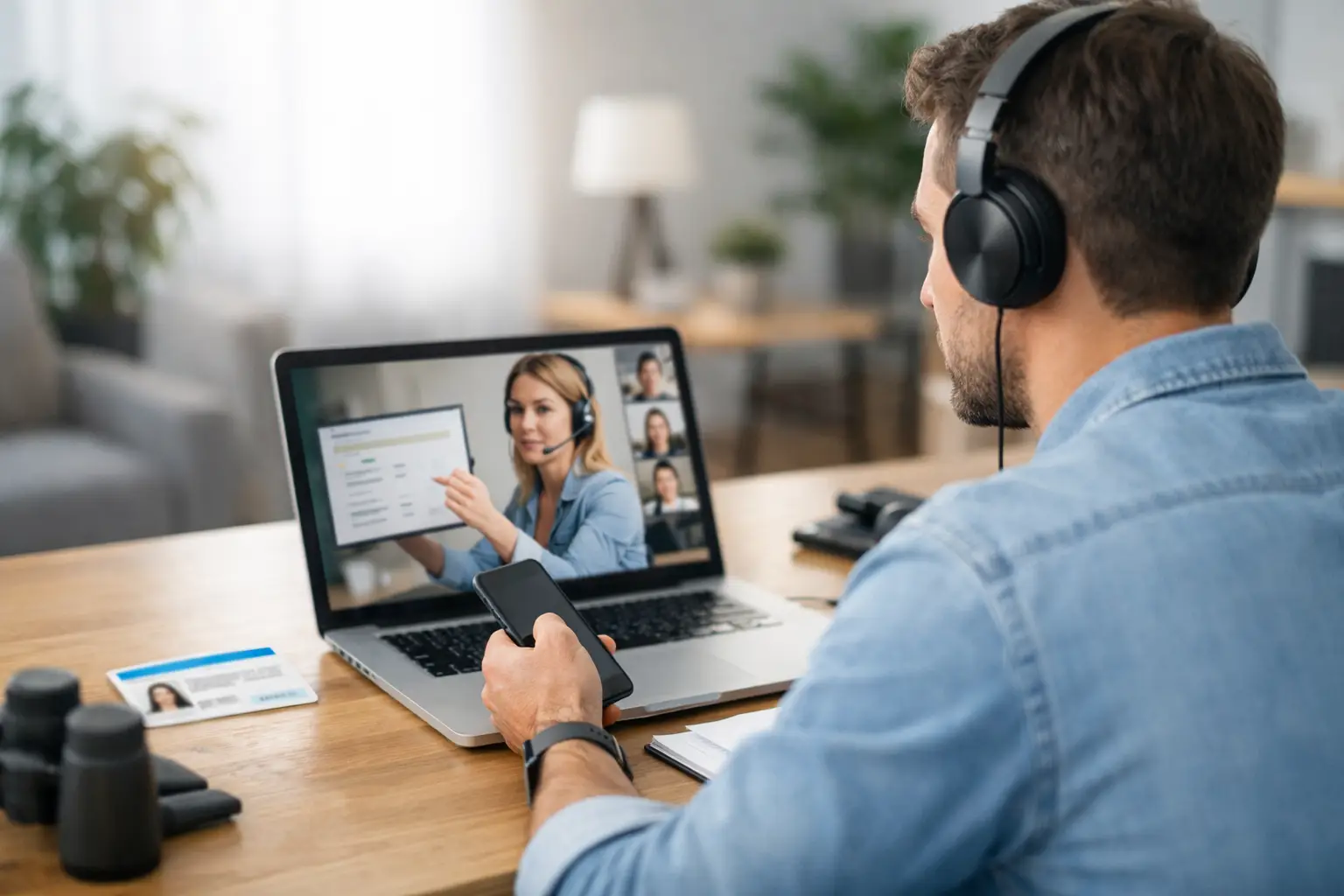
You register for a scheduled session, receive instructions ahead of time, and join the exam through a video platform such as Zoom. Before the test begins, the volunteer examiners verify your identity, review your setup, and confirm that your testing space meets exam requirements. That usually includes a clear desk, appropriate camera placement, and removal of prohibited materials.
Once the session starts, the process is straightforward. You are monitored remotely by certified volunteer examiners, just as you would be supervised in person. After you finish, your results are reviewed and explained to you. If you pass, your paperwork moves forward so your upgrade can be processed through the normal FCC system.
The key point is this: remote testing is convenient, but it is not casual. A good team keeps the experience calm and supportive while also protecting exam integrity.
Preparing your space before you upgrade to General license remotely
Most remote testing issues have nothing to do with the exam questions. They come from preventable setup problems.
A quiet room is the first priority. Choose a place where other people will not walk through, talk to you, or distract you during check-in and testing. Your desk or table should be clear except for approved materials. If your exam team provides specific instructions about what is allowed, follow those carefully rather than guessing.
Your internet connection matters too. It does not need to be fancy, but it does need to be stable. Test your camera, microphone, and computer before exam day. If you are using Zoom for the first time, log in early enough that you are not learning the platform while the session is starting.
Lighting is another small detail that makes a real difference. Examiners need to see you and your workspace clearly. A dim room can slow check-in and create avoidable frustration.
If you treat the session like any other important appointment, the process usually goes smoothly.
How to know if you’re ready for the General exam
A lot of Technician licensees wait too long because they think they need to feel 100 percent certain before scheduling. That is understandable, but not always realistic.
A better standard is consistent practice performance. If you are regularly passing quality General question pool practice tests and you understand why the correct answers are correct, you are probably close. You do not need perfect scores to be ready. You need a dependable grasp of the material across the main topic areas.
Pay attention to weak spots instead of just repeating the questions you already know. For many candidates, those weak spots include band privileges, propagation, basic rules, electrical principles, and operating practices. The goal is not to memorize your way through a single test session. The goal is to build enough understanding that you can recognize the right answer even when the wording shifts your confidence for a moment.
If your scores are inconsistent, that does not always mean you should delay. Sometimes it means you need two or three more focused study sessions on the topics that keep pulling your average down.
The trade-offs of remote versus in-person testing
Remote testing is an excellent option, but it is still fair to ask whether it is the best option for every candidate. Sometimes the answer depends on how you test best.
If you are comfortable with computers, able to follow instructions, and have a reliable quiet space, remote testing is often the easier path. It cuts out travel, reduces scheduling friction, and lets you test in a familiar environment.
On the other hand, some candidates simply feel better in a traditional room with paper forms and face-to-face interaction. Others may have internet limitations, shared living spaces, or equipment issues that make remote sessions less practical. In those cases, an in-person session may still be the better fit.
The right choice is the one that gives you the best chance to perform well while meeting all exam requirements. Convenience matters, but so does your comfort with the format.
What to expect on exam day
The most helpful mindset is to expect a structured process, not a stressful one. Remote exam teams are there to administer the test correctly, but also to help candidates understand what happens next.
Plan to join a little early. Have your identification ready, along with any required FCC registration information and payment confirmation if your session uses one. Read every instruction sent to you in advance rather than skimming it an hour before the exam.
During check-in, take your time. If an examiner asks you to reposition your camera, show your desk, or adjust the room view, that is normal. It is part of maintaining a valid testing environment for everyone.
Once the exam begins, focus on one question at a time. The General exam is very passable for candidates who have prepared well. If a question catches you off guard, do not let it shake the rest of your test. Move carefully, trust your preparation, and avoid second-guessing every answer.
After you pass your General upgrade
Passing the exam is exciting because it changes what you can do on the air, not just what appears in the FCC database. General Class privileges open much more of the HF spectrum, which means more opportunities for long-distance contacts, different operating styles, and deeper involvement in the hobby.
For some operators, that means finally getting onto the HF bands with confidence. For others, it means expanding emergency communications capability, trying digital modes, or building a station that can do more than local repeater work. The upgrade is not just another credential. It often changes how much radio becomes part of your day-to-day life.
That is one reason many candidates choose a remote exam team that keeps the process clear and supportive from start to finish. Middle Tennessee Exams, for example, serves candidates who want an ARRL-certified online session without unnecessary friction. When the process is organized well, you can spend less energy worrying about logistics and more energy preparing to pass.
If you’re ready for more HF access and you’ve already been studying, this may be the right time to stop waiting for a perfect local session. Schedule the test, prepare your space, and give yourself the chance to move forward from home.