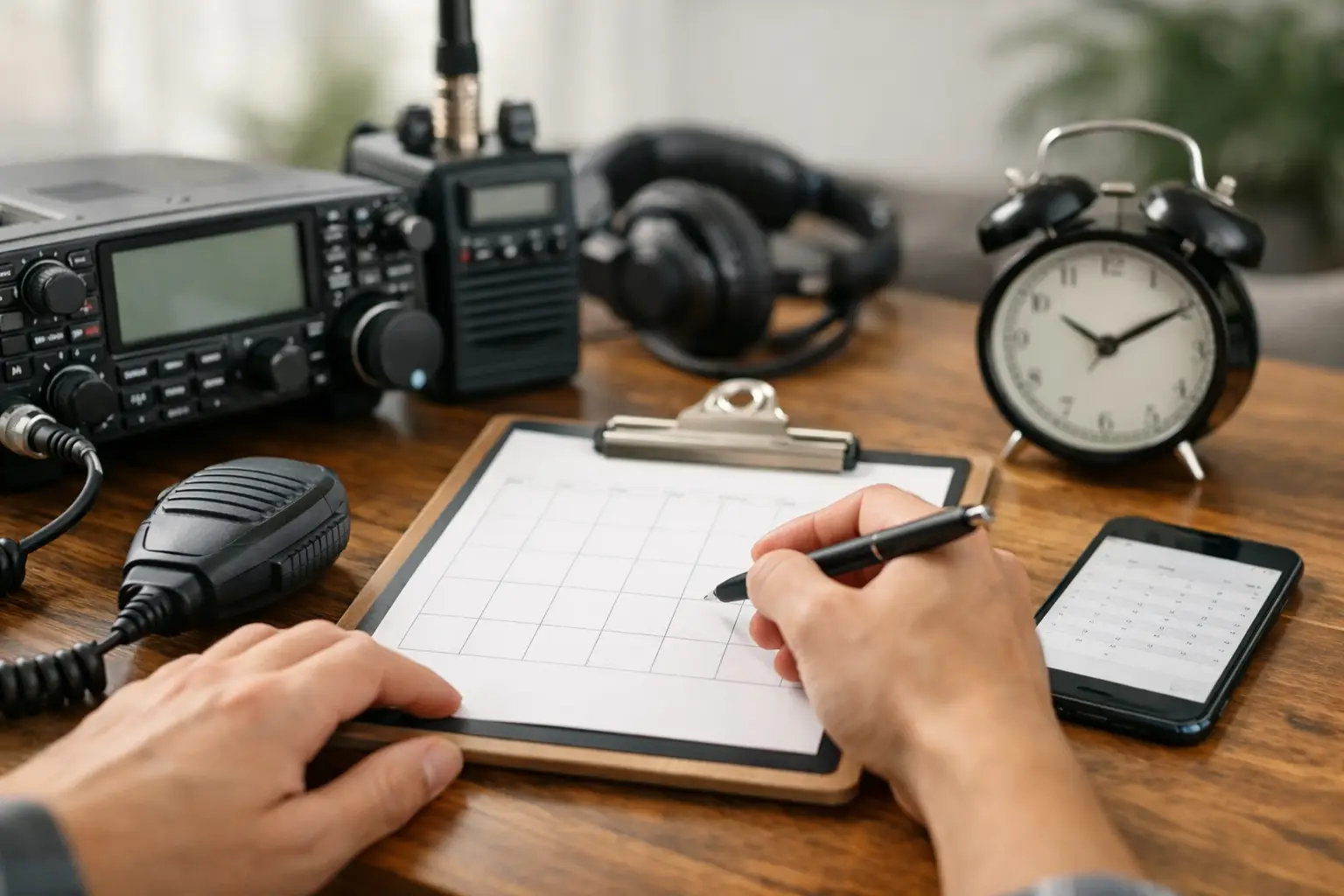
If you have ever found a local test session that was three weeks away, across town, and scheduled for the one Saturday you already had plans, you already understand why ham radio exam scheduling matters. For many new and upgrading operators, the hard part is not studying. It is finding a legitimate exam session that fits real life.
That is exactly where smart scheduling can remove a lot of friction. When you can choose a time that works, test from home, and know the process ahead of time, the path to your Technician, General, or Extra license feels much more manageable. A good exam experience should protect testing standards without making candidates jump through unnecessary hoops.
Why ham radio exam scheduling affects your odds of success
People often treat scheduling like an administrative detail. It is not. The date and format you choose can directly affect how prepared and confident you feel on exam day.
Schedule too early, and you may spend the session second-guessing material you almost know. Wait too long, and your momentum can fade. Most candidates do best when they pick a date while their study habits are strong, then use that deadline to stay focused. A real appointment creates useful pressure. It gives your review sessions a purpose.
Format matters too. In-person sessions still work well for many people, especially if they prefer a traditional testing room. But remote testing has become a practical option for candidates who want more flexibility. If travel time, work schedules, family obligations, or limited local exam availability have delayed your plans, remote sessions can make the process far more accessible.
When to schedule your exam
The best time to schedule depends on where you are in the process. If you have just started studying, it may be too soon to lock in a date unless you know you are someone who works best with a firm deadline. If you are consistently passing practice exams, that is usually a strong sign that it is time to book.
For most Technician candidates, a useful benchmark is scoring comfortably above passing on multiple practice tests, not just squeaking by once. The same idea applies to General and Extra upgrades. You do not need a perfect score, but you should be seeing steady results under realistic conditions.
There is also a practical side to timing. Evening and weekend availability can fill faster because those sessions fit working adults and families. If you need a specific day or time, schedule earlier rather than assuming something will open at the last minute.
What to look for in a remote exam session
Not all exam experiences feel the same, even when they meet the same basic requirements. If you are comparing providers, look beyond the calendar and fee.
First, make sure the session is run by an ARRL-certified team or another properly recognized volunteer examiner group following FCC rules and accepted exam procedures. That certification matters because it speaks to legitimacy, consistency, and careful handling of your results.
Second, pay attention to communication. A good team gives clear instructions before the session, explains what identification or paperwork is needed, and tells you how the remote setup works. Candidates are usually less anxious when they know exactly what the proctors will ask them to do.
Third, consider the overall candidate experience. A serious testing process does not have to feel cold or confusing. The best sessions balance compliance with straightforward guidance and a calm tone. That matters more than many people expect, especially for first-time test takers.
How online ham radio exam scheduling works in practice
Online ham radio exam scheduling is usually straightforward when the team running the session is organized. You choose an available date and time, register, pay the exam fee if required, and receive instructions for the session. Those instructions typically include what platform will be used, what identification to have ready, and how to prepare your testing space.
Most remote sessions use video conferencing, often with a structured proctoring process that verifies your identity and checks the room around you. Candidates are commonly asked to show their desk or table, the walls nearby, and the floor area. This is not meant to make the process intimidating. It is there to protect exam integrity and ensure the session meets accepted standards.
If you are testing for the first time, expect a few minutes of setup before the exam begins. If you are upgrading, the process is similar, though you may also need to provide proof of your current license. A well-run session will walk you through each step without leaving you guessing.
Common scheduling mistakes to avoid
One common mistake is booking the exam based on hope rather than evidence. If your practice scores are inconsistent, you may be better served by waiting a little longer and building confidence. On the other hand, some candidates postpone for months because they want to feel completely ready. That can become its own problem.
Another issue is underestimating the setup requirements for remote testing. Your internet connection, webcam, microphone, and quiet testing space all matter. A candidate who is academically ready can still create unnecessary stress by waiting until the last hour to test the technology.
It is also wise to read the session instructions carefully. Missing documents, using an unsupported device, or misunderstanding check-in expectations can delay the start of your exam. None of these are hard problems, but they are easier to fix a day early than five minutes before your appointment.
How to prepare once your session is booked
After you schedule, shift from general studying to targeted preparation. Keep taking practice exams, but also review your weak spots. For Technician candidates, that may be basic regulations, operating practices, or electronics fundamentals. For General and Extra candidates, it may be band privileges, propagation, circuit behavior, or more advanced rules.
The week before the exam, make your review more realistic. Practice in a quiet room. Set a timer if that helps you focus. Avoid the temptation to cram the night before. Most candidates perform better when they are rested and calm than when they try to force one more marathon study session.
For remote exams, prepare your environment as carefully as your notes. Clear the testing area, charge your devices, and confirm that your webcam and audio are working properly. If the exam team provides pre-session instructions, follow them closely. Good preparation reduces stress because it turns exam day into a routine rather than a scramble.
Why flexible scheduling matters for more than convenience
Convenience is a major benefit, but flexible scheduling does more than save a drive across town. It opens the door for people who might otherwise keep putting off their license or upgrade.
Working professionals may only be free in the evening. Parents may need a time that fits around family responsibilities. Retirees may prefer daytime sessions. Rural candidates may have very few local in-person options. For all of these groups, remote availability can remove a practical barrier without lowering standards.
That combination matters. Amateur radio depends on new operators joining the service and current operators advancing their skills. When ham radio exam scheduling is flexible, organized, and legitimate, more people can participate in the hobby and in the public service roles that often come with it.
Choosing a testing team you can trust
The exam itself is standardized, but the candidate experience is not. A trustworthy team communicates clearly, runs on time, answers questions respectfully, and treats the process with the seriousness it deserves. That is especially valuable for people who are nervous about remote testing or who have never taken an FCC amateur radio exam before.
Middle Tennessee Exams is one example of how that should look in practice: standards-driven, supportive, and built to help candidates test from home with confidence. The right team will never make the process feel casual, but they also should not make it harder than it needs to be.
If you are ready to move forward, schedule when your practice scores say yes, not when your doubts say maybe. A well-timed exam session can turn study effort into a real call sign or a long-awaited upgrade. Sometimes the step that gets people on the air is not more studying. It is simply choosing a date and showing up prepared.
Your license journey does not need to revolve around someone else’s calendar. When the exam process is clear, compliant, and built around real-life schedules, getting on the air starts to feel a lot closer.