If you have only ever seen ham radio exams offered in church basements, club meeting rooms, or community centers, it is reasonable to ask: is online ham radio testing legit? The short answer is yes. Remote amateur radio exams are legitimate when they are administered by qualified Volunteer Examiners following FCC rules and approved procedures. The real question is not whether online testing exists in a gray area. It is whether the team offering the session is doing it the right way.
Is online ham radio testing legit under FCC rules?
Yes, online ham radio testing can be fully legitimate in the United States. The FCC allows amateur radio exams to be administered by Volunteer Examiners, and those exam teams can use remote proctoring when their coordinating organization permits it and the required safeguards are in place.
That matters because the exam itself does not become less official just because you take it from home. The license you earn is still an FCC amateur radio license. The question pool is the same. The passing standard is the same. The paperwork still has to be handled correctly. A legitimate remote session simply changes the location, not the standard.
Online testing became more visible when in-person sessions were harder to access, but it has remained popular for a simple reason: it solves a real problem. Many candidates live far from a testing site, work unusual hours, have mobility limitations, or just want a more convenient path to getting licensed or upgrading.
What makes a remote ham radio exam legitimate?
A legitimate online exam session is built on control, documentation, and trained people. If any of those pieces are missing, you should ask more questions.
First, the exam team should be made up of qualified Volunteer Examiners. For most amateur radio exams, that means a properly credentialed VE team is supervising the session, validating your identity, observing the testing process, and completing the required records.
Second, the session should follow a defined remote testing process. That usually includes a live video platform, identity verification, a room scan, screen sharing or camera positioning, and instructions on what materials are allowed. These steps are not there to make testing stressful. They are there to protect the value of the license you earn.
Third, the team should be associated with a recognized Volunteer Examiner Coordinator, or VEC, such as ARRL VEC. That affiliation is one of the clearest signs that the exam is being conducted within an established framework rather than improvised on the fly.
Finally, a legitimate provider should communicate clearly. Candidates should know what equipment is needed, how to prepare the room, what forms of ID to bring, what happens after the test, and how results are submitted. When a team is organized, the process feels calm even though it is secure.
Why some people still question online testing
Skepticism usually comes from a good place. Amateur radio licensing has long depended on trust, standards, and volunteer oversight. If someone has spent years attending traditional exam sessions, the idea of testing over Zoom can sound too easy.
But convenience is not the same as lowered standards. A well-run remote session often involves more structured verification than an informal in-person setup. Candidates may need to show the entire testing area, position cameras carefully, keep phones away, and remain visible throughout the session. In many cases, the process is more standardized because the remote format requires every step to be intentional.
There is also confusion between legal and common. Online testing is still newer to some parts of the ham community, so candidates may assume that unfamiliar means unofficial. It does not. What matters is whether the session is being administered according to the rules by a properly authorized team.
How to tell if an online ham radio exam is trustworthy
If you are comparing exam providers, a few practical signs can help you separate a legitimate service from one that deserves caution.
Look for clear statements about ARRL certification or another recognized VEC relationship. Check whether the provider explains its proctoring process in plain language. A trustworthy team does not hide the steps. It explains them so you can prepare.
You should also expect real human communication. If you have a question about ID, equipment, rescheduling, or exam elements, someone should be available to answer it. That support matters, especially for first-time candidates who may be more nervous about the logistics than the actual exam.
Another good sign is transparency about results. A professional team will tell you what happens after you pass, how your paperwork is handled, and what kind of timeline to expect before your FCC record updates. Legitimate providers understand that candidates want certainty, not vague promises.
Reviews and testimonials can help too, though they should not be the only factor. Look for comments about professionalism, fairness, organization, and low-stress administration. Those are signs of a testing team that respects both the rules and the candidate experience.
What the online exam experience usually looks like
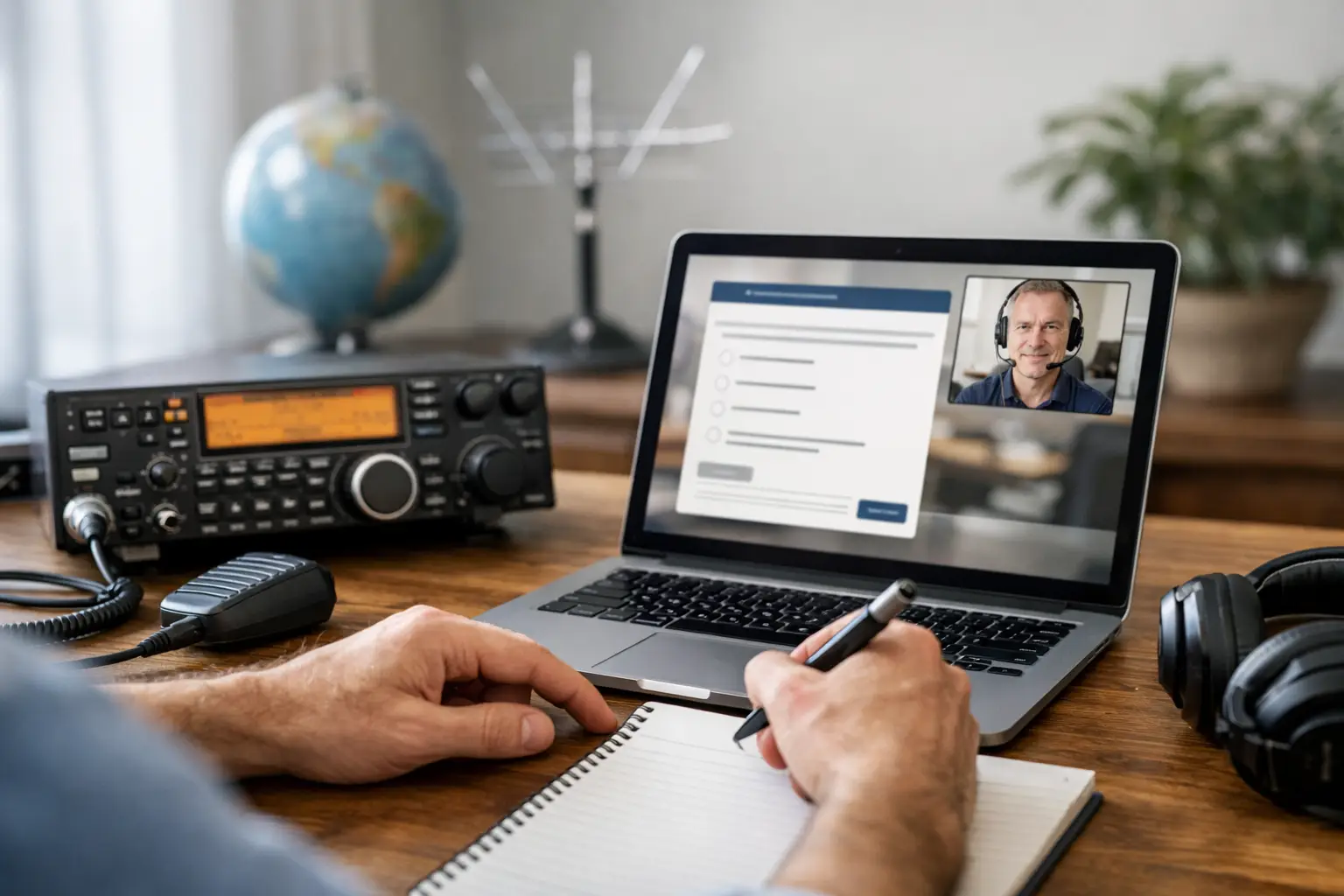
Most candidates are pleasantly surprised by how straightforward remote testing feels once they know the steps. You typically register in advance, receive instructions, and join the session at your scheduled time. Before the exam starts, the team verifies your identity and checks your testing environment.
You may be asked to use a computer with a webcam, a smartphone as a second camera, or a specific camera angle so proctors can monitor the room and your workspace. The proctors explain what to remove from the desk, what references are not allowed, and how the test will be submitted.
During the exam, the VE team observes and assists with process questions, but not with exam content. If you pass one element and are eligible for the next, many teams can move you directly into the next exam element in the same session. That convenience is a major reason remote sessions have become so popular for upgrades.
Afterward, your paperwork is completed and submitted through the proper channels. A strong team will also let you know what to expect next, so you are not left wondering whether the process worked.
Is online ham radio testing legit for Technician, General, and Extra?
Yes. Online exam sessions can be used for Technician, General, and Extra class exams, as long as the testing team is qualified to administer them and follows the required procedures.
For a new Technician candidate, remote testing can remove one of the biggest barriers to getting started. Instead of waiting weeks for a local test date or driving across several counties, you can schedule an exam from home and focus your energy on studying.
For General and Extra candidates, online sessions can be even more appealing. Many experienced operators put off upgrading simply because finding a convenient in-person exam is difficult. Remote testing makes it easier to act when motivation is high and the material is fresh.
That said, online testing is not ideal for every person. Some candidates are uncomfortable with video technology, have unreliable internet, or do not have a quiet testing space. In those cases, a traditional in-person session may still be the better choice. Legitimate options exist in both formats.
The trade-off: convenience vs preparation
The biggest advantage of remote testing is obvious. You do not have to travel. But taking the exam from home does not mean you can log in casually and hope for the best.
You need the right device, a stable connection, proper identification, and a room that meets the session requirements. If your equipment is unreliable or you wait until the last minute to read the instructions, the experience can feel harder than it needs to be.
This is where a service-oriented exam team makes a real difference. Clear instructions, responsive support, and a predictable check-in process reduce stress significantly. Middle Tennessee Exams is one example of a team that focuses on making the process both compliant and approachable, which is exactly what most candidates need.
So, is online ham radio testing legit?
It is legitimate when it is run by qualified Volunteer Examiners under approved procedures with proper identity checks, live proctoring, and accurate submission of results. The format is modern, but the standards are not relaxed.
For many future hams, online testing is not a shortcut. It is simply the most practical way to take a real FCC amateur radio exam without unnecessary travel or scheduling headaches. If the provider is organized, certified, and transparent, you can register with confidence and focus on the part that actually matters: being ready to pass.