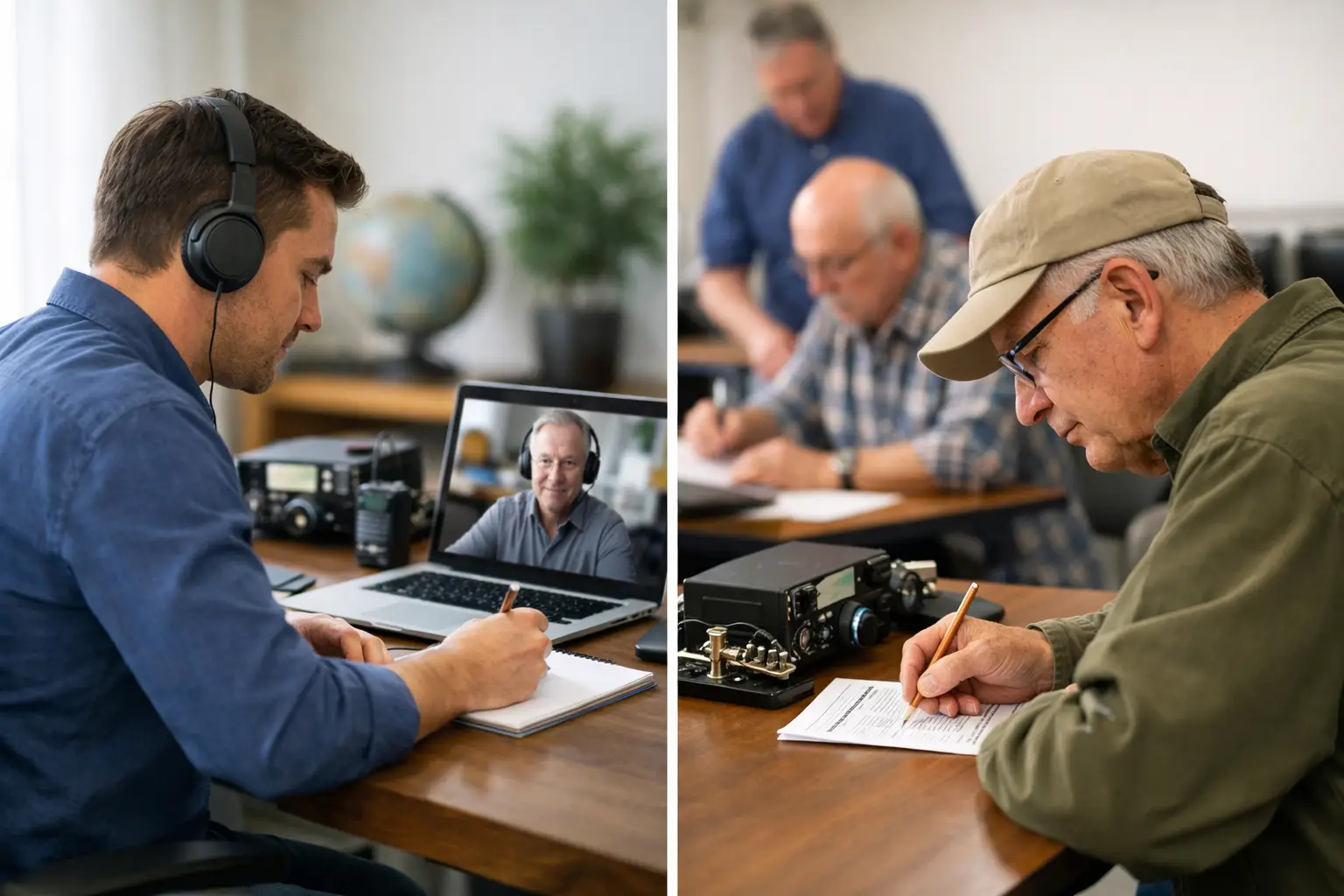
If you’re deciding between an online vs in person ham exam, the best choice usually comes down to one thing: what will help you test with the most confidence and the least friction. For some candidates, that means sitting at home with a scheduled remote session. For others, it means driving to a local test site and handing over paperwork across a table. Both paths can lead to the same FCC license. The difference is how you get there.
That matters more than people sometimes expect. The exam itself already asks you to focus, recall regulations, and work through technical questions under pressure. If the testing format adds extra stress, limited scheduling, or avoidable travel, it can make an already serious moment feel harder than it needs to be.
Online vs in person ham exam: what actually changes?
The license outcome does not change. Whether you take your amateur radio exam online or in person, you are still working through an official volunteer examiner process and meeting FCC requirements. A valid online session is not a shortcut, and an in-person session is not automatically better just because it feels traditional.
What changes is the experience around the exam. Online testing shifts the environment to your home and relies on remote proctoring, camera checks, identity verification, and a structured digital process. In-person testing puts you in a physical room with volunteer examiners and other candidates, usually on a schedule set by a local club or team.
For many people, the real question is not which format is more legitimate. It is which format is more practical for their life, location, and comfort level.
Convenience is the biggest separator
For a lot of candidates, convenience is the deciding factor. In-person exams can be excellent, but availability often depends on where you live. Some areas have active volunteer teams offering frequent sessions. Other areas may only have occasional exam dates, longer drives, or limited seating.
Online sessions solve that problem for many test takers. Instead of coordinating travel, time off, traffic, and a physical location, you can schedule a session and test from home. That is especially helpful for working professionals, retirees who do not want unnecessary driving, rural candidates, parents, and anyone upgrading from Technician to General or Extra after putting it off for months.
Convenience is not just about comfort. It also affects follow-through. A candidate who can test this week from home is often more likely to finish the process than a candidate waiting six weeks for the next local seat.
The stress factor looks different in each format
People experience testing anxiety in different ways, so there is no universal answer here. Some candidates feel calmer at home. They know the room, the lighting, and the chair. There is no commute, no last-minute rush, and no unfamiliar crowd. That can lower the mental load before the first question even appears.
Other candidates prefer the structure of an in-person room. They like seeing the examiners face to face and feel reassured by the familiar rhythm of a traditional test session. If you are easily distracted by technology or worry about your internet connection, in-person testing may feel steadier.
The key trade-off is this: online testing often removes travel stress, while in-person testing may remove technology stress. The better option is the one that lets you focus on the exam instead of the setup.
Online exams require a clean setup, not technical expertise
One concern that keeps some people from booking a remote session is the idea that online testing must be complicated. In practice, most well-run remote exam sessions are structured very clearly. You will typically need a reliable internet connection, a computer with camera and audio, a quiet room, a government-issued ID, and the ability to follow instructions from the proctoring team.
That does not mean anything goes. Remote testing is controlled and compliance-driven for a reason. Expect identity checks, room scans, and clear rules about notes, phones, extra screens, and who can be in the room. A professional team makes those expectations easy to understand in advance, which helps the process feel organized rather than intimidating.
For candidates who are reasonably comfortable using Zoom or a similar video platform, the setup is often simpler than they feared. If you can join a video call, position your camera, and follow directions, you are most of the way there.
In-person testing still has strengths
It would be a mistake to treat in-person sessions as outdated. They still serve a valuable role in amateur radio, especially in communities where local clubs run efficient and welcoming exam events. For some candidates, that first handshake with volunteer examiners is part of what makes joining the hobby feel real.
In-person testing can also be a good fit if your home environment is not ideal for a remote session. If you do not have a private room, reliable internet, or the right device, a local exam site may simply be easier. Some candidates also appreciate being able to ask a quick procedural question in the room and move through the process without worrying about camera angles or technical checks.
The limitation is availability. A strong local team can make in-person testing excellent, but not every candidate has easy access to one.
Speed and scheduling often favor online testing
One of the biggest practical advantages of remote exams is scheduling flexibility. Online teams can often offer more session times than a local in-person group working around club calendars, room reservations, and volunteer availability. That matters when you are ready to test now, not next month.
Fast scheduling also helps candidates keep momentum. Many people study hard, reach practice-test readiness, and then lose energy waiting for an opening. An online option can shorten that gap. It can also make upgrades easier because you are not trying to line up a local event just to move from one license class to the next.
Middle Tennessee Exams, for example, is built around that need for organized scheduling, clear communication, and a low-stress remote process. For candidates who want a serious, standards-based exam experience without the travel burden, that model makes a lot of sense.
Legitimacy and exam integrity matter in both formats
Candidates sometimes ask whether online exams are truly accepted. The answer is yes, when they are administered properly by certified volunteer examiners following approved procedures. A legitimate remote exam is still a real exam. The standards are not relaxed just because you are at home.
That is why process quality matters. A well-run online team should be clear about ID verification, room requirements, technology expectations, and post-exam steps. The best providers combine strict compliance with supportive communication, so candidates feel guided without feeling coddled.
The same standard applies in person. A good in-person session should be organized, transparent, and professionally administered. In either format, candidates deserve confidence that the exam is handled correctly.
Which format is right for you?
If you have reliable internet, a private room, and a busy schedule, online testing is often the better fit. It removes travel, opens up more appointment options, and lets you test in a familiar environment. That combination is hard to beat, especially for adults balancing work, family, or long distances to the nearest exam site.
If you prefer a traditional setting, do not have a suitable home setup, or simply feel more comfortable in a physical testing room, in-person may be the better choice. There is nothing wrong with wanting a face-to-face format if that helps you perform at your best.
This is one of those decisions where convenience and confidence should carry more weight than habit. The right format is the one that helps you show what you know under fair, clear, and well-managed conditions.
A practical way to decide
If you are torn, ask yourself three simple questions. Can you create a quiet, compliant space at home for the length of the exam? Is getting to a local session easy enough that it will not add stress or delay? And which format makes you feel more ready to focus?
Those answers usually point in the right direction pretty quickly. The goal is not to choose the format that sounds most official. The goal is to choose the one that helps you actually get licensed or upgraded without unnecessary obstacles.
Amateur radio already rewards preparation, patience, and steady learning. Your exam experience should support that, not get in the way. Pick the path that lets you sit down, take a breath, and give the test your full attention.