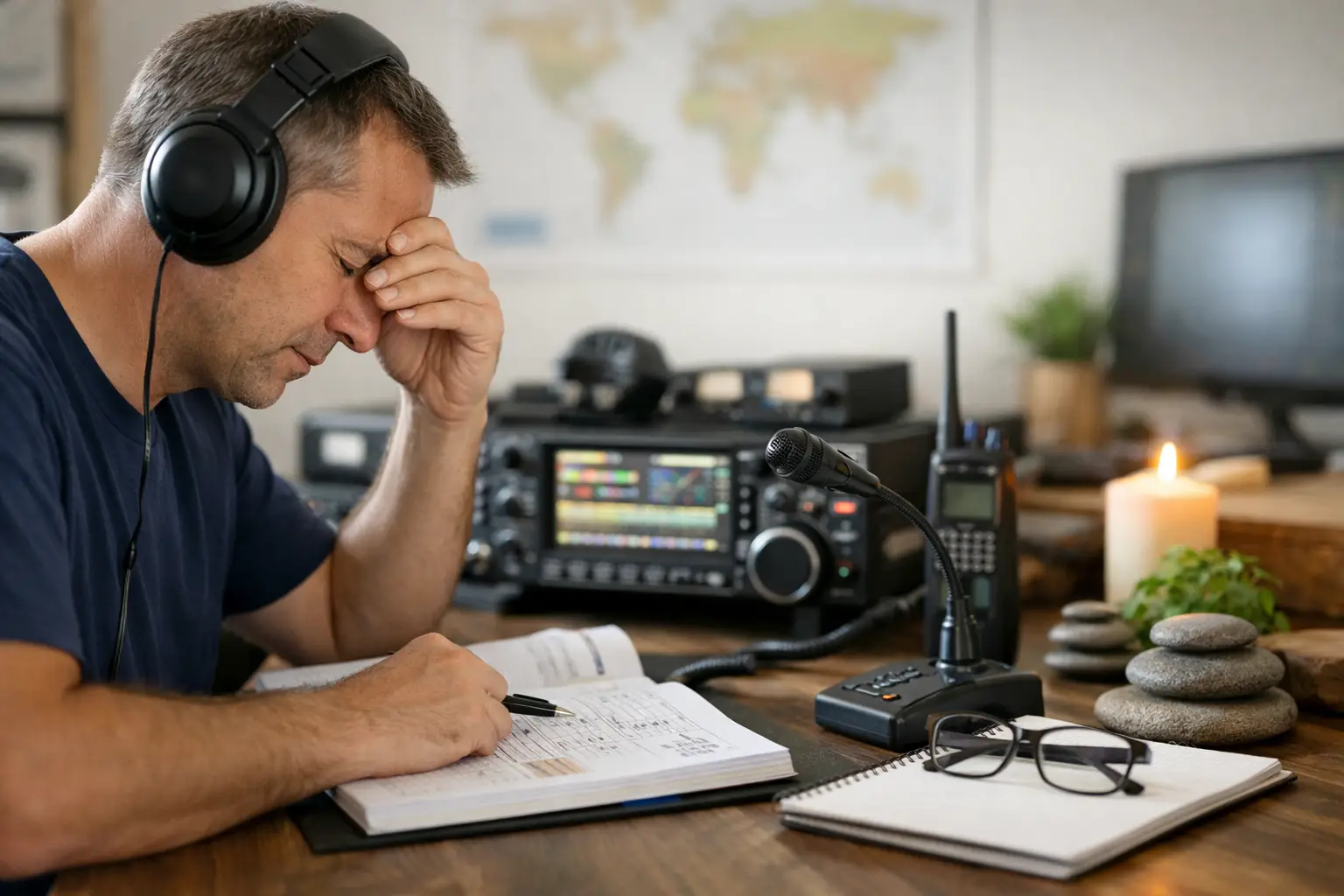
That tight feeling before an amateur radio exam is rarely a sign that you are unprepared. More often, it is your body reacting to a situation that matters to you. The best ways to reduce exam anxiety are not about pretending nerves do not exist. They are about replacing uncertainty with a clear plan, realistic practice, and a testing setup you can trust.
For a first-time Technician candidate, the exam may feel like the final barrier between studying and getting on the air. For someone upgrading to General or Extra, the material may be more familiar, but the pressure to pass can be just as real. A few practical choices before test day can make a meaningful difference.
Reduce Exam Anxiety by Making the Process Familiar
Test anxiety grows in the gaps. If you are unsure what will happen, what you need to bring, or whether your equipment will cooperate, your mind tends to fill in the blanks with worst-case scenarios. The goal is to remove as many unknowns as possible before the session begins.
Start by reviewing the exam provider’s instructions carefully several days ahead of time, not five minutes before your appointment. Confirm the session time and time zone, read the requirements for identification and your testing space, and make sure you understand the check-in process. If you are testing remotely, verify that your computer, camera, microphone, and internet connection are working properly.
It also helps to choose a quiet location where you will not be interrupted. Let others in your household know when you will be testing. Put pets in another room if possible, silence notifications, and clear the work surface you will use. These small preparations are not just about meeting remote proctoring requirements. They tell your brain that the situation is under control.
If a process detail is unclear, ask before exam day. A reputable exam team expects questions and would rather help you prepare than have you arrive worried or confused. MidTENN Nationwide Testing provides structured remote sessions designed to make the process clear while preserving the integrity expected of an ARRL-certified exam.
Study for Recall, Not Just Recognition
Many candidates take practice tests until the score looks good, then feel surprised when they freeze on a similar question during the real exam. This happens because recognizing an answer on a familiar screen is not always the same as understanding why it is correct.
Use practice exams as a diagnostic tool. When you miss a question, do more than memorize the right letter. Read the explanation, identify the underlying rule or concept, and return to that topic later. For example, if band privileges, operating rules, or basic electronics formulas keep causing trouble, spend a focused study session there instead of taking another full exam immediately.
A strong benchmark is to pass several practice exams consistently, on different days and with questions presented in a different order. There is no magic score that guarantees a result, and candidates have different learning styles. Still, repeated passing scores give you evidence that you know the material, which is much more useful than vague reassurance.
Avoid turning the final evening into a marathon. Cramming can make facts feel less organized and may interfere with sleep. A short review of your weak areas is usually more productive than trying to reread an entire question pool. You are preparing to demonstrate knowledge you have built over time, not to absorb every detail at the last minute.
Build a Test-Day Routine That Calms Your Body
Anxiety is physical. Your heart rate rises, breathing becomes shallow, and your attention narrows. You cannot always reason your way out of that reaction, but you can give your body a calmer signal.
On exam day, eat something familiar, drink water, and avoid overdoing caffeine. If coffee is already part of your routine, there is no need to skip it suddenly. But adding extra caffeine because you are tired can make normal anticipation feel like panic. Plan to be ready early so you are not rushing through check-in.
When you notice your nerves building, slow your breathing. Try inhaling gently for four counts, exhaling for six counts, and repeating that pattern for a minute or two. The longer exhale can help reduce the physical intensity of stress. Keep it simple. You do not need a special app, a perfect meditation practice, or a completely quiet mind.
Use a practical statement instead of a dramatic one. Rather than telling yourself, “I cannot fail,” try, “I have prepared, I can take one question at a time, and I only need to do my best on this question.” The first statement creates more pressure. The second gives you a task you can actually perform.
Use a Steady Strategy During the Exam
Once the exam starts, do not let one difficult question decide the emotional tone of the entire session. Every amateur radio candidate encounters questions that seem unfamiliar, worded differently than expected, or temporarily hard to recall. That is normal.
Read each question carefully before looking at the answer choices. Pay attention to words such as “maximum,” “minimum,” “most,” “except,” and “not.” These are not tricks, but missing one can change the meaning of a question. Then eliminate answers that are clearly wrong before choosing among the remaining options.
If you feel yourself getting stuck, pause briefly. Relax your shoulders, take one slow breath, and move forward with the best answer you can identify. Do not spend so much time fighting one question that you lose focus on the next ten. A hard question is only one question.
For math or technical questions, write down the key numbers or relationship if scratch work is permitted under the session rules. Breaking a problem into a few simple steps reduces mental clutter. For rules questions, think about the operating principle behind the answer: safety, interference avoidance, proper identification, or authorized privileges. Understanding the purpose often makes the correct choice easier to recognize.
Protect Your Confidence From Unhelpful Comparisons
Amateur radio is full of knowledgeable people, and that is one of the hobby’s strengths. It can also make candidates feel as if everyone else knows more than they do. Remember that every operator began as a new licensee, and every upgrade required learning material that was once unfamiliar.
Your exam is not a contest with the other candidates in a session. It is a demonstration that you meet the required standard for the license class you are pursuing. You do not need a perfect score. You need to answer enough questions correctly to pass.
Be careful with last-minute conversations, social media posts, or online discussions that introduce obscure exceptions and edge cases right before your test. A helpful review partner can build confidence. A long discussion of the hardest possible questions can create doubt without improving your readiness. In the final hours, prioritize what you have studied and what you can control.
Have a Plan for Imperfect Conditions
One of the best ways to feel calmer is to accept that not every detail must be perfect. You might sleep less than usual, feel nervous during check-in, or see a question you do not remember studying. None of those things automatically means you will not pass.
Remote testing does add practical considerations. Your internet may briefly slow down, a browser prompt may appear, or you may need a moment to adjust your camera. Follow the proctors’ instructions and communicate clearly if an issue occurs. Do not try to solve a testing problem in silence while your stress rises. The testing team is there to administer a fair exam and guide candidates through the established process.
If you do not pass on the first attempt, treat the result as useful information, not a verdict on whether you belong in amateur radio. Review the areas that gave you trouble, build a targeted study plan, and return when you are ready. Many capable operators have needed more than one attempt or have taken time between license upgrades.
The license exam is a meaningful step, but it is also one step in a hobby built on learning, service, experimentation, and community. Prepare carefully, set up your space early, and give yourself permission to be nervous without letting nervousness take the microphone.