Your FCC Registration Number, or FRN, is a small but necessary part of getting on the air. Before you sit for an amateur radio exam, learning how to register FRN helps prevent last-minute delays and ensures your application can move forward after you pass.
An FRN is a unique 10-digit number assigned by the Federal Communications Commission. It connects your exam paperwork, license application, and future FCC transactions to the right person. Whether you are preparing for your first Technician exam or upgrading to General or Extra, taking a few minutes to register in advance will make test day less stressful.
What Is an FRN and Why Do You Need One?
The FCC uses an FRN to identify people and organizations that do business with the agency. For amateur radio applicants, that means the number is used when your Volunteer Examiner team submits your successful exam session information to the FCC.
Your FRN is not your amateur radio call sign. You receive a call sign only after you pass the exam, the application is processed, and the FCC grants your license. The FRN comes first.
Registering ahead of your session also protects the integrity of your application. The name, mailing address, and identifying information associated with your FRN should match the information you provide on your exam form. A mismatch can create extra work or slow the process while records are reviewed.
How to Register FRN in FCC CORES
You register an FRN through the FCC’s Commission Registration System, commonly called CORES. The process is free for individual applicants and generally takes only a few minutes when you have the needed information ready.
Create or sign in to an FCC Username account
Start at the official FCC CORES registration area. If you do not already have an FCC Username account, create one using an email address you can access. The FCC may send a verification message as part of account setup, so use an address you check regularly.
If you have dealt with the FCC before, such as through another FCC-regulated service, you may already have an account or an FRN. Sign in and check before creating a new registration. One person should generally have one individual FRN.
Choose the option to register for a new FRN
Once you are in CORES, select the option to register for a new FRN. Individual amateur radio applicants should choose the individual registration type, not a business or organization record.
You will be asked for personal details, including your legal name, mailing address, and taxpayer identification information. For an individual applicant, this is typically your Social Security number. The FCC requires this information under federal law for licensing and other covered transactions.
Use the official FCC system only. Do not send your Social Security number by email to an exam team, post it in a message, or share it in a public group. A qualified testing team needs your FRN for the exam application, not your Social Security number.
Review every field before submitting
Take a moment to review the spelling of your name and your complete mailing address. Enter your legal name as it appears on your identification. If you use a nickname, middle name variation, or a different last name on another account, do not guess which version to use. Consistency is what matters.
Your mailing address also matters because the FCC license record is associated with it. A post office box may be acceptable in some situations, but make sure the information you enter is accurate and current. You can update your address later through FCC systems, but it is easier to start with a clean record.
Save your 10-digit FRN
After you submit the registration, CORES will provide your FRN. Save it in a secure place where you can find it again, such as a password manager, protected notes file, or printed licensing folder.
You will use the same FRN throughout your amateur radio journey. Keep it when you upgrade from Technician to General, upgrade again to Amateur Extra, renew your license, request certain vanity call sign actions, or make other FCC filings. It is not a number you need to replace every time you take an exam.
Check Whether You Already Have an FRN First
Duplicate FRNs are one of the most avoidable problems in the licensing process. If you have previously held an amateur radio license, passed an exam, applied for another FCC authorization, or registered with the FCC for a different reason, look for your existing FRN before opening a new record.
For returning hams, an older license record may already contain the number you need. If your name has changed, your license has expired, or you cannot access an old account, the answer is usually to recover or update the existing record rather than register again.
If you are uncertain, pause and ask for help before creating a second FRN. A testing team can explain what information is needed for your exam application, while FCC support resources can help with account access and registration issues. Resolving uncertainty before your session is far easier than correcting a duplicate record after paperwork has been submitted.
What to Bring to Your Online Exam Session
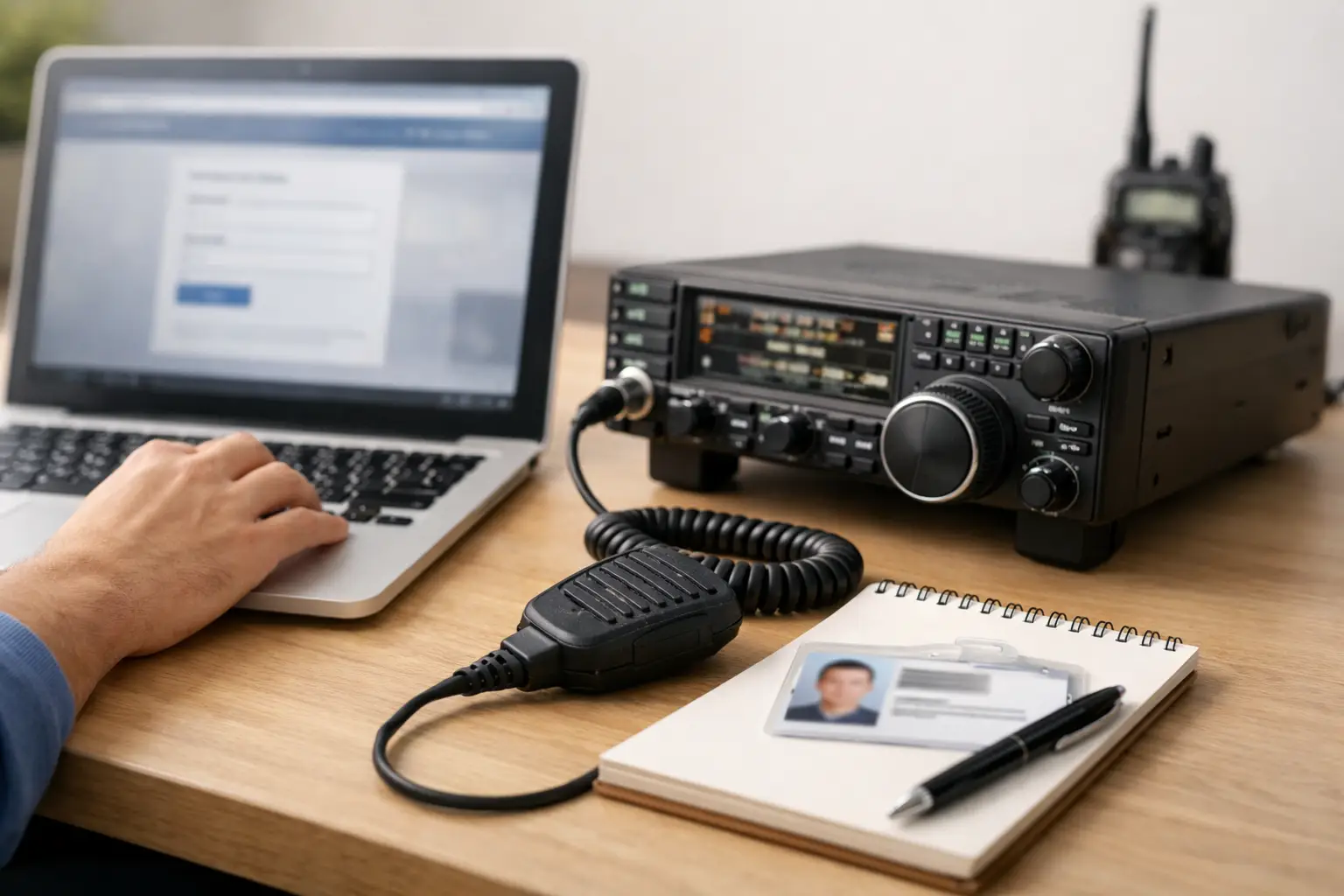
Once your FRN is registered, include it when you complete your exam-session registration. Have the number available on test day along with the valid government-issued photo identification required by your exam team.
Remote amateur radio testing has a few practical requirements beyond the FRN. You will need a reliable internet connection, a computer with a camera and microphone, a quiet private testing space, and a way to show your room and work area during the proctoring process. Read your testing team’s instructions carefully well before your appointment.
At MidTENN Nationwide Testing, candidates receive clear directions for the remote testing process so they can focus on demonstrating what they have studied. The goal is a friendly, organized experience that meets the standards required for a legitimate amateur radio examination.
Common FRN Questions
Do I need an FRN before I schedule my exam?
Requirements can vary by exam team, but registering before you schedule or before your appointment is the safest approach. It gives you time to confirm the number and correct any registration issue without pressure. Do not wait until a few minutes before an online exam session to begin.
Is registering for an FRN the same as applying for a ham radio license?
No. FRN registration creates your FCC identification number. Passing the appropriate amateur radio exam and having your paperwork submitted begins the license application process. Your license is not active until the FCC grants it and your call sign appears in the FCC licensing records.
Does an FRN cost money?
Creating an FRN itself does not carry a registration fee. Separate FCC application fees may apply to certain amateur radio licensing actions, including new licenses and upgrades. Fee rules can change, so confirm the current requirements as you prepare for your exam.
What if I lose my FRN?
Do not create another one. Return to your FCC account or use the available FCC record tools to recover the number. If you still cannot locate it, get assistance before your exam date.
Your FRN is one of the first administrative steps toward amateur radio, but it should not feel like a barrier. Register early, keep the number secure, and make sure your information is accurate. Then you can arrive at your exam session prepared, confident, and ready to earn the privileges you have worked for.