A local exam session used to be the only practical path to an amateur radio license. That could mean waiting weeks for a seat, driving across town, or fitting an appointment around work and family. So, can you test from home for a ham radio license? For many candidates, yes – provided you meet the requirements for a properly administered remote exam session.
Remote testing is not a shortcut around the FCC examination process. You still take the same question pool, meet the same passing score, and test under the supervision of accredited Volunteer Examiners. What changes is the setting. With the right equipment, a quiet space, and a clear understanding of the rules, you can earn your first license or upgrade your privileges without traveling to an in-person site.
Can You Test From Home and Still Receive a Valid License?
Yes. Remote amateur radio exams are conducted through authorized Volunteer Examiner teams that follow FCC and coordinating organization procedures. When your session is offered by an ARRL-certified testing team, the examination is administered under the same standards expected at an in-person session.
The exam itself is familiar. Technician, General, and Amateur Extra candidates answer multiple-choice questions drawn from the current FCC question pools. You must earn a passing score of at least 74 percent. If you pass, the Volunteer Examiners complete the required paperwork and submit your result for processing. Your new license or upgrade becomes effective when it appears in the FCC database – not simply when you finish the test.
That distinction matters. A legitimate remote session has identity verification, active proctoring, controlled testing conditions, and documented results. If a service seems to promise a license with no oversight or offers to send answers in advance, it is not following the process amateur radio operators rely on.
What a Remote Ham Radio Exam Looks Like
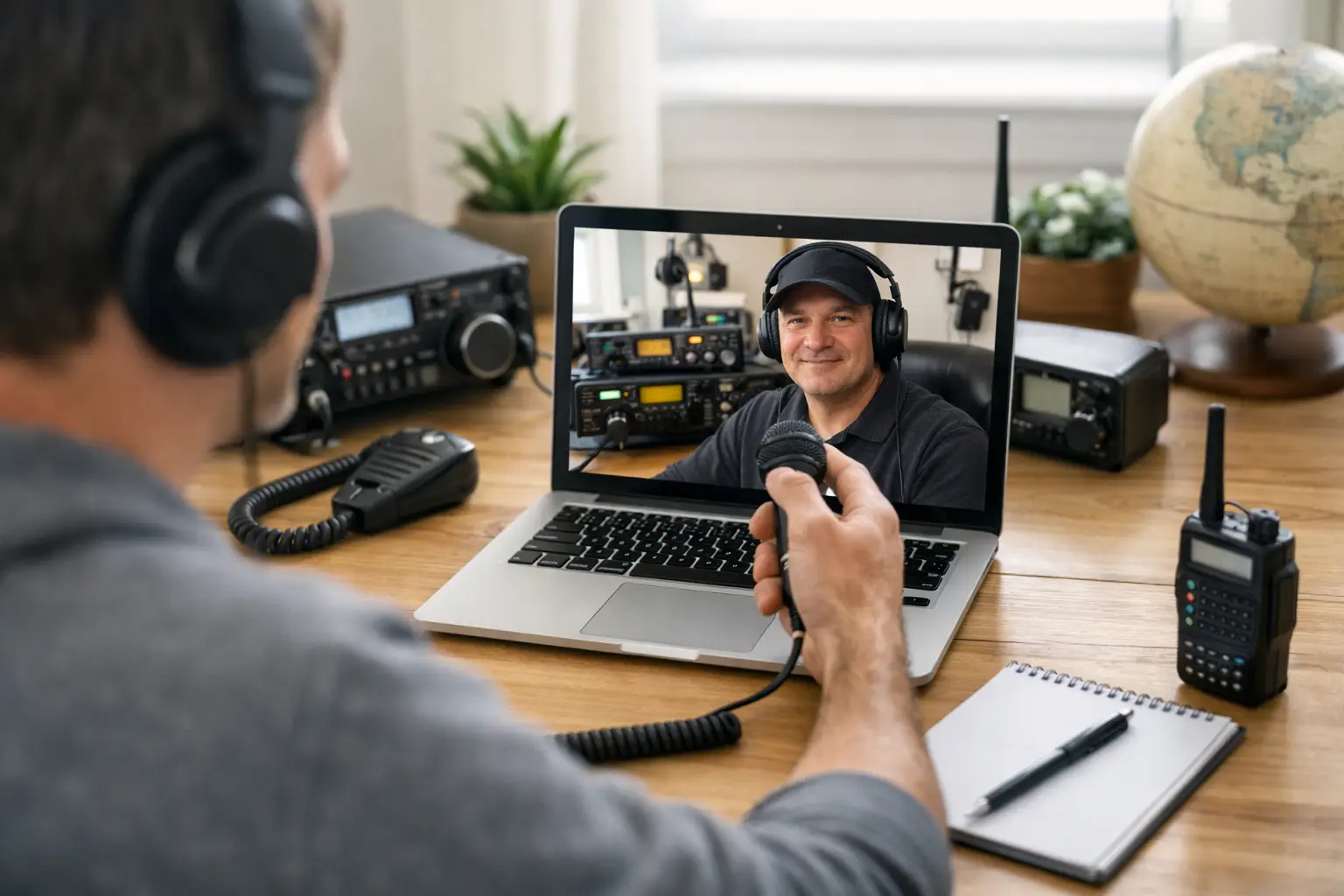
Most candidates use a computer with a webcam, microphone, reliable internet connection, and Zoom or another approved video platform. Before the exam begins, the team will verify your identity and guide you through the session requirements. Expect clear instructions, not guesswork.
A remote proctoring process commonly includes showing a government-issued photo ID, confirming your FCC Registration Number, and using your camera to show the room, desk, and nearby area. The purpose is straightforward: the Volunteer Examiners must confirm that you are testing independently and do not have access to unauthorized materials.
During the exam, your webcam and microphone remain on. You may be asked to share your screen while you complete the test. The proctors are there to protect exam integrity, but a good team also makes the experience less intimidating by explaining each step before it happens.
After you submit your answers, you generally receive your result right away. Passing is a great moment, especially for a first-time Technician candidate who has worked through the material and finally sees that effort pay off. If you do not pass, the examiners can explain the next available options under their session policies, and you can use the result to focus your next study session.
Prepare Your Space Before Test Day
The biggest advantage of testing at home is convenience. The biggest responsibility is preparing a testing environment that meets proctoring requirements. A few minutes of preparation can prevent last-minute stress.
Choose a private, quiet room where you can close the door and avoid interruptions. Your desk or table should be clear except for items the testing team permits. In most cases, phones, smartwatches, notes, books, extra monitors, and reference materials must be out of reach or removed from the room. Do not assume a calculator, scratch paper, or formula sheet is allowed unless your exam team specifically says so.
Your computer needs a working webcam, microphone, and stable connection. A laptop is often the simplest choice because it can be moved during the room scan. If you use a desktop computer, confirm ahead of time that your webcam can show the required views. Close unrelated browser tabs, silence notifications, and plug in your device or make sure the battery is fully charged.
It also helps to let other people in your household know when you will be testing. A barking dog, a child opening the door, or a delivery interruption can be distracting. Proctors understand that homes are real places, but you should make every reasonable effort to create a quiet, controlled session.
The Details Candidates Often Miss
Remote testing is convenient, but it does require advance planning. The most common problem is not the exam material. It is arriving without one of the required items or discovering a technical issue minutes before the appointment.
First, obtain an FCC Registration Number, often called an FRN, before your session. An FRN is needed for FCC licensing transactions and is different from your future call sign. If you are upgrading an existing license, use the FRN associated with your current FCC record.
Next, read the appointment instructions carefully. Your testing team may have specific guidance for acceptable identification, payment, software setup, room scans, and check-in time. Joining early gives you time to resolve an audio setting or camera problem without feeling rushed.
Finally, study from the current question pool for the license class you want. The Technician license is the starting point for most new hams. It covers basic regulations, operating practices, safety, radio theory, and equipment. General and Extra exams build on that foundation and open access to more amateur radio privileges. Practice exams are useful, but make sure you understand the concepts as well as the answers. That knowledge will serve you once you are on the air.
When Testing From Home May Not Be the Best Fit
An online session is an excellent option for many people, but not every situation is ideal. If your internet connection is unreliable, your home does not offer a private space, or you are uncomfortable working through video-based instructions, an in-person session may be easier.
Candidates who need testing accommodations should also contact the exam team before scheduling. Accommodations can often be arranged, but they should be discussed early so the session can be organized appropriately. The goal is a fair exam experience that still meets the required standards.
There is no advantage to choosing remote testing if the setup will leave you anxious or distracted. The best format is the one that lets you show what you know under proper exam conditions.
A Confident Start to Your Amateur Radio Journey
For busy professionals, rural candidates, caregivers, and anyone without a convenient local session, online testing removes a practical barrier that once kept many people from getting licensed. It can also make an upgrade feel more attainable when you are ready to move beyond your current privileges.
MidTENN Nationwide Testing provides scheduled remote exam sessions with an organized process, live support, and immediate exam feedback. The experience should feel professional without feeling impersonal: clear requirements before the appointment, respectful proctoring during it, and a team that wants to welcome another capable operator into the amateur radio community.
Set up your space, review the instructions, and give yourself credit for getting this far. Your home can be the place where a new call sign, new operating privileges, and new connections across the airwaves begin.