A missed local test session should not put your amateur radio plans on hold for another month. For many candidates, remote proctoring provides a practical way to take an FCC amateur radio exam at home while preserving the same standards of identity verification, exam security, and volunteer examiner oversight expected in a formal session.
Whether you are studying for your first Technician license or preparing to upgrade to General or Extra Class, testing from home can remove a major obstacle: getting to the session. The key is understanding what a properly administered online exam involves and preparing your space before exam day.
What Remote Proctoring Means for Ham Radio Exams
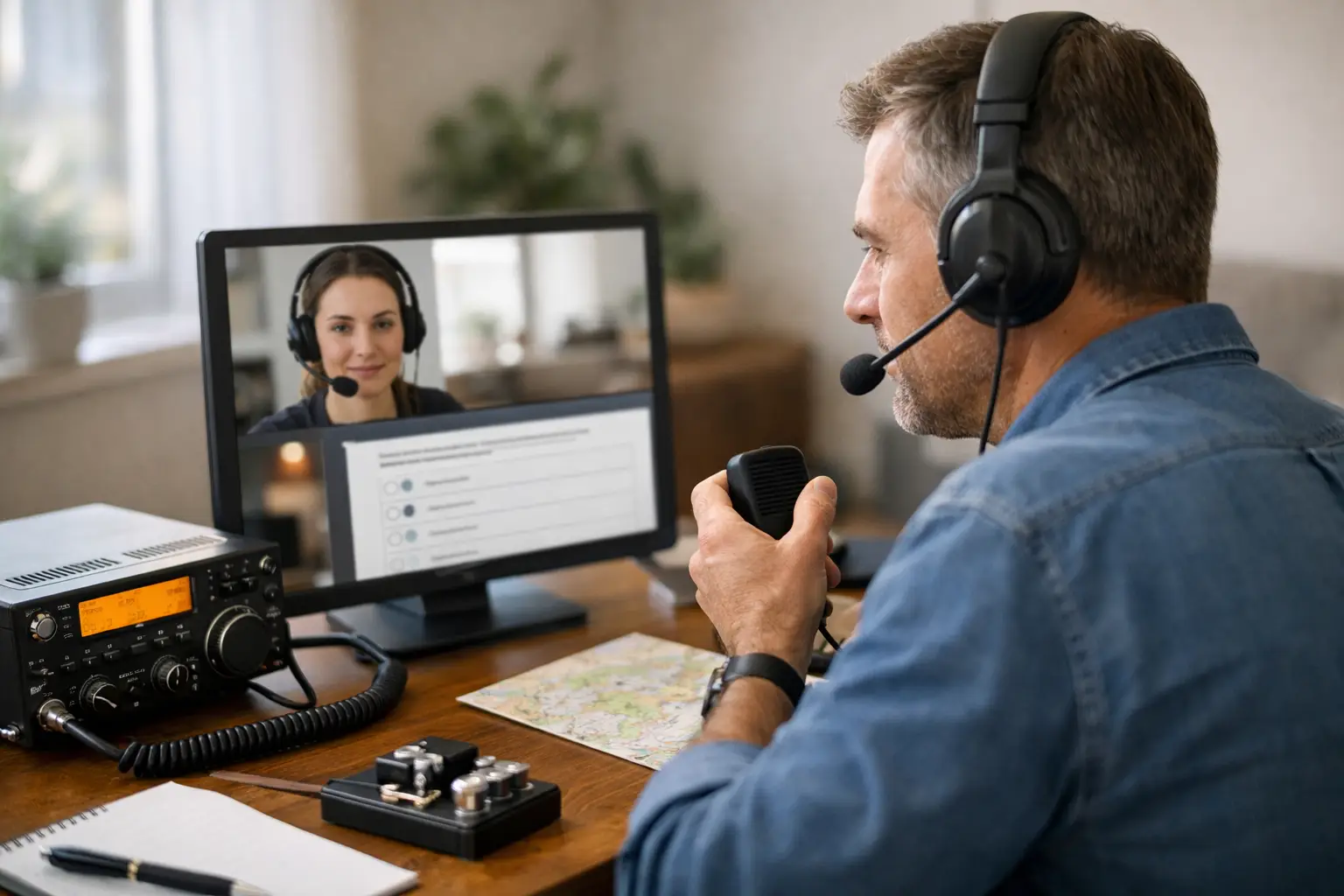
Remote proctoring is the live supervision of an exam through approved online tools. Rather than sitting across a table from a team of volunteer examiners, you connect by video from a private location and follow the session instructions provided by the testing team.
This is not an unmonitored online quiz. A legitimate amateur radio exam session includes real human examiners, candidate identification, a review of the testing area, and procedures designed to protect the integrity of the question pool. The goal is straightforward: every candidate should have a fair opportunity to demonstrate what they know, and every passing result should carry the credibility the FCC licensing process requires.
For candidates, the experience is often less intimidating than expected. The format is structured, but a good team explains each step clearly and gives you a chance to ask process questions before the exam begins. That support matters, especially if this is your first licensing exam or your first remotely supervised test.
Why Candidates Choose to Test From Home
Convenience is the most visible benefit. A remote session can save a long drive, eliminate the need to coordinate transportation, and make it easier to fit testing around work, family, or other commitments. This can be especially helpful in rural areas, where in-person amateur radio sessions may be limited or held only occasionally.
It also gives candidates more scheduling flexibility. Instead of waiting for the next nearby event, you may be able to choose a session that better matches your study timeline. If you have been consistently passing practice exams, being able to schedule promptly can help you take the test while the material is fresh.
The home setting can reduce avoidable stress, too. You are in a familiar environment, without the uncertainty of finding a meeting room, arriving early at an unfamiliar location, or dealing with travel delays. That does not make the exam easier, nor should it. It simply allows your preparation to be the focus.
Remote testing is not the best answer for every person. Some candidates prefer the in-person experience, have unreliable internet service, or do not have access to a quiet private room. A quality testing program should make the remote requirements clear so you can decide with confidence whether the format fits your circumstances.
What a Remote Exam Session Usually Includes
Exact procedures vary by volunteer examiner team and the current policies they follow, but most remote exam sessions follow a similar sequence. You schedule in advance, receive instructions, and join the session at the assigned time using the specified video platform. MidTENN Nationwide Testing, for example, uses scheduled Zoom sessions with a structured process designed to be clear for candidates and examiners alike.
At check-in, be prepared to present the required identification and any requested registration information. The examiners will explain how the session will work, including how to communicate if you have a question or encounter a technical issue.
You will also be asked to show your testing environment. This is a normal part of remote proctoring. Examiners need to verify that the room is private and that prohibited materials, additional electronic devices, or other people are not available during the exam. Follow their directions carefully and do not take this review personally. The same safeguards protect your result as much as they protect the testing program.
Once the exam begins, remain on camera and follow the instructions for using the online exam system. Avoid leaving your seat, opening unrelated applications, or handling materials that have not been explicitly permitted. If something unexpected happens – your internet drops, a family member enters the room, or you are unsure how to proceed – tell the examiners promptly. Trying to solve a problem silently can create more confusion than simply asking for help.
After you submit the exam, the examiner team reviews the result and completes the required paperwork. Many remote sessions can provide prompt feedback, which means you will know whether you passed before you move on with your day. Your license will still be issued through the FCC process, so allow time for the application and database updates to be completed.
How to Prepare Your Space and Equipment
The best remote exam experience starts before the session opens. Read every instruction from your testing team, even if you have taken online meetings for years. An amateur radio exam has different expectations than a casual video call.
Choose a quiet room with a door, reliable lighting, and a stable internet connection. The space should be private for the entire appointment. Let household members know that you cannot be interrupted, and make arrangements for pets if they are likely to create a distraction.
Use a computer with a working camera, microphone, and speaker. A larger screen and physical keyboard are generally more comfortable than a phone or tablet, but follow the equipment requirements supplied for your session. Charge your device or keep it connected to power, and test your camera, audio, and internet connection ahead of time.
Clear your desk or table completely unless your instructions specifically allow an item. Remove notes, books, second monitors, smartwatches, headphones, phones, and other electronic devices from the testing area. Even an item you do not intend to use can raise questions during a supervised exam. A clean workspace makes the room check faster and helps you stay focused.
Have your required photo identification ready before check-in. If you have an existing amateur radio license and are testing for an upgrade, make sure you understand what additional documentation or information your exam team requires. Preparation is not only about memorizing regulations, operating practices, and technical concepts. It is also about arriving ready for the administrative side of the session.
Exam Integrity Is Part of the Convenience
Some candidates hear the words “remote proctoring” and wonder whether an exam taken at home is treated differently. It should not be. The location changes, but the standards do not.
Remote exam procedures are built around accountability. Live volunteer examiners verify the candidate and environment, supervise the exam, and apply the same rules consistently. The process protects the value of your license and the amateur radio community’s confidence in it.
That is why a legitimate testing provider may be firm about room scans, identification, device limits, and privacy requirements. These are not unnecessary hurdles. They are the practical measures that allow an online session to remain fair for everyone, including candidates who tested in person.
Candidates also have responsibilities. Do not assume that an item is allowed because it seems harmless, and do not rely on old advice from a previous testing session. Policies and approved procedures can change. Use the instructions sent for your scheduled exam as the final authority, and contact the testing team before exam day if anything is unclear.
Reducing Test-Day Stress
Most test anxiety comes from uncertainty, not from the exam itself. You can reduce that uncertainty by completing a simple rehearsal the day before. Sit where you plan to test, sign in to the video platform, check your camera angle, and confirm that your room is quiet. Then set out your identification and close anything on your computer that you will not need.
On exam day, join early enough to handle normal check-in without rushing. Listen to the examiners one step at a time. You do not need to know the remote process perfectly before you arrive; you need to be cooperative, prepared, and willing to ask when you are uncertain.
Your study effort got you to the appointment. A well-prepared remote session gives that effort a fair place to show. Set up your space, follow the directions, and let your knowledge carry you toward the next call sign or license upgrade.