Taking an FCC amateur radio exam from your own home can remove a major obstacle, especially when the nearest in-person session is miles away or does not fit your schedule. This online ham exam review explains what a legitimate remote testing session looks like, what you need to prepare, and how to approach exam day with confidence.
Remote testing is not a shortcut around FCC standards. The questions, passing score, volunteer examiner oversight, and license process remain the same. What changes is the setting: instead of driving to a meeting room, you join a scheduled session by video and complete the process under structured remote proctoring.
What an Online Ham Exam Review Should Tell You
A useful review of online amateur radio testing should look beyond convenience. The best question is not simply, “Can I test from home?” It is, “Will the process be clear, compliant, and supported by real people if I need help?”
For candidates pursuing Technician, General, or Amateur Extra privileges, a quality online exam session should include clear pre-exam instructions, identity verification, a room and equipment check, active proctoring, and prompt notice of your result. These steps protect the integrity of the examination while giving candidates a more practical way to test.
An ARRL-certified Volunteer Examiner team is especially meaningful because it signals that the session follows an established, nationally recognized examination framework. You should know who is administering the exam, what technology is required, how your information will be handled, and what happens after you pass.
Convenience matters, but it should not come at the expense of confidence in the process. A well-run remote session makes the requirements understandable before exam day rather than surprising you once the camera is on.
The At-Home Testing Experience, Step by Step
Online exams generally begin before your appointment. After scheduling, you should receive instructions covering the video platform, required identification, payment if applicable, and the workspace rules. Read these carefully a day or two ahead of time. Most avoidable delays happen because a candidate is trying to download software, find a photo ID, or clear a desk minutes before the session starts.
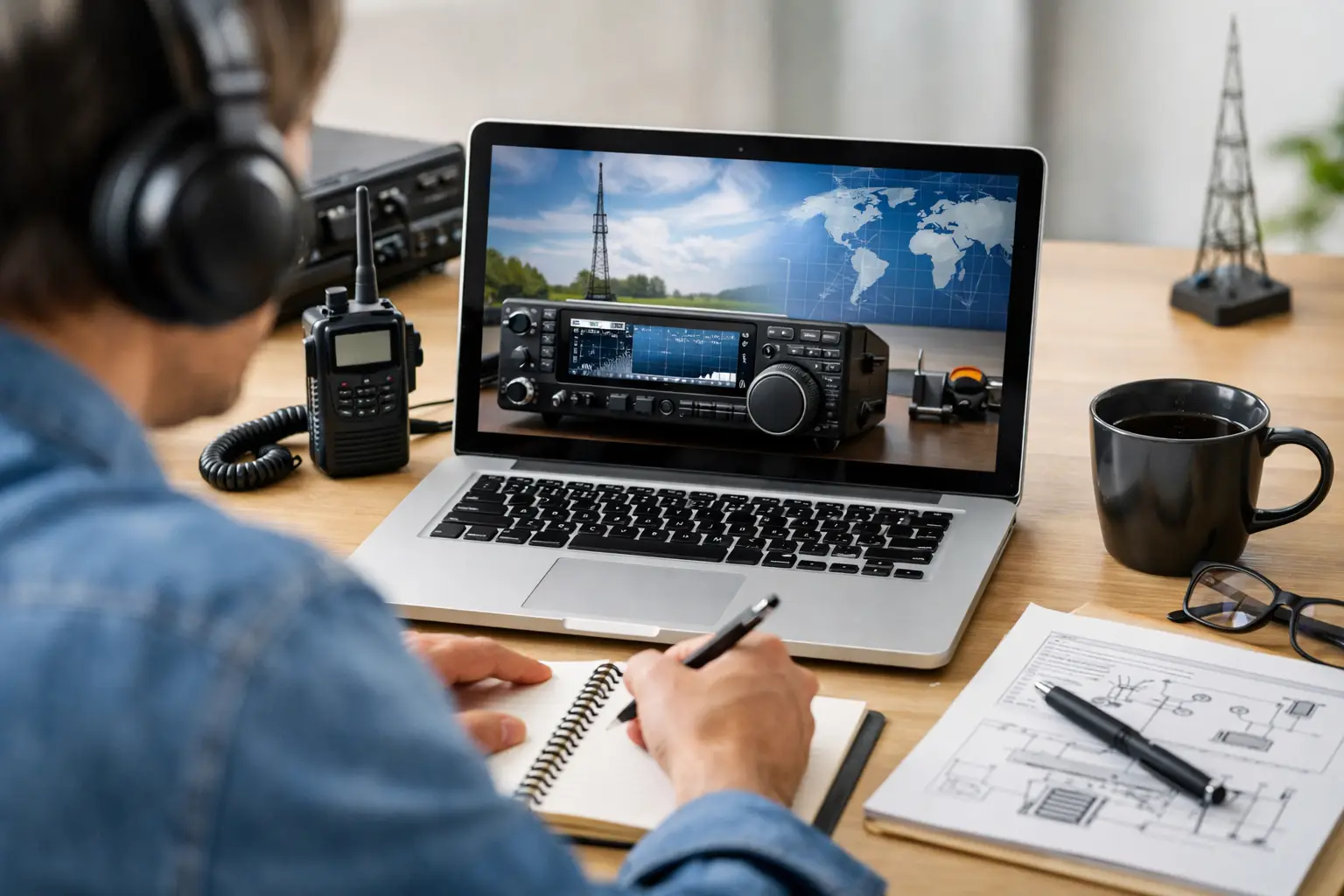
At the scheduled time, you join the video meeting using a computer with a camera, microphone, and reliable internet connection. A phone may be useful as a secondary camera when requested, but it is not always a substitute for the computer you will use to take the exam. Follow the testing team’s instructions rather than assuming every online session uses the same setup.
The volunteer examiners will verify your identity and may ask to see your examination space through your webcam or a second device. They need to confirm that your desk is clear, no unauthorized materials are available, and no one else is in a position to assist you. This can feel formal, particularly for first-time candidates, but it is a normal part of protecting every license earned through the session.
Once the check is complete, the testing team provides access to the exam. You answer the questions independently while the examiners monitor the session. If a technical problem occurs, stay calm and communicate with the team. A professional testing group will explain the next step, whether that means reconnecting, adjusting a camera, or rescheduling when a problem cannot be resolved fairly.
After you submit your answers, the examiners review the result and tell you whether you passed. For many candidates, immediate feedback is one of the most reassuring benefits of online testing. If you pass, the team will explain the paperwork and the next stage of FCC processing. If you do not pass, they can help you understand your retest options without making an already disappointing moment more stressful.
Equipment and Workspace Requirements That Matter
A quiet, private space is more valuable than an elaborate home office. Choose a room where you can close the door, remain undisturbed, and keep the testing surface clear. Let family members or roommates know that you cannot be interrupted during your appointment.
Your computer should be fully charged or connected to power, with a working webcam and microphone. Test your internet connection and video platform in advance. If your Wi-Fi is unreliable, moving closer to the router or using a wired connection may prevent an unnecessary interruption.
Have your government-issued photo identification ready. If you already hold an amateur radio license, have your FCC Registration Number available as well. Candidates testing for an upgrade should also be prepared to provide the information needed to document their current license status.
The rules on materials are not optional. Do not keep study guides, notes, extra electronics, or unrelated papers within reach unless the examiners specifically permit an item. For exams where a calculator is allowed, use only the type and method approved by the testing team. Asking ahead is always better than guessing on exam day.
Preparing for the Exam, Not Just the Appointment
A smooth online session starts with solid study habits. The FCC question pools are public, and practice exams can help you recognize weak areas before your scheduled test. Still, memorizing answer patterns alone is not the strongest path forward. Learn the concepts behind the questions, particularly operating rules, safety, basic electronics, propagation, and the privileges attached to your license class.
For the Technician exam, spend extra time on frequency privileges, call sign rules, station safety, basic operating practices, and the practical radio knowledge you will use soon after getting on the air. General candidates should be comfortable with HF operation, propagation, antennas, and the expanded operating privileges they are seeking. Amateur Extra candidates face a broader and more technical question pool, so consistent review over time is usually more effective than last-minute cramming.
Practice under realistic conditions. Set a timer, work through a full exam without referring to notes, and review every missed question afterward. If you repeatedly miss questions from the same topic, return to the underlying lesson rather than taking practice tests until the answer happens to stick.
It also helps to schedule your exam when you can think clearly. An evening appointment may work well for a busy professional, while a weekend morning may be better for someone who wants a quiet house and fresh focus. The right time depends on your routine, but avoid booking when you expect to be rushed or distracted.
Common Concerns About Remote Ham Exams
Many first-time candidates worry that online proctoring will feel intimidating. In practice, the process is usually straightforward when you arrive prepared and follow instructions. The examiners are there to maintain standards, but they are also members of the amateur radio community. A respectful, organized team understands that candidates may be nervous.
Another concern is whether an online exam is as legitimate as an in-person one. It is, provided it is administered by an authorized Volunteer Examiner team using approved procedures. Your location does not reduce the value of the license you earn. The FCC license is the same, and your operating responsibilities are the same.
Technical issues are the trade-off for at-home convenience. Internet outages, poor lighting, weak audio, or an improperly positioned camera can slow a session. That is why preparation matters. Test your equipment, charge your devices, and give yourself enough time to complete the check-in without pressure.
Candidates also sometimes assume they must wait for a local session before attempting an upgrade. Remote testing creates more scheduling flexibility, which can be especially helpful for operators who live in rural areas, have mobility limitations, work irregular hours, or simply prefer testing in a familiar environment.
Choosing a Testing Team You Can Trust
Before scheduling, look for a team that communicates clearly and provides direct human support. You should be able to find practical guidance about requirements, scheduling, and exam-day expectations without sorting through vague instructions.
Consider whether the group offers sessions for your license level and whether its availability fits your timeline. A candidate ready for a Technician exam may value a quick appointment, while an Amateur Extra candidate may prefer scheduling farther out to allow for structured study. Neither approach is wrong. The right choice is the one that gives you adequate preparation and a calm testing environment.
Middle Tennessee Exams provides scheduled remote sessions designed to make the process organized, friendly, and standards-driven. Candidates can take an ARRL-certified amateur radio exam from home while receiving clear instructions and timely feedback from an experienced testing team.
Your exam appointment is not just a final hurdle. It is the moment your preparation becomes permission to participate more fully in amateur radio. Set up your space, review the material honestly, and arrive ready to show what you know. The next conversation you have on the air may begin at the desk where you take your test.