
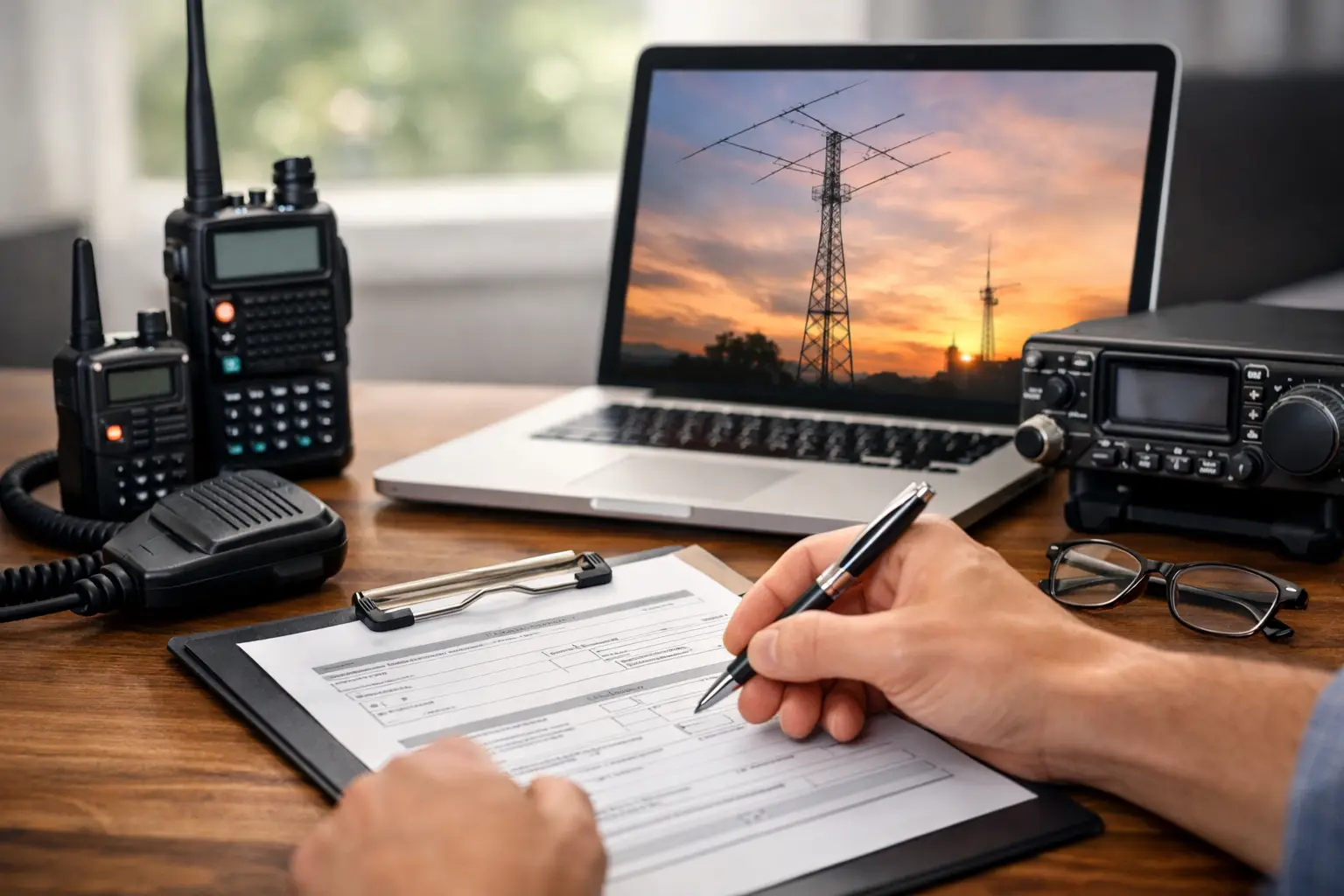
The radio may be ready, the study guide may be dog-eared, and you may be scoring well on practice exams. Yet many first-time candidates still pause at one question: what exactly do I need to do to apply? This FCC exam application guide explains the practical path from registration to a newly issued amateur radio license, with special attention to what remote candidates should expect.
For most people, the process is simpler than it first appears. You do not submit a traditional exam application directly to the FCC before testing. Instead, you prepare your FCC registration information, schedule with an authorized Volunteer Examiner team, complete the exam session, and then follow the FCC’s instructions if a fee is due. Knowing the order of events removes much of the uncertainty.
FCC Exam Application Guide: Start With Your FRN
Before your exam session, obtain an FCC Registration Number, commonly called an FRN. This unique number identifies you in the FCC’s system and is used on the paperwork associated with your amateur radio examination. First-time applicants need an FRN before they test. Current licensees already have one and should use the same FRN when upgrading.
Take a few minutes to make sure the name, mailing address, and email address associated with your FRN are accurate. Your legal name should match the government-issued photo ID you will present to the exam team. A mismatch does not always prevent testing, but it can create avoidable follow-up work and delay processing.
Protect your FRN just as you would other important account information. Have it available when you register, but do not post it publicly or send it casually through unsecured channels. Your exam team needs the number to prepare the required FCC application paperwork, usually Form 605, on your behalf.
If you hold an amateur radio license and are applying for an upgrade, review your current license details before scheduling. Bring proof of your existing license if your exam team requests it. The team will verify the credit you have earned and ensure that you are registered for the correct element.
Choose the Right License Exam
Amateur radio licensing follows a clear progression. The Technician license is the entry point for most new operators and provides meaningful privileges on VHF, UHF, and selected HF bands. General expands access to HF frequencies and is a common next step for operators interested in long-distance communication. Extra Class offers the broadest amateur privileges and requires passing the most advanced written examination.
You only need to pass the exam for the license level you are seeking, provided you already hold the lower-level license required for an upgrade. A new applicant starts with Technician. A Technician may take the General exam, and a General may take Extra.
There is also an encouraging option for well-prepared candidates: you may take more than one exam element in the same session if your Volunteer Examiner team permits it and you pass each element in sequence. For example, a new candidate who passes Technician may be allowed to attempt General. This is not a reason to rush your preparation, but it is worth understanding before your appointment.
Schedule With an Authorized Exam Team
Once you have your FRN and know which exam you want to take, choose an exam session. Remote testing can be especially helpful when local in-person sessions are limited, travel is inconvenient, or your work and family schedule makes a fixed weekend event difficult.
When registering, provide your contact information carefully and select the correct exam level. Read the confirmation message from the testing team from start to finish. It will explain the appointment time, required identification, testing fee if applicable, remote proctoring setup, and any forms or check-in steps you must complete beforehand.
Middle Tennessee Exams provides scheduled online sessions through an ARRL-certified Volunteer Examiner program, giving candidates a convenient way to test from home while maintaining the standards expected for an FCC amateur radio examination. A good remote session should feel organized and personal, not impersonal or confusing.
Remote testing procedures vary somewhat by team, so the instructions from your assigned team always control. In general, plan to use a reliable computer with a camera and microphone, stable internet access, and Zoom or another approved meeting platform. Do not wait until exam day to test your equipment.
Prepare Your Space Before Check-In
Remote proctoring protects the integrity of the exam and the value of every amateur radio license. The goal is not to make candidates uncomfortable. It is to confirm that every person tests under fair, consistent conditions.
Set aside a quiet, private space where you can remain uninterrupted for the full appointment. Your exam team may ask you to use a phone or second camera to show the room, desk, computer area, and nearby surfaces. Follow these directions calmly and completely. This review is a normal part of a compliant remote session.
Before check-in, gather the items your team has requested. Most candidates should expect to need:
- A current government-issued photo ID
- Their FCC Registration Number
- Proof of an existing license, when applying for an upgrade
- A working computer, webcam, microphone, and reliable internet connection
- A smartphone or second camera if the remote setup requires one
Clear your desk of notes, books, extra screens, smart watches, and unapproved electronic devices. Close browser tabs and applications that are not needed for the exam. A simple workspace helps proctors complete their review efficiently and lets you focus on the questions rather than the setup.
If another person is in your home, let them know when you will be testing. Pets, deliveries, and family interruptions happen, but reducing those risks beforehand makes the experience less stressful. If you have an accessibility need or a concern about your testing environment, contact the exam team before the session rather than trying to solve it during check-in.
What Happens During the Online Exam
Join the session early enough to complete check-in without feeling rushed. The Volunteer Examiners will verify your identity, review the remote testing conditions, confirm your application details, and explain the exam process. Ask questions before the examination begins. Once testing is underway, conversation must be limited to preserve exam security.
The Technician, General, and Extra written elements each contain 35 multiple-choice questions. You need 26 correct answers to pass. Questions are drawn from the current FCC question pools, which is why practice exams are useful, but understanding the material matters more than memorizing a pattern.
Read each question carefully. Pay attention to words such as “not,” “only,” and “best,” which can change what is being asked. If the testing platform lets you review answers, use that feature wisely. Do not let one difficult question consume too much time. Make your best choice, move forward, and return if time allows.
You may use a simple calculator only if your exam team and exam platform allow it under their stated procedures. Do not assume that a phone calculator, scratch paper, or a second device is permitted. Remote exam rules are specific for a reason, and your proctors will tell you what is allowed.
After You Pass: The FCC Processing Steps
One of the best parts of an organized online session is prompt feedback. Your exam team can tell you whether you passed after the examination is graded. That is a major milestone, but it is not yet permission to transmit.
After a successful exam, the Volunteer Examiner team submits your application to its coordinating organization, which then files the information with the FCC. For a new license, the FCC generally sends an email with instructions to pay the required application fee, when applicable. Follow that message promptly and carefully. The FCC does not grant the license until all required processing, including fee payment, is complete.
Fee rules and processing times can change, so rely on the current instructions you receive from the FCC and your exam team. Check your email inbox and spam folder after passing. If you are upgrading, the FCC will process the application and update your license record when the filing is accepted.
Do not transmit using new privileges until the FCC license database shows that your license has been granted or modified, unless an applicable FCC rule specifically permits otherwise. For a first license, wait until your call sign appears in the official record. The anticipation is part of the experience, and the first legal contact is worth waiting for.
A Confident Start to Your Amateur Radio Journey
An FCC exam is a standards-based test, but it should not feel like a mystery. Get your FRN, choose the correct license level, follow your exam team’s instructions, prepare a clean and quiet testing space, and watch for FCC correspondence after a passing score.
Whether you are pursuing Technician to join a local net, upgrading to General for HF operation, or working toward Extra Class after years in the hobby, take the process one step at a time. Good preparation is more than studying questions. It is giving yourself a calm, legitimate, well-organized path to the call sign and operating privileges you have worked to earn.