
You have studied the question pool, scheduled your session, and tested your webcam. Do not let a missing document create a last-minute problem. The id requirements for ham exam candidates are straightforward, but remote testing means you need to have the right items ready before your session begins.
For most candidates, the process comes down to presenting acceptable identification, providing your FCC Registration Number (FRN), and completing a brief check with the Volunteer Examiners. A little preparation helps the session start on time and lets you focus on the exam itself.
ID Requirements for Ham Exam Sessions
Amateur radio exams are administered under FCC rules by accredited Volunteer Examiner teams. VEs must confirm that the person taking the exam is the person listed on the application. That is why identification is not a formality. It protects the integrity of your license and the amateur radio service as a whole.
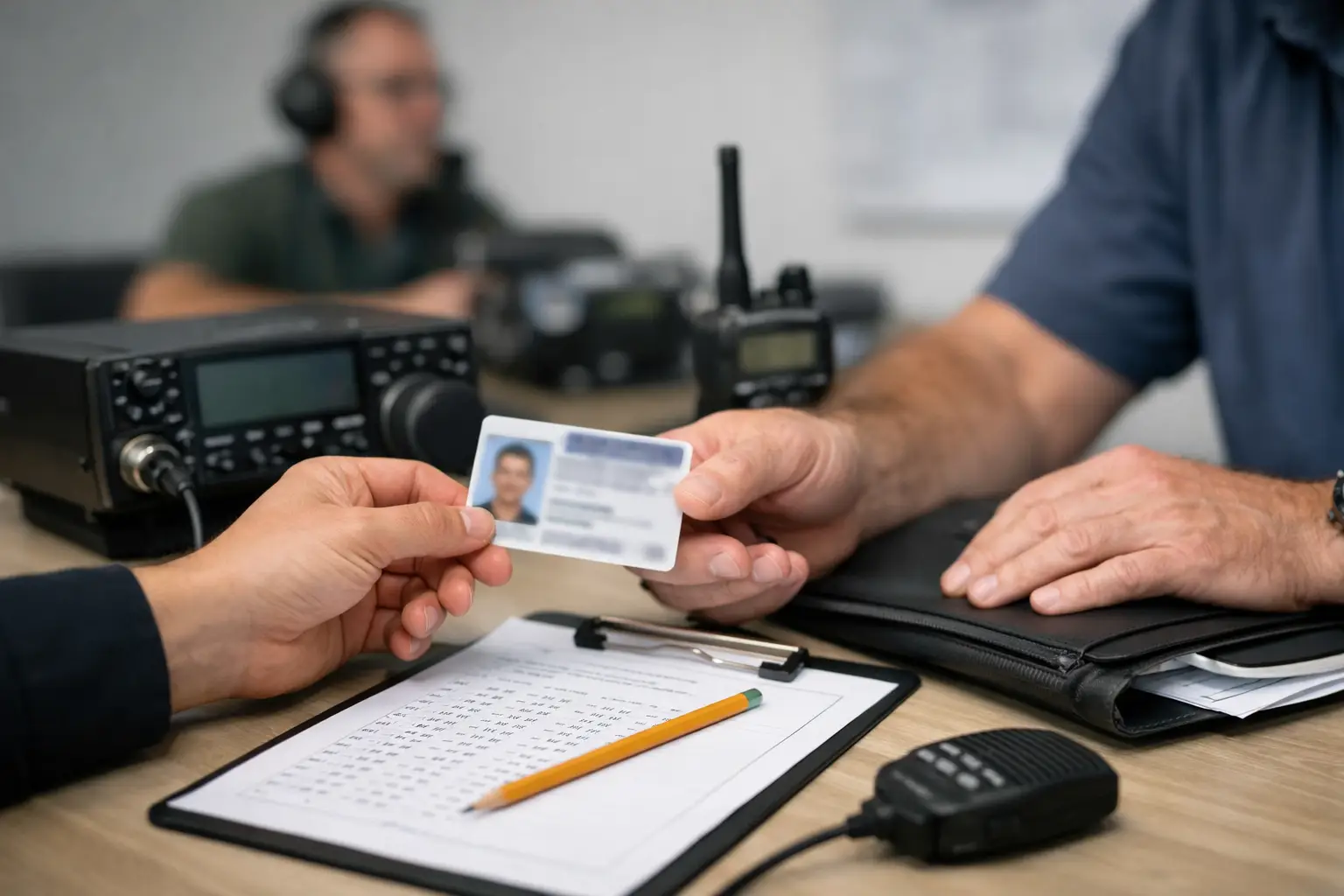
The standard item to have ready is a current, government-issued photo ID. A driver’s license, state identification card, passport, military ID, or other official photo identification is generally the simplest choice. Your name should be clear, and the document should be valid and readable on camera.
For an online session, you will typically be asked to hold your ID up to the webcam so the exam team can inspect it. Keep the document nearby, remove it from a wallet or plastic sleeve if glare is an issue, and make sure your room has enough light. A blurry webcam image can slow down check-in even when you have the right ID.
The specific instructions from your scheduled exam team always control. Read them carefully before exam day, since remote proctoring procedures may differ slightly from one accredited team to another.
If You Do Not Have a Government Photo ID
Candidates without a government-issued photo ID should not assume they cannot test. Alternative identification may be accepted, often using two forms of ID that establish your identity. Depending on the exam team’s procedures, documents may include a birth certificate, Social Security card, school ID, library card, utility bill, bank statement, or official correspondence that shows your name.
Because acceptable alternatives can vary and documents must be reviewed before testing, contact the exam team before your appointment if you will not have standard photo identification. Do not wait until the session opens to explain the situation. A quick question beforehand can prevent a reschedule.
Parents or guardians should take special care when a young candidate is testing. A school ID may be useful, but the team may need additional documentation. The goal is not to make the process difficult for minors. It is to ensure the candidate’s application can be properly completed and submitted.
Your FRN Is Also Part of Exam-Day Identification
Your FCC Registration Number is not photo identification, but it is essential information for your amateur radio exam application. An FRN is a unique 10-digit number issued by the FCC and used to connect your exam result with the correct applicant record.
Get your FRN before your scheduled exam. Write it down accurately or keep it available in a secure document. Do not rely on memory when check-in begins. A transposed digit can create unnecessary delays and may require corrections after the session.
First-time applicants need an FRN before taking the Technician exam. Upgrade candidates also need to provide their FRN, even if they have held an amateur license for years. If you are unsure which number is yours, resolve that question before test day rather than guessing on your application.
Your name on the application, your identification, and your FCC record should match as closely as possible. A recent name change, suffix difference, or other discrepancy is not automatically a problem, but it is worth mentioning to the VEs early in the check-in process. Have supporting documentation available if applicable.
What Upgrade Candidates Should Bring
If you are testing for General or Extra Class, identification and your FRN are still the starting point. You should also be prepared to document your existing amateur radio license when the exam team requests it.
In many cases, the VEs can confirm an active license through FCC records. Still, having a copy of your license or a clear record of your call sign available is a sensible backup. If you are claiming credit for a recently passed element that has not yet appeared in the FCC database, bring the relevant Certificate of Successful Completion of Examination, commonly called a CSCE.
This is one area where timing matters. A candidate who passed a lower-class exam very recently may have valid credit to use for an upgrade, but the paperwork must be clear enough for the VEs to verify it. Keep digital copies organized and easy to display if your remote team permits electronic documents.
Preparing Your ID for a Remote Exam
Remote testing adds a few practical steps that do not apply when you hand a card across a table. Plan to join your meeting a few minutes early with your identification beside you. Avoid photographing or scanning your ID unless the team specifically instructs you to do so. Most remote sessions use a live camera review rather than requiring you to send sensitive documents in advance.
Before the session, test your camera position and lighting. The examiners need to read the ID without excessive reflection, shadows, or autofocus blur. A desk lamp pointed indirectly toward your face and document often works better than bright light directly behind you.
Privacy matters, too. Show the requested identification only to the authorized exam team through the approved testing process. Do not post pictures of your ID in chat groups or share them with anyone who is not part of your scheduled session. A legitimate exam team will provide clear instructions about what is needed and how it will be reviewed.
Common Check-In Problems to Avoid
Most identification delays are preventable. Expired identification, a missing FRN, poor camera focus, and a name mismatch are the most common issues. None of these reflects on your knowledge of radio theory or regulations, but each can interrupt an otherwise smooth appointment.
It also helps to distinguish between your legal name and your call sign. Your call sign identifies you on the air after licensing, while the application must use your legal name as it appears on your identification and FCC record. If you have an existing call sign, have it available, but do not substitute it for the requested applicant information.
Avoid using nicknames, abbreviated names, or an old address without explanation. If your documents reflect a recent move or legal name change, tell the examiners promptly. Clear, early communication is usually all that is needed to keep the process moving.
A Simple Pre-Exam Document Check
The day before your test, confirm that you have your valid photo ID, your FRN, and any upgrade documentation you may need. Then place them where you will be testing, not in another room. This small step is especially useful for online sessions, where leaving the camera area during check-in may complicate the process.
If you have a question about whether a document will be accepted, ask before your session. Middle Tennessee Exams is built around making remote testing convenient while maintaining the standards that make an FCC amateur radio license meaningful. Getting your documents ready is one of the easiest ways to begin your exam with confidence.
Your exam is a milestone, not a paperwork drill. Set out your ID, confirm your FRN, take a breath, and give yourself the clear start you have earned through your preparation.