
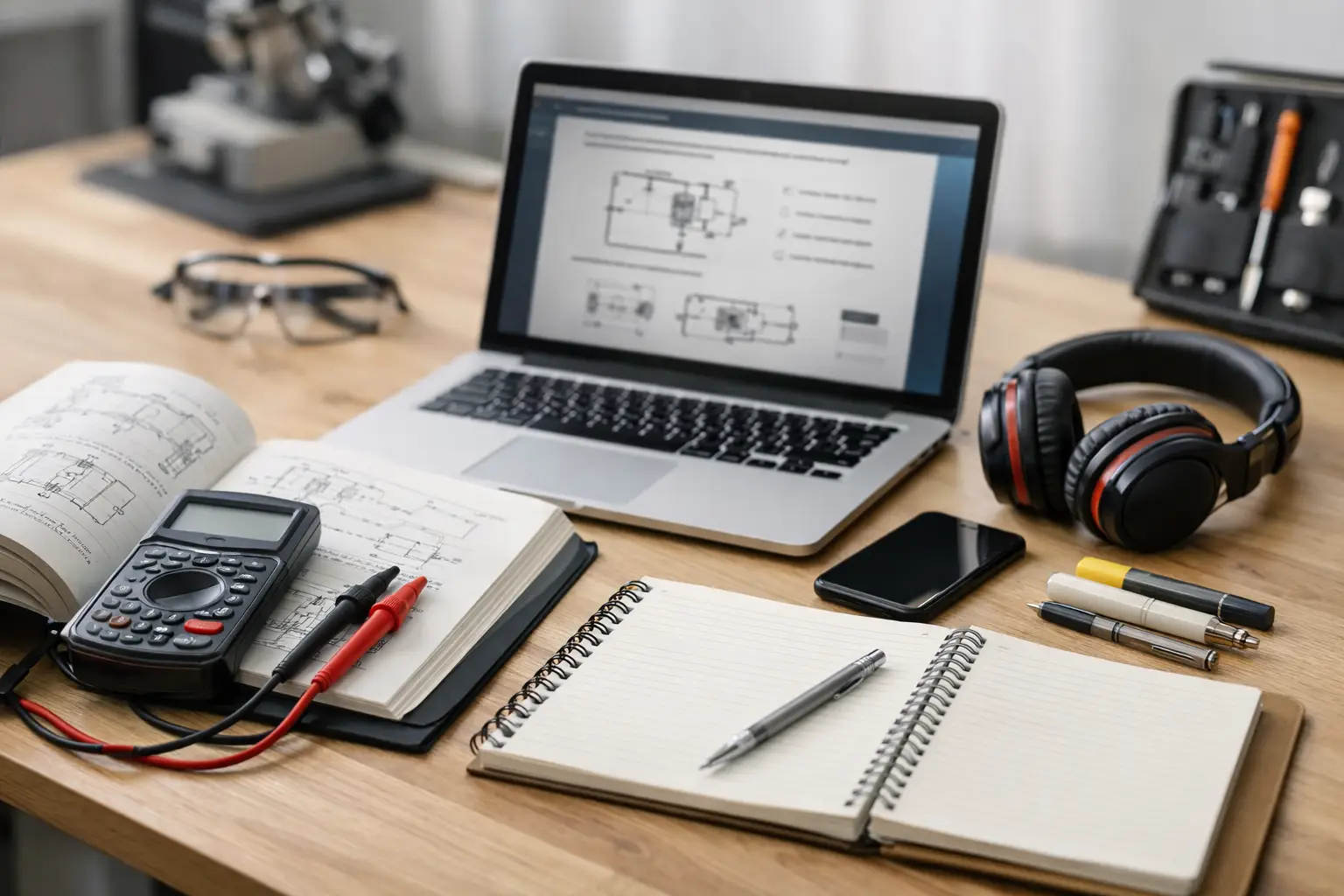
Your first successful contact may begin with a call sign, but it starts with 35 exam questions. The top study tools for technician exam preparation are the ones that help you understand the material, recognize how questions are written, and stay calm when it is time to test. You do not need to be an electronics expert to earn an FCC Technician license. You do need a plan that turns unfamiliar topics into reliable answers.
The Technician exam covers a wide range of practical amateur radio knowledge: FCC rules, operating procedures, safety, basic electronics, antennas, propagation, and emergency communications. That range can feel intimidating at first. A good study approach breaks it into manageable pieces and gives you regular proof that you are improving.
Start With the Current Technician Question Pool
The current FCC Technician question pool should be the center of your preparation. Every question on the actual exam comes from this published pool, although the 35 questions on your individual test are selected in a mixed order. Studying the pool gives you a clear target instead of asking you to guess what might appear on test day.
A question-pool study guide is especially useful because it groups the material by topic and provides explanations. Do more than memorize the letter next to the right answer. Read why the answer is correct and why the other choices are not. That extra minute matters when the same concept appears in different wording.
Pay close attention to questions involving operating privileges, call sign identification, frequency bands, exposure safety, and electrical hazards. These are not just exam topics. They are part of operating responsibly once you are licensed. For technical subjects such as Ohm’s law, wavelength, and circuit behavior, work through a few examples until the relationship makes sense rather than trying to recall isolated facts.
Before buying or downloading any study material, confirm that it matches the current Technician pool. Older books and copied notes may still contain useful background, but outdated questions can create unnecessary confusion.
Top Study Tools for Technician Exam Preparation
The best tools work together. One resource teaches the concept, another helps you recall it quickly, and another shows whether you can apply it under exam conditions. Your preferred learning style and available time will determine the right mix.
A focused Technician study guide
A current study guide provides the foundation. It is the best choice for candidates who want context behind the questions, especially if terms like repeater offset, feed line, modulation, or SWR are new. Choose a guide that follows the question-pool sections and explains answers in plain language.
A guide alone can be slower than an app, so use it strategically. Read a section, answer its related questions, and mark anything that still feels unclear. You do not need to reread every chapter from beginning to end if you already understand a subject.
Flashcards for rules, band privileges, and terms
Flashcards are effective for facts that need quick recall. They are particularly helpful for frequency allocations, common abbreviations, control operator responsibilities, and safety limits. Digital flashcards are convenient for short study sessions during a lunch break or while waiting for an appointment. Printed cards can be better if screens distract you.
The key is active recall. Look at the prompt, answer it before turning the card over, then sort cards into categories such as know it, almost there, and review again. Repeating only the cards you miss is more efficient than treating every card the same.
Practice exams that show explanations
Online practice exams are one of the most valuable tools because they reveal your readiness in the same multiple-choice format you will see on test day. Look for practice tests that draw from the current pool and provide an explanation after each answer. A score alone tells you where you stand. An explanation tells you what to fix.
At first, take practice tests by topic or in untimed mode. This makes it easier to catch patterns, such as repeatedly missing antenna questions or confusing station identification rules. As your exam date gets closer, take full 35-question practice exams without notes. The passing score is 26 correct answers, or 74 percent, but it is wise to aim consistently higher than that. Scores in the mid-80s or above across several different practice tests usually provide a more comfortable margin.
Do not let a single high score convince you that you are finished. If you see the same questions often enough, recognition can feel like understanding. Mix up the quizzes and spend time reviewing missed questions before taking another test.
Short instructional videos for difficult concepts
A clear video lesson can make technical material less abstract. Seeing a diagram of a dipole antenna, a simple circuit, or a repeater system often helps more than reading a definition several times. Videos are useful for subjects where you need to picture what is happening, including propagation, grounding, power, and basic calculations.
Use video as a supplement, not as passive entertainment. Pause when a topic is explained, write down the key idea in your own words, and then answer related pool questions. If you cannot explain the concept simply, return to the study guide or find another explanation.
A personal missed-question log
A notebook, spreadsheet, or simple note on your phone can become your most useful study tool. Each time you miss a question, record the topic, the correct principle, and what caused the mistake. Was it an unfamiliar term, a careless reading error, or confusion between two similar choices?
This log prevents you from spending all your time on material you already know. It also makes the final days before the exam more productive. Instead of cramming the entire pool, review the handful of ideas that have challenged you repeatedly.
Build a Study Routine You Can Keep
A steady routine is usually better than an ambitious plan that lasts three days. For many first-time candidates, 20 to 30 minutes a day over two or three weeks is enough to make meaningful progress. If you have more technical experience, you may move faster. If regulations and electronics are entirely new, give yourself more time and avoid comparing your pace with someone else’s.
Begin each session with a small set of new questions or one topic from your guide. Follow it with a short review of flashcards or missed questions. End with a quiz. That sequence gives you instruction, recall, and application in a single session.
Once a week, take a full practice exam and note your score by subject area. If you are strong in rules but weak in electrical principles, adjust your next week accordingly. The goal is not to spend equal time on every topic. The goal is to close the gaps that could cost you points.
Practice the Remote Exam Experience
Preparing your knowledge is the priority, but preparing your testing setup can reduce avoidable stress. If you plan to take an online amateur radio exam, practice in the same quiet space you expect to use. Check that your computer, camera, microphone, and internet connection are dependable. Make sure the room can meet proctoring requirements and that your desk is clear of unapproved materials.
Take one practice exam in a single sitting with no interruptions, notes, or answer checking. This is useful even if you are comfortable with the material. It helps you develop a measured pace and proves that you can work through a question you do not immediately recognize without losing focus.
Read the instructions from your exam team well before your appointment. A well-organized remote session is designed to be straightforward, but knowing what to expect lets you focus on your answers. Middle Tennessee Exams provides a structured, ARRL-certified remote testing process with clear guidance for candidates testing from home.
Know When You Are Ready to Schedule
You are likely ready when you can pass several fresh practice exams in a row, explain your missed answers, and complete a full test without relying on hints. You do not need perfection. Even experienced operators occasionally miss a question. What matters is that your knowledge is consistently above the passing threshold and that you understand the rules and safety practices behind the answers.
If one section remains difficult, do not postpone indefinitely. Spend a focused evening reviewing that topic, then test yourself again. Progress becomes much easier to see when you measure it with current, realistic practice questions.
Your Technician license is a gateway to local repeaters, public service events, emergency communication, technical experimentation, and conversations that can reach far beyond your neighborhood. Give yourself a dependable study routine, arrive prepared, and let the exam be the first confident step into the amateur radio community.