If you have been putting off your FCC amateur radio exam because the nearest test session is a long drive away, online testing changes the equation. Understanding how online ham radio exams work can take a lot of the stress out of the process, especially if you are earning your first Technician license or upgrading to General or Extra from home.
Remote amateur radio testing is legitimate, structured, and closely supervised. It is not a casual quiz you take on your own. A certified Volunteer Examiner team follows established rules, verifies your identity, watches the testing environment, and administers the same FCC license exam element you would take at an in-person session.
How online ham radio exams work from start to finish
The process usually starts with scheduling. You choose an available session, register in advance, and receive instructions for what you need on exam day. Most online exam teams also explain what software will be used, what identification is required, how payment works, and how to prepare your room and computer.
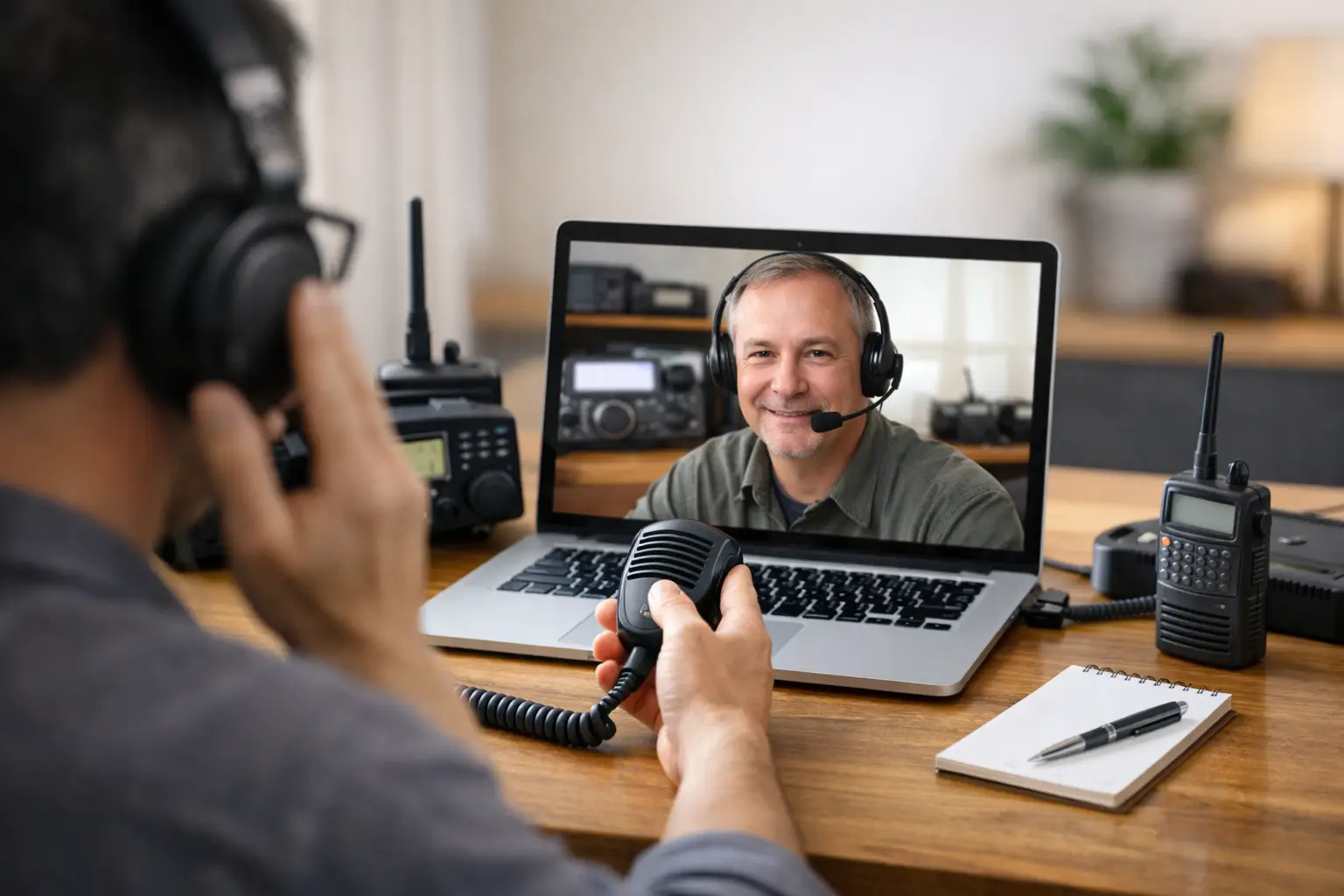
Before the exam begins, you join a video meeting at your scheduled time. Many teams use Zoom because it is familiar and works well for live proctoring. Once you connect, examiners walk you through check-in. That step often includes verifying your name, confirming your FCC Registration Number if you have one, and checking your photo ID or alternate identification documents if needed.
From there, the proctors review your testing space. This part matters because online ham radio exams still have to meet the same integrity standards as in-person testing. You may be asked to use your camera to show your desk, walls, floor area, and computer setup. Some sessions also require a second camera angle, often from a phone or tablet, so the examiners can see both you and your screen area while you test.
Once the room check is complete, the exam is delivered electronically. You answer the same pool-based FCC exam questions used nationwide. The number of questions and passing score depend on the license class. A Technician exam has 35 questions, and so does General. Extra has 50. In each case, you need to answer enough questions correctly to pass that element.
When you finish, the examiners score the test and tell you the result. One of the biggest benefits of remote testing is speed. In many sessions, you know right away whether you passed and whether you are eligible to attempt the next exam element that same day.
What you need before test day
Online ham radio testing is convenient, but it is not something to approach casually. A smooth session depends on having the right setup ahead of time.
You will usually need a reliable internet connection, a computer with a camera and microphone, and a quiet room where you can test alone. Some exam teams also ask for a smartphone or tablet to serve as a second camera. That extra view helps the proctors confirm that no unauthorized materials or assistance are in use.
You should also have your identification ready and any required registration details on hand. For most candidates, that includes an FCC Registration Number, often called an FRN. If you are brand new to amateur radio, you can create that before exam day. If you are upgrading an existing license, make sure your current information matches what the exam team expects.
A scratch paper policy can vary slightly by team. Some allow a blank sheet shown to the camera before the exam begins. Others use digital whiteboards or limit note-taking entirely. The key is to read the instructions sent after registration and follow them exactly.
Why the room scan and proctoring are so strict
Some candidates are surprised by how detailed the check-in process can be. That is understandable. Testing from home feels more relaxed than driving to a community center or club meeting, but the exam itself still has to be secure.
Volunteer Examiner teams are responsible for protecting the integrity of the license process. That means making sure the person taking the test is really the registered candidate, that no one else is in the room, and that unauthorized books, phones, browsers, or notes are not being used during the exam.
This level of oversight is a good thing. It protects the value of your license and keeps remote sessions nationally recognized and compliant. A well-run online exam should feel organized and professional, not intrusive for the sake of being difficult.
What the actual exam experience feels like
For most people, the exam itself is less intimidating than the idea of the exam. Once check-in is done, the session usually becomes very straightforward. You read each question, select your answer, and move through the exam at your own pace within the allowed time.
The question pool is public, so nothing on the test should be a mystery if you have studied. What changes online is not the content but the setting. You are taking the test in your own home, which can help reduce nerves. At the same time, being on camera and following proctor instructions can feel unfamiliar if you have never tested remotely before.
That is why a clear, supportive exam team makes such a difference. Good proctors explain each step, answer process questions before the exam starts, and keep the session moving without making candidates feel rushed. Middle Tennessee Exams, for example, is built around that balance of compliance and encouragement, which matters a lot for first-time test takers.
Can you take more than one exam in the same session?
Often, yes. If you pass your Technician exam, you may be allowed to attempt the General exam right away. If you pass General, you may be able to continue to Extra in the same sitting.
That said, it depends on the session structure, time available, and the exam team’s procedures. Some candidates come prepared for only one element. Others study for two or even all three and want to see how far they can go in one appointment. There is no single right approach.
If you are close to ready for the next level, same-session testing can be a smart option. If you are already anxious, focusing on one exam at a time may be the better call. The goal is not to force a perfect performance. It is to move forward with confidence.
What happens after you pass
After a successful exam, the Volunteer Examiner team completes the required paperwork and submits your result through the proper channels. For new applicants, your call sign is issued after the FCC processes the application. For upgrades, your new operating privileges may take effect once the FCC database reflects the change.
The timeline can vary a little, but online exam teams often move quickly. Candidates usually appreciate getting immediate confirmation that they passed, even though final FCC processing still happens afterward.
If you do not pass, that is not the end of the road. Depending on the session rules and available time, you may be able to pay a second exam fee and try again the same day. Even when that is not possible, you leave knowing exactly where you stand and what to study next.
Common concerns about online ham radio exams
The biggest question most people have is whether online exams are really accepted. The answer is yes, when they are administered by a properly authorized Volunteer Examiner team following established procedures. The exam you pass is the same FCC license element, not a lesser version.
Another concern is technology. What if your internet drops or your camera misbehaves? That is where preparation helps. Test your equipment in advance, charge your devices, and use the exact setup requested by the exam team. Most proctors are patient about normal hiccups, but serious technical problems can interrupt a session, so it is worth taking setup seriously.
Cost is also part of the decision. Some candidates assume online testing should be cheaper because there is no physical room involved. In reality, remote administration still requires trained examiners, scheduling, support, identity checks, and secure proctoring. What you are paying for is not just the test itself, but a compliant and well-managed exam experience.
Is online testing right for every candidate?
Usually, but not always. If you have dependable internet, basic comfort with video calls, and a quiet place to test, online exams are often the easiest path. They are especially helpful for people with limited local exam options, busy work schedules, mobility concerns, or long travel times.
Still, some candidates prefer in-person sessions. If technology makes you uneasy or your home environment is too busy for a private exam, face-to-face testing may feel simpler. The best option is the one that lets you focus on the questions instead of the logistics.
For many aspiring hams, though, remote testing removes the biggest barrier between studying and actually getting licensed. When the process is clearly explained and professionally run, taking your exam from home can feel less like a workaround and more like the straightforward, modern option it has become.
If you are ready to test, the most helpful thing you can do is choose a session, read the instructions carefully, and trust that a good exam team wants the same thing you do – a fair, smooth experience that gets you on the air with confidence.