If you have been putting off your license because the local exam date is weeks away or the nearest session means a long drive, learning how to schedule ham exam appointments online can remove a major barrier. For many candidates, the hardest part is not the test material – it is figuring out where to register, what to prepare, and whether the process is legitimate. The good news is that remote amateur radio testing is now a reliable, ARRL-supported option when administered by qualified exam teams.
How to schedule ham exam appointments without confusion
The scheduling process is usually straightforward once you know what exam teams need from you. Most remote exam providers post available sessions online, along with the exam fee, the video platform they use, and the instructions you must follow before test day. Your job is to choose a session that fits your schedule, register accurately, and make sure your testing setup meets the requirements.
That sounds simple, but a few details matter. If you enter the wrong name, use an email address you rarely check, or wait until the last minute to gather your FCC Registration Number, you can create unnecessary stress for yourself. A smooth exam starts with a clean registration.
Before you book, confirm which license class you plan to take. New operators typically start with the Technician exam. If you already hold a Technician license and want expanded HF privileges, you may be scheduling the General exam. If you are ready for the top-level license, Extra is the next step. Some candidates choose to attempt more than one element in the same session, but that depends on your preparation and the exam team’s process.
What you need before you schedule a ham exam
A little preparation makes scheduling much easier. In most cases, you should have your FCC Registration Number, a legal photo ID, and a reliable email address ready before you reserve a seat. If you already hold an amateur radio license, keep a copy of your current license available too, especially if you are testing for an upgrade.
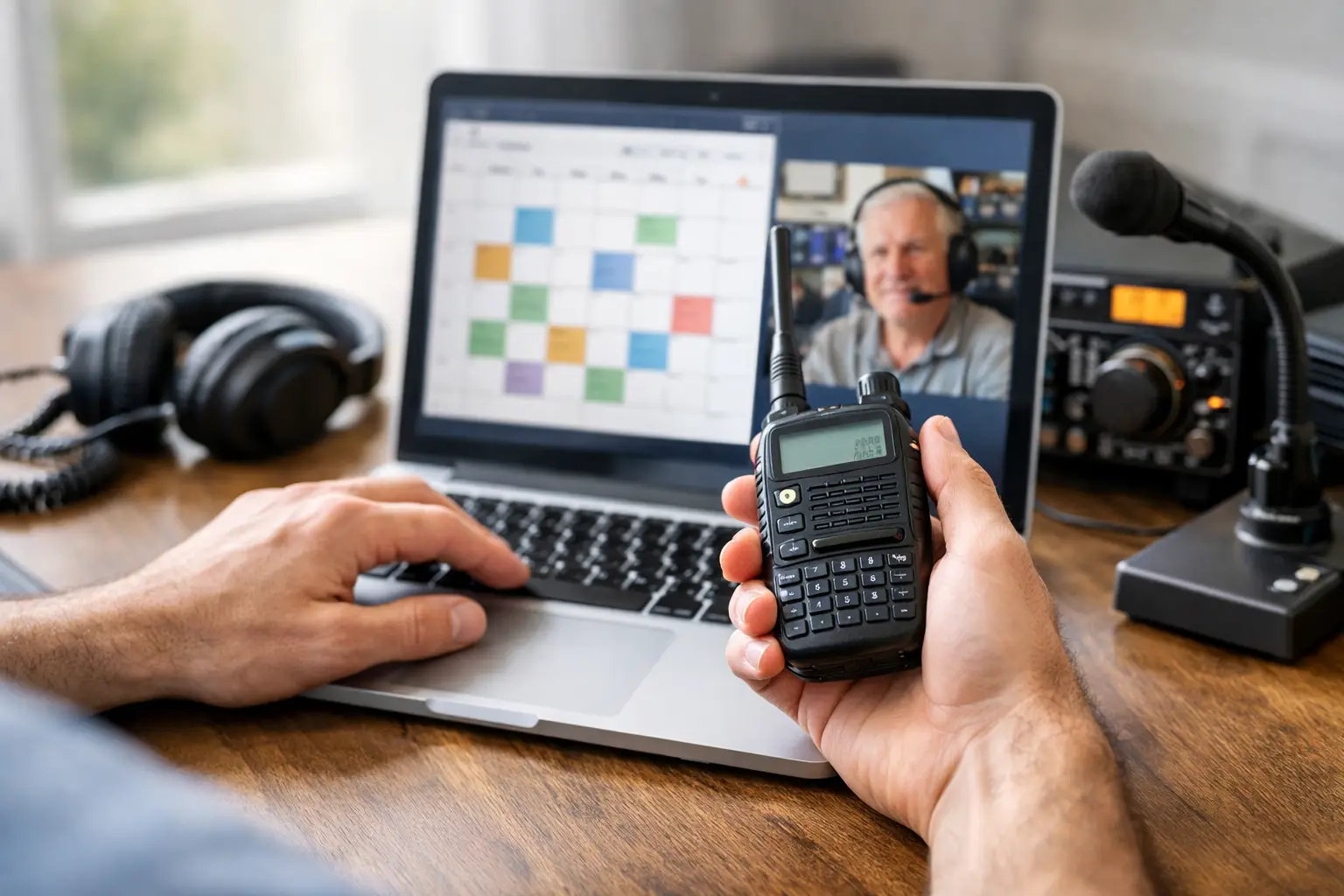
You will also want to check your equipment. Remote exams are commonly conducted over Zoom or a similar platform, so you need a computer, stable internet connection, webcam, and microphone. Some teams also require a smartphone or second camera so proctors can view your testing space from another angle. This is not meant to make the process difficult. It is part of maintaining exam integrity while allowing you to test from home.
Just as important is your test environment. A remote session typically requires a quiet room, a clear desk, and no unauthorized materials within reach. If your household is busy, schedule a time when you can control interruptions. Convenience is one of the biggest advantages of online testing, but convenience works best when your setup is ready.
Where candidates usually get stuck
The most common scheduling problems are not technical. They are logistical. Candidates often wait to register until the night before a preferred session, only to find it full. Others assume they can use a nickname instead of their legal name or forget to obtain an FRN in advance. Some do not read the confirmation email carefully and miss important setup instructions.
This is why a professional exam team matters. A well-run remote session should give you clear pre-exam instructions, explain what identification is accepted, tell you how payment works, and let you know what to expect on exam day. The more organized the process, the less mental energy you waste on guessing.
If a provider is unclear about procedures, that is worth noticing. Amateur radio exams are serious FCC-administered steps, even when they are delivered remotely. You want a team that balances a friendly experience with strict compliance.
Step by step: how to schedule ham exam sessions online
Start by finding an ARRL-certified or otherwise properly accredited exam team that offers remote testing in the United States. Review the available session dates and pick one that gives you enough time to prepare without pushing your exam so far out that you lose momentum.
Next, complete the registration form carefully. Use your full legal name exactly as it appears on your identification. Enter your FRN correctly, double-check your email address, and select the right exam element. If the system asks whether you are a new candidate or upgrading an existing license, answer that accurately too.
After registration, pay the exam fee if payment is collected in advance. Many online teams use secure digital payment methods as part of the scheduling workflow. Once you are confirmed, look for a confirmation email with instructions about Zoom access, identification requirements, room setup, and any forms you need to complete before the session.
Then, do not stop at booking. Put the exam on your calendar, test your camera and microphone, and read every instruction at least once before test day. Candidates who treat scheduling as the final step often feel rushed later. Scheduling is really the start of a short preparation checklist.
Choosing the right remote exam session
Not every available time slot is the best fit. If you work full time, an evening or weekend session may help you test when you are most alert. If you are easily distracted at home, an early morning slot may give you a quieter room and fewer interruptions.
There is also a preparation trade-off. Booking the earliest possible date can help you stay focused, but if you are still missing practice questions on core topics, a little extra study time may improve your odds. On the other hand, waiting too long can lead to procrastination. The best date is usually one that keeps your momentum while still giving you time to prepare your workspace and documents.
If you are considering taking both Technician and General in one sitting, be realistic. Some candidates pass both with good preparation, while others do better by focusing on one element at a time. There is no shame in choosing the pace that gives you the best chance of success.
What happens after you schedule
Once your exam is booked, the next phase is simple: prepare for the session itself. You should receive detailed instructions about when to join, how check-in works, and what proctors will need to see. In a compliant remote session, the volunteer examiners will verify your identity, review your room and desk setup, and explain the testing rules before the exam begins.
This process often feels less intimidating than candidates expect. A good team will be professional and orderly, but also calm and helpful. Their goal is not to catch you doing something wrong. Their job is to run a valid exam session, answer process questions, and help you move through the experience with confidence.
Many candidates are pleasantly surprised by how efficient remote testing can be. Instead of driving across town, sitting in an unfamiliar room, and waiting for paperwork to move, you can test from home in a controlled environment. That convenience is especially valuable for busy professionals, retirees with limited local options, and candidates in rural areas.
Why online scheduling works so well for ham candidates
The biggest benefit is flexibility. Traditional in-person sessions are still valuable, but they may be offered only occasionally, and the dates may not line up with your schedule. Online scheduling gives you more options and more control.
It also reduces friction. When you can register online, pay online, receive instructions by email, and test from home, the path to earning or upgrading your license becomes more manageable. That matters because many people who would make excellent amateur operators delay testing simply because the logistics feel inconvenient.
A structured remote process can also lower stress. When expectations are clear and support is available, the experience feels less like navigating a maze and more like completing a well-organized appointment. That is exactly what most candidates want – a legitimate testing process that respects both the rules and their time.
For candidates looking for a dependable remote option, Middle Tennessee Exams reflects that standard with ARRL-certified online sessions, clear communication, and a supportive process designed to make testing from home feel organized and approachable.
A few final checks before test day
The day before your exam, confirm the session time, charge your devices, and gather your ID and FRN. Clear your desk, let others in your home know you need quiet, and join the meeting a few minutes early. Small steps like these can make the session feel much easier.
If you have questions before the exam, ask them before test day rather than making assumptions. Good exam teams expect that. They would much rather clarify a requirement in advance than have you scrambling at check-in.
Getting licensed in amateur radio should feel like the start of something exciting, not a paperwork obstacle. Once you understand how to schedule ham exam sessions online, the process becomes much more approachable – and often much faster than people expect. Pick a date that fits your life, prepare your setup, and give yourself the chance to get on the air.