If the idea of earning your FCC amateur radio license sounds appealing but driving across town for a test session does not, the good news is simple: you can get a ham license from home. For many new operators and upgrade candidates, remote testing has removed the biggest barrier between studying and actually sitting for the exam.
That convenience matters more than people sometimes admit. Life gets busy. Local exam sessions may be infrequent, booked up, or held at times that do not work for your schedule. When online testing is administered correctly by an ARRL-certified team, it gives you a legitimate, standards-based path to your Technician, General, or Extra exam without sacrificing exam integrity.
What it means to get a ham license from home
A ham license from home does not mean a shortcut or a less official test. It means you take the same FCC amateur radio exam through a remote session that follows established procedures, with trained volunteer examiners observing the process online.
In practice, that usually means joining a scheduled video session, verifying your identity, showing your testing space, and completing your exam under remote proctoring rules. The questions come from the same published pools used in in-person sessions. Passing scores are the same. The license you earn is the same FCC license.
That distinction is important because some candidates still assume online testing is informal or somehow easier. It is not easier in the sense of lower standards. It is easier in the sense that the logistics are simpler. You can focus on the exam instead of the drive, the parking, and whether you found the right church basement or community center.
Why more candidates choose a ham license from home
For first-time test takers, convenience is usually the first reason. For experienced operators upgrading to General or Extra, it is often about speed and flexibility. If you have already done the studying, waiting weeks for a nearby session can feel unnecessary.
There is also a comfort factor. Testing from home can reduce nerves because you are in a familiar space. That does not mean the process is casual. You still need to follow instructions carefully. But many candidates find they think more clearly when they are not rushing into an unfamiliar room with a dozen other people.
Remote testing also helps candidates who live in rural areas or places with fewer local exam opportunities. It can be a strong fit for busy professionals, retirees who prefer not to travel, and emergency communications volunteers who want to get licensed or upgraded on a practical schedule.
The trade-off is that remote testing asks a bit more of your setup. You need reliable internet, a quiet room, and the ability to follow technical instructions. For most people that is manageable, but it is worth knowing in advance.
What you need before your online exam
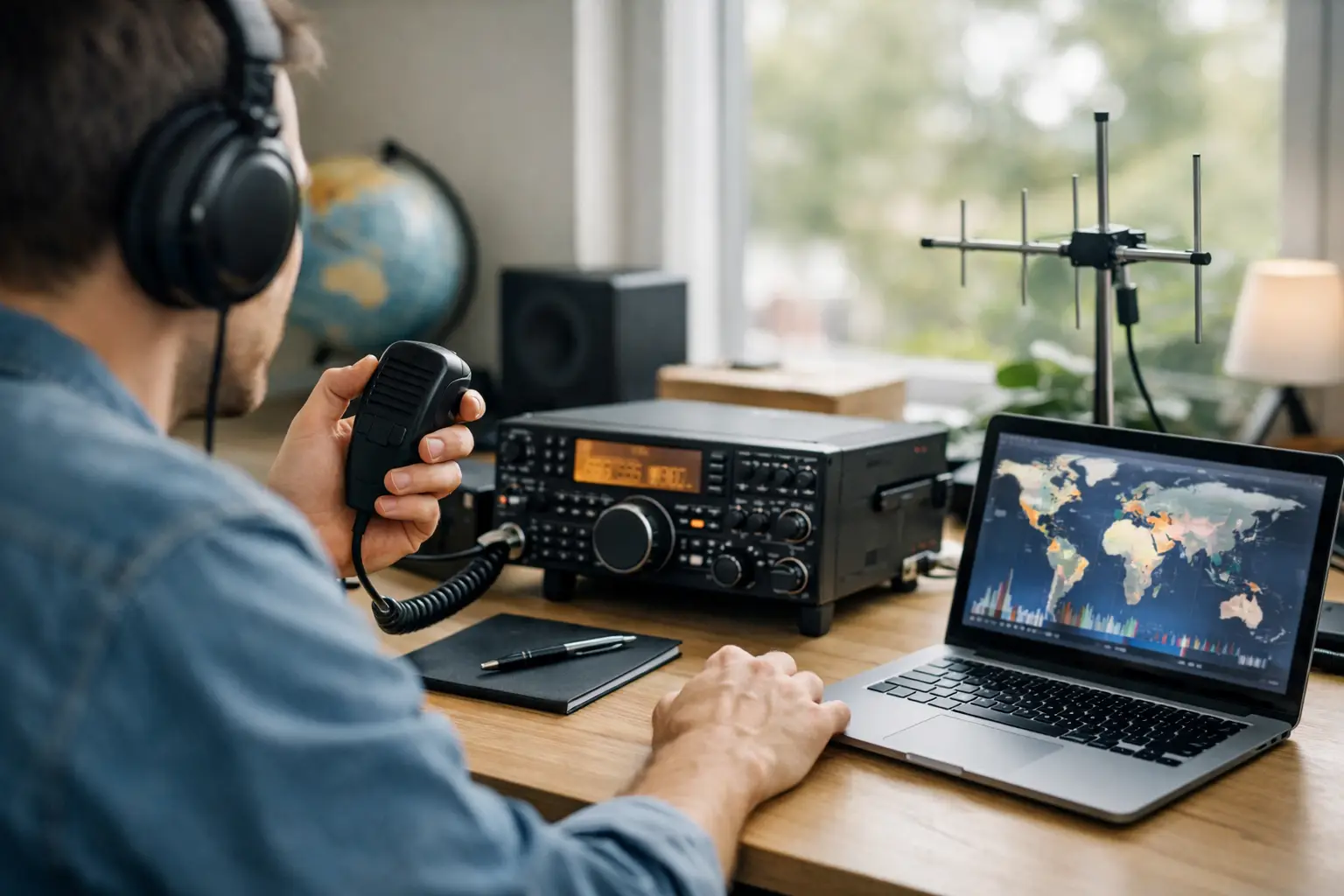
The basic requirements are straightforward. You will need a computer or device that supports the exam platform, a camera and microphone, a stable internet connection, and a quiet private space where proctors can monitor the session.
You will also need a legal photo ID and an FCC Registration Number, often called an FRN. If you are upgrading, you may need to provide proof of your current license status or any required paperwork connected to prior exam credit. A good exam team will tell you exactly what to prepare before your appointment so there are no surprises.
Your room setup matters more than many people expect. The testing area usually needs to be clear of notes, extra screens, radios, and anything else that could create a compliance issue. Remote exam teams are not trying to make the process difficult. They are protecting the integrity of the exam and making sure all candidates are held to the same standard.
If you are unsure whether your setup will work, ask ahead. That is much better than guessing on exam day.
How the remote exam process usually works
Most online amateur radio exams follow a consistent flow. You schedule a session, receive instructions, and join at the assigned time. At check-in, the exam team confirms your identity and reviews your room and equipment.
Once the proctors are satisfied that the setup meets requirements, the exam begins. During the session, you may be asked to keep your camera positioned so the team can see you and your workspace. You will also need to follow directions about when to speak, when to stay on camera, and what to do if there is a technical issue.
After you finish, the exam team scores the test and lets you know the result. If you pass, you may have the chance to move directly to the next element if you are prepared and the session format allows it. That can be a major advantage for someone who wants to earn more than one class of license efficiently.
This is where a well-run team makes a real difference. A professional remote session feels organized, calm, and clear. Candidates should know what is happening at each step. Middle Tennessee Exams is one example of a service built around that kind of low-stress, standards-driven experience.
Common concerns about taking the exam from home
The biggest concern is usually legitimacy. People want to know whether an online exam really counts. It does, provided it is administered through a properly certified volunteer examiner team following accepted procedures.
The second concern is technology. Candidates worry that one glitch will ruin the session. Sometimes problems do happen. Internet connections can drop. Audio can fail. A camera setting can misbehave at the worst moment. The best way to reduce that risk is to test your equipment beforehand and read all pre-exam instructions carefully. Experienced exam teams also know how to handle minor issues without turning them into a crisis.
Another concern is test anxiety. Some people actually feel more pressure online because they are thinking about both the exam and the technology. If that sounds like you, do a practice run. Set up your desk, test your camera, and sit in the space where you will test. Familiarity helps.
How to prepare for a ham license from home
Study for the exam itself first. The remote format should not become your main focus. If you are going for Technician, spend your time learning the question pool, basic operating practices, regulations, and radio fundamentals. For General and Extra, build the same kind of consistency in your study plan.
As exam day approaches, shift some attention to logistics. Read every email from the exam team. Make sure your identification is ready. Confirm your FRN. Clear your room. Charge your device. Close unrelated apps and disable notifications that could interrupt the session.
It also helps to treat the appointment like any other important test. Log in early. Do not multitask beforehand. Keep a glass of water nearby if allowed, and give yourself a few quiet minutes to settle in.
If you are upgrading, decide in advance whether you want to attempt the next exam element if you pass. Some candidates are ready and benefit from the momentum. Others prefer to take one step at a time. Either approach is fine.
Is online testing right for everyone?
Usually, yes, but not always. A ham license from home is ideal for candidates who value convenience, have a reliable internet setup, and want more scheduling flexibility. It is especially helpful when local in-person sessions are limited or difficult to reach.
That said, some candidates still prefer in-person testing. If technology makes you uneasy, your home environment is hard to control, or your internet service is unreliable, a local face-to-face session may feel easier. There is nothing wrong with that. The goal is to choose the format that gives you the best chance to test confidently and fairly.
For many people, though, remote testing removes just enough friction to help them stop postponing the next step. That can be the difference between saying you want to get licensed and actually getting on the air.
The real benefit is momentum
What makes online amateur radio testing so valuable is not just comfort or convenience. It is momentum. When candidates can study, schedule, test, and receive results without weeks of delay or unnecessary travel, they are more likely to follow through.
That matters for the hobby and for the broader amateur radio community. Every new Technician adds another voice, another operator, another person learning how radio works. Every General or Extra upgrade opens more operating opportunities and deepens that person’s involvement.
If you have been putting off your exam because the old process felt inconvenient, this is a good time to rethink it. A ham license from home gives you a practical, recognized, and supportive way to move forward – and once you take that first step, the rest of the journey tends to feel much closer.