Choosing between ARRL vs W5YI exam sessions can feel more complicated than it needs to be, especially when your real goal is simple: earn your first amateur radio license or move up to General or Extra. Both paths can lead to a valid FCC amateur radio license. The better choice usually comes down to the individual exam team, its schedule, its testing format, and how clearly it supports you before test day.
For most candidates, the name of the Volunteer Examiner Coordinator, or VEC, matters less than the quality and availability of the session. A well-run remote exam gives you a quiet place to test from home, clear instructions, qualified volunteer examiners, and prompt confirmation of your result. Understanding what is standardized and what can vary will help you choose with confidence.
What ARRL and W5YI Actually Do
ARRL VEC and W5YI-VEC are both FCC-recognized Volunteer Examiner Coordinators. A VEC coordinates volunteer examiner teams, manages the required testing procedures and paperwork, and submits successful exam information for FCC license processing.
The exam itself is not written by ARRL or W5YI. Technician, General, and Amateur Extra exam questions come from the published FCC question pools used throughout the amateur radio testing system. Whether you take a Technician exam with an ARRL-affiliated team or a W5YI-affiliated team, you are working toward the same FCC license privileges.
That point removes a common concern: passing through one VEC does not create a lesser license, a different call sign category, or different operating authority. Your FCC license is the same regardless of which qualified VEC-coordinated session you use.
Where the organizations can differ is in their administrative systems, policies for their examiner teams, session fees, paperwork workflow, and remote testing procedures. Those differences can influence your experience, but they do not change the license you earn.
ARRL vs W5YI Exam Sessions: What Stays the Same
The central testing standards are remarkably consistent. Candidates must prove their identity, complete the appropriate application information, work under the supervision of accredited Volunteer Examiners, and pass the required exam element. The passing score is 74 percent, which means 26 correct answers out of 35 questions for each current written exam element.
Both systems use trained volunteer examiners and follow FCC rules designed to protect the integrity of the testing process. You should expect to show a government-issued photo ID if you are an adult, use the required FCC Registration Number, or FRN, and follow instructions about your test area and permitted materials.
You should also expect a Certificate of Successful Completion of Examination, often called a CSCE, after passing. In an organized online session, candidates commonly receive confirmation shortly after the exam is graded. The timing of when a new license or upgrade appears in the FCC database can vary because it depends on successful submission and FCC processing.
For a first-time applicant, the FCC may also require an application fee. Fees and fee policies can change, and upgrades, renewals, and new applications may not be treated the same way. Confirm the current requirements before your session so there are no surprises after you pass.
Where Your Experience May Differ
Remote testing rules and technology
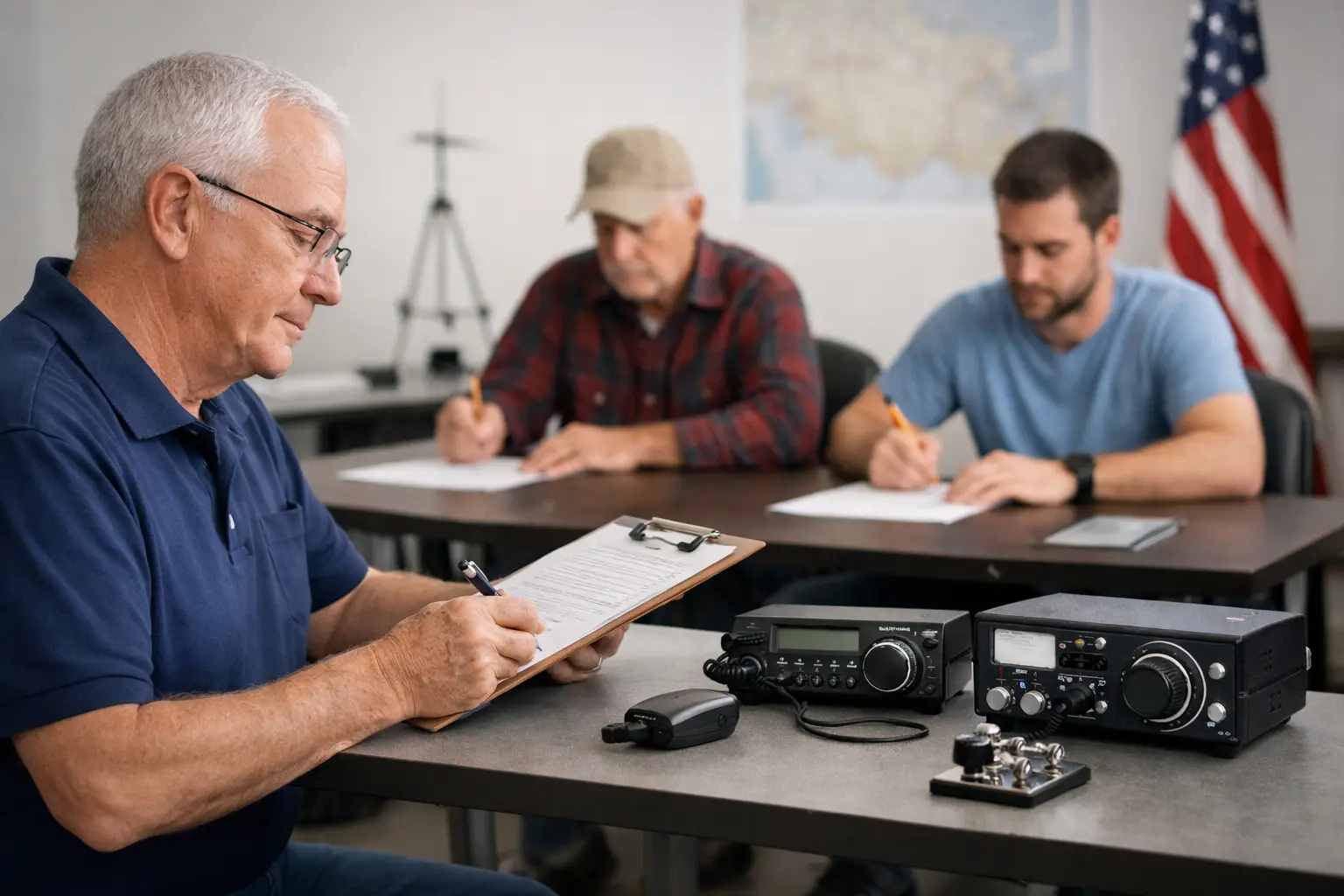
Online testing is one area where the individual team matters greatly. Some teams offer only in-person sessions. Others offer remote sessions but on a limited schedule or with specific equipment requirements. A remote session may ask you to use a computer with a webcam, stable internet, a smartphone camera for a second view, Zoom or another approved meeting platform, and a private testing space.
The requirements are not there to make the process intimidating. They allow the Volunteer Examiners to verify your identity, inspect your work area, and maintain fair conditions for every candidate. A professional team should tell you what to prepare before exam day and give you time to ask questions if your setup is unusual.
MidTENN Nationwide Testing administers ARRL-coordinated remote sessions using a structured Zoom process designed to make those requirements clear while keeping the experience welcoming. That combination can be especially helpful for candidates who have limited local testing options or who would rather not travel to an in-person session.
Scheduling and access
A nearby ARRL or W5YI session may be the right fit if it is convenient, frequent, and has a strong local reputation. But for many working adults, rural candidates, caregivers, and people with mobility or transportation challenges, the closest session may be weeks away or involve a long drive.
Remote testing changes that calculation. Instead of choosing only from teams in your county, you can look for a qualified online session with an available appointment and clear candidate support. The key is not to assume that every VEC-affiliated team offers the same availability. Check the actual dates, time zones, registration process, and whether the session is remote or in person.
Fees and payment procedures
Exam session fees are another practical difference. VECs and individual teams may have different fee structures, accepted payment methods, rescheduling policies, and rules for retakes during the same session. Do not select a session based on an old forum post or a years-old price listing. Verify the current fee directly with the team before registering.
A lower fee may be meaningful, but it should not be the only factor. A session that provides detailed preparation instructions, timely replies, flexible appointments, and a calm proctoring process can be a better value than one that saves a few dollars but leaves you uncertain about what to expect.
Communication before the exam
This is often the difference candidates remember. The FCC content standards may be the same, yet the human experience can be very different. A helpful team explains what identification to bring, how to obtain or locate your FRN, what calculators are allowed, how to prepare your room, and what happens if you pass or need to retest.
For a first-time Technician candidate, clear communication can reduce much of the anxiety associated with a formal exam. For an experienced operator pursuing Extra, it can prevent administrative delays and let you focus on the technical material you studied.
How to Choose the Right Exam Session
Start by deciding whether you want remote or in-person testing. If you have reliable internet, a suitable computer and camera setup, and a quiet room, remote testing can be the most convenient option. If you prefer face-to-face assistance or do not have the needed technology, an in-person team may feel more comfortable.
Then look beyond the VEC name. Review the session’s next available date, the instructions it provides, its stated fee, and how you can get help before the appointment. A legitimate, candidate-focused team will be transparent about the process. You should not have to guess what equipment is needed or whether your registration was received.
It also helps to match the session to your licensing goal. Technician candidates often benefit from extra guidance about FRNs, identification, and first-time FCC processing. General and Extra candidates may care more about scheduling flexibility, quick confirmation of an upgrade, and whether they can test for additional elements if they pass.
If you are comparing a local W5YI session with an online ARRL session, there is no universal winner. The local W5YI team may be ideal when its date and location work for you. An ARRL-coordinated online session may be better when travel, distance, or a tight schedule is the obstacle. The right answer is the session that meets FCC standards while giving you a realistic, low-stress path to sit for the exam.
A Few Details Worth Confirming Before You Register
Before committing to any session, confirm four practical details: whether it is remote or in person, the current session fee, the equipment or identification requirements, and the expected post-exam process. Ask whether the team provides a CSCE promptly after a pass and what you should do if you are testing for an upgrade.
If you are testing remotely, take the setup instructions seriously. Charge your phone if it will be used as a second camera, choose a quiet room, clear unauthorized materials from your desk, and test your internet connection ahead of time. These small preparations help the session begin on schedule and let you focus on the questions rather than the technology.
The most useful way to think about ARRL vs W5YI exam sessions is not as a contest between two different licenses. It is a choice between available, qualified testing teams. Pick the one that communicates clearly, fits your schedule, protects exam integrity, and gives you the encouragement to take the next step in amateur radio.