A licensing exam should test your amateur radio knowledge, not your ability to drive across town on a Saturday morning. When comparing video proctoring versus in person testing, the best choice often comes down to your schedule, comfort with technology, local availability, and the kind of support that helps you perform at your best.
Both formats can provide a legitimate path to an FCC amateur radio license or upgrade when administered by qualified volunteer examiners under the applicable rules. The difference is not whether one format is “real” and the other is less serious. The difference is how the exam session is organized, what you need to prepare, and where you feel most at ease.
Video Proctoring Versus In Person: The Core Difference
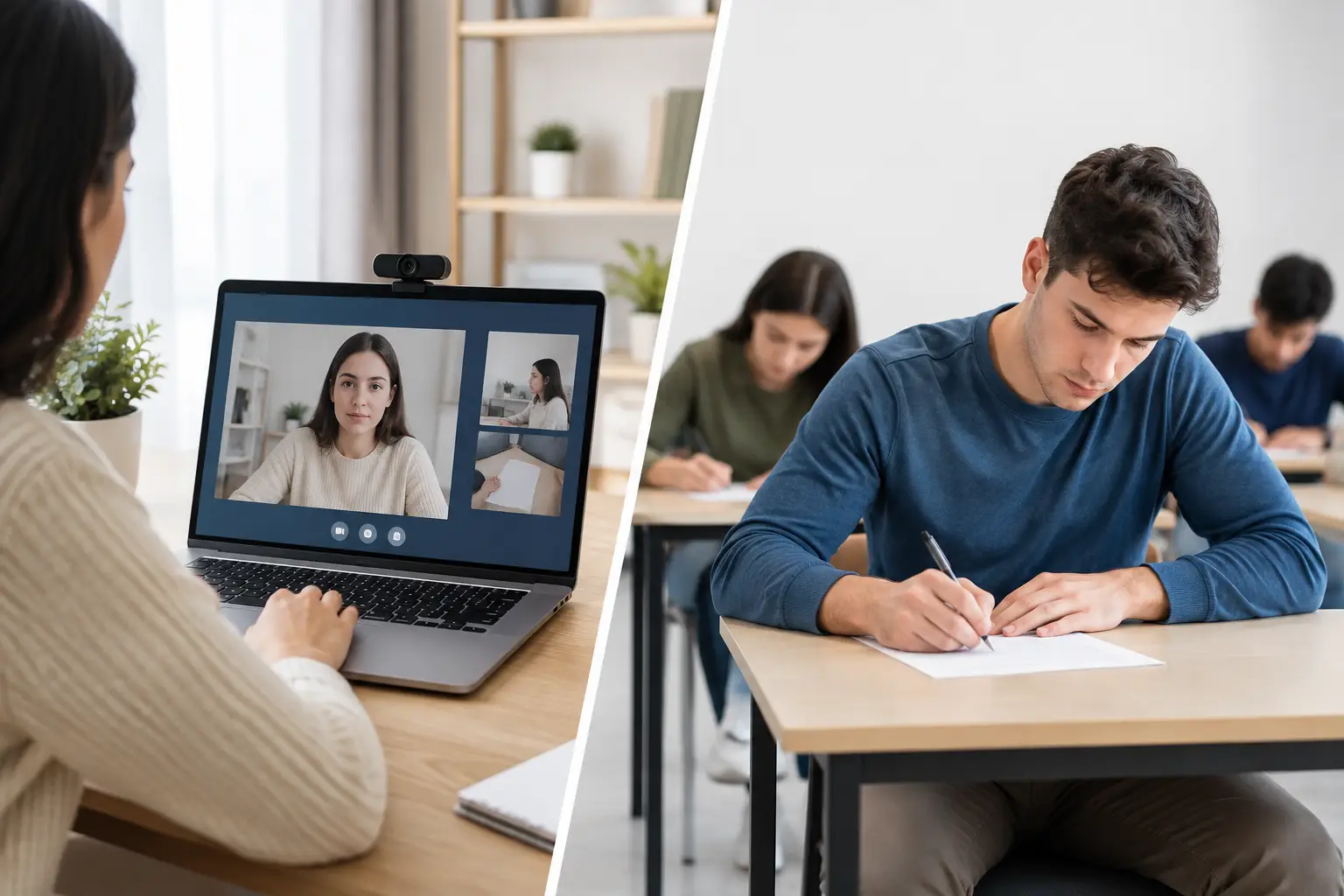
An in-person exam places you in the same room as the volunteer examiners. You arrive at a scheduled location, provide the required identification and application information, complete the exam, and receive your result from the testing team.
A remotely proctored exam brings that supervised experience to your home or another suitable private location. You join a scheduled online session, typically by video conference, show your testing space and permitted materials as instructed, and remain on camera while volunteer examiners oversee the process.
The integrity standard matters in both cases. In either format, examiners must verify your identity, protect the exam materials, follow the established procedures, and document the result correctly. Remote testing does not eliminate those responsibilities. It simply uses cameras, screen-sharing procedures where required, and clear candidate instructions to meet them from a distance.
Why Candidates Choose Video Proctoring
For many aspiring hams, convenience is the deciding factor. Local exam sessions may be held only once or twice a month, may fill quickly, or may require a long drive. That can be frustrating when you have finished studying and are ready to earn your Technician license, move to General, or take on the challenge of Extra Class.
Remote sessions can offer broader scheduling options without requiring travel. This is especially helpful for working professionals, caregivers, rural candidates, people with mobility limitations, and operators who live far from an active local testing team. Instead of planning around fuel, traffic, weather, and a meeting hall, you can focus on being ready for the exam.
Taking the test in a familiar setting can also reduce anxiety. You still need a quiet, compliant testing space, but you are not walking into an unfamiliar room full of people. For a first-time candidate, that sense of control can make the process feel more manageable.
There is another practical benefit: results are often communicated immediately after the exam is graded. A passing candidate can celebrate the accomplishment right away and understand the next steps in the licensing process. Keep in mind that passing an exam is not the same as receiving an active FCC license or upgraded operating privileges. The examination paperwork must still be processed and the FCC database must be updated before you operate under new privileges.
What Remote Testing Requires From You
Convenience does not mean no preparation. Video-proctored testing asks candidates to prepare their space and equipment before the session begins. A dependable internet connection, a computer with a camera and microphone, and a smartphone or secondary camera may be needed depending on the testing team’s procedure.
You also need a private, well-lit area where the examiners can clearly observe your workspace. The desk or table should be clear except for allowed items. During check-in, you may be asked to show the room, your desktop, and the area around you. That step protects you as much as it protects the testing process: it demonstrates that every candidate is working under the same rules.
Remote testing can be a poor fit if your internet is unreliable, your home is consistently noisy, or you do not have a suitable device setup. It may also feel stressful for someone who strongly dislikes video calls or troubleshooting technology. Those are reasonable concerns, not personal shortcomings. In that situation, an in-person session may be the more comfortable choice.
A well-run remote team should provide clear instructions before your appointment and be available to answer practical questions. At MidTENN Nationwide Testing, the goal is to make candidates feel prepared before the session starts, while maintaining the careful procedures an ARRL-certified exam process requires.
The Strengths of In-Person Amateur Radio Exams
In-person testing remains an excellent choice for many people. The biggest advantage is simplicity at the moment of the exam. You do not need to manage camera positioning, video software, room scans, or your own internet connection. You arrive with the requested documents and permitted materials, then the examiners guide you through the process face to face.
For candidates who are not comfortable with computers, an in-person session can remove a major source of stress. It can also be helpful if you need direct clarification about a procedural step, have a technical issue with your application paperwork, or simply prefer speaking with people in the room.
Local exam sessions also create a community connection. Amateur radio clubs often host them, and meeting local operators can be a welcoming introduction to the hobby. You may learn about nearby repeaters, nets, public service opportunities, emergency communications groups, or local mentoring. That personal interaction has real value, particularly for newcomers who want to build relationships as well as earn a call sign.
The trade-off is availability. You may have fewer dates to choose from, and the site may be some distance away. Weather, transportation, work schedules, and family obligations can turn an otherwise straightforward appointment into a logistical challenge.
Exam Integrity Is Not a Format Preference
Some candidates wonder whether a remote amateur radio exam is as legitimate as an in-person exam. The answer depends on the examining organization and whether the session follows approved procedures, not on whether the candidate is sitting at a kitchen table or in a club meeting room.
Qualified volunteer examiners are responsible for maintaining exam security and following the rules in every setting. In person, that may involve seating arrangements, observation, and controlled handling of materials. Online, it involves identity verification, camera views, a scan of the testing environment, and ongoing supervision. The tools differ, but the purpose is the same: an earned license should reflect the candidate’s own knowledge.
Candidates should be cautious about any service that makes the process sound casual, secretive, or free from oversight. A legitimate session will explain its requirements plainly. It will not promise shortcuts, guarantee a passing score, or treat compliance as an inconvenience.
How to Decide Which Format Fits You
Start with your practical circumstances. If travel is difficult or local sessions are scarce, video proctoring may give you the quickest, most accessible route to testing. If you have reliable technology and a quiet private room, the setup is usually a manageable part of the appointment.
If you would rather avoid online tools or you value meeting a local club and exam team, an in-person session may be more appealing. It is also a sensible choice when your home environment cannot meet remote testing requirements.
Your confidence level matters, too. Some candidates feel calmer in their own space. Others find reassurance in having the examiners physically present. Neither preference says anything about your readiness for the question pool. The right format is the one that lets your preparation take center stage.
Do not wait until exam day to think through the details. For an online session, test your camera, microphone, internet connection, and lighting ahead of time. Read the instructions carefully and clear your workspace early. For an in-person appointment, confirm the location, arrival time, accepted payment method if applicable, required identification, and any materials you need to bring.
A Better Test Experience Starts Before the First Question
Whether you choose remote or in-person testing, preparation is more than memorizing answers. Review the current question pool, practice under timed conditions, and become comfortable with the exam rules. If you are upgrading, spend extra time on the topics that require calculation, regulations, or operating judgment rather than relying only on repeated practice-test scores.
Give yourself permission to ask procedural questions before the session. A professional testing team wants candidates to understand check-in requirements, not guess at them. Clear expectations lower stress and help the session stay fair for everyone.
The best exam format is the one that gives you a legitimate, well-supported opportunity to show what you know. Choose the setting that removes unnecessary obstacles, prepare carefully, and let your knowledge carry you toward your next amateur radio privilege.