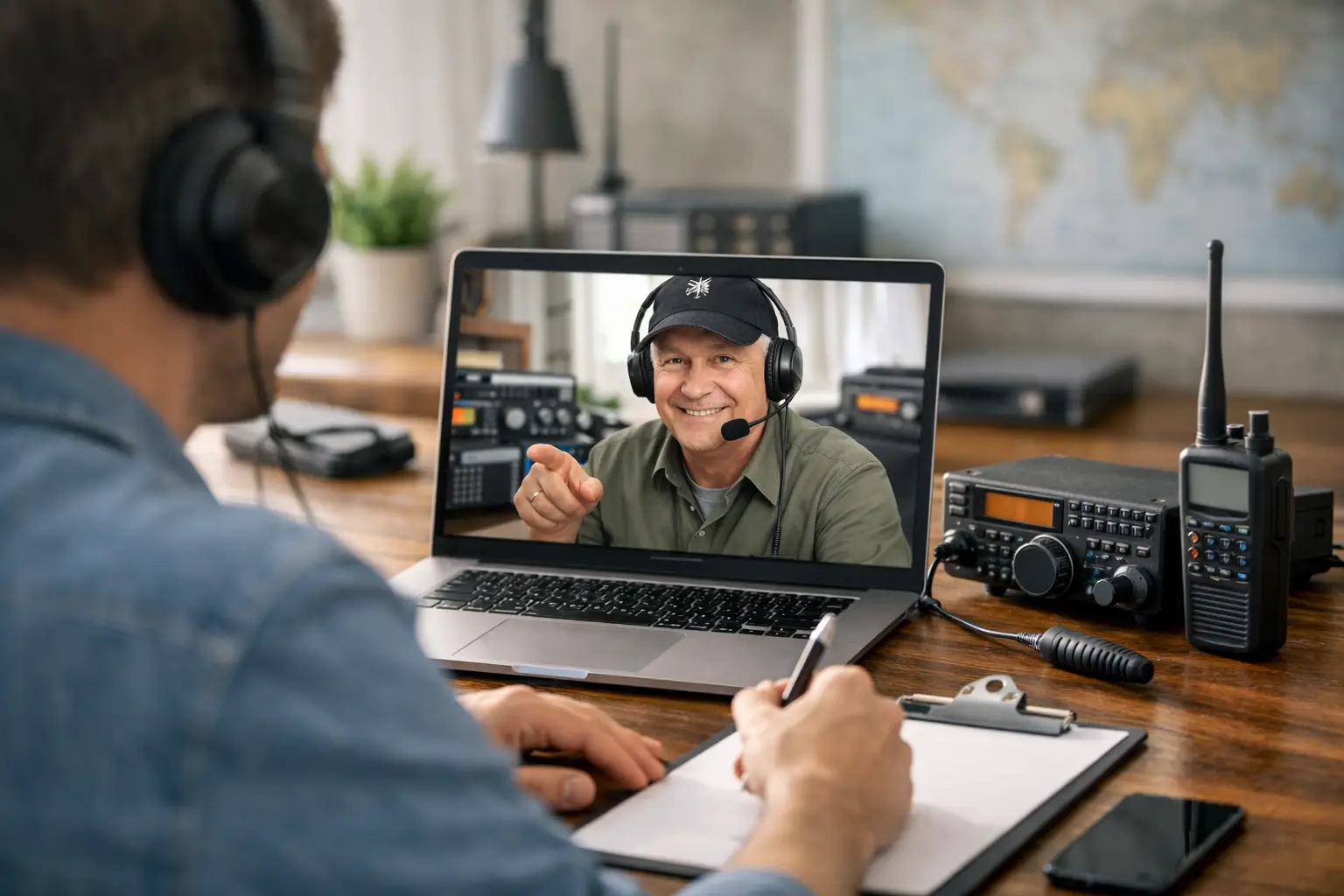
The best testing location may already be on your desk. An online exam session for ham license candidates lets you pursue your Technician, General, or Extra Class credential without planning a drive, waiting for the next nearby session, or trying to fit travel into a busy week. You still take a real FCC amateur radio examination under qualified supervision. The difference is that the testing team brings the session to you through a structured remote process.
For many future operators, that convenience removes the biggest barrier to getting started. But remote testing is not casual testing. A successful session depends on preparation, a suitable workspace, and a clear understanding of what the proctors need to see. Knowing what to expect can replace last-minute stress with confidence.
What an Online Exam Session for Ham License Involves
A remote amateur radio exam session uses live video conferencing and remote proctoring to preserve the same standards expected at an in-person examination. You join the scheduled session from a computer with a camera, microphone, and dependable internet connection. Volunteer examiners verify your identity, observe the testing environment, explain the rules, and supervise the exam while you complete it online.
The process is designed to protect exam integrity while making access easier for candidates across the United States. ARRL-certified volunteer examiners follow established procedures, including identity verification and secure handling of results. The setting may be your home office, kitchen table, or another quiet room, but the standards remain serious.
That combination matters. A legitimate online session should feel organized and professional, not improvised. You should receive clear instructions before your appointment, know what equipment and identification to bring, and have a way to ask questions if something is unclear. Middle Tennessee Exams provides that kind of structured, supportive experience for candidates who want a convenient path to licensing or an upgrade.
Before Your Session: Prepare the Room and Your Equipment
Remote testing works best when you treat your appointment like a formal exam, not a quick video call. Choose a private, quiet, well-lit room where you can work without interruption. Let family members or roommates know you need uninterrupted time. Pets, deliveries, phone calls, and background conversations can all create avoidable distractions.
Your desk or table should be clear. Proctors need to see that you do not have unauthorized materials available during the test. Remove study guides, handwritten notes, extra electronics, and anything else that could raise a question. In most cases, you may use a basic calculator only if the session instructions permit it, but confirm the rules ahead of time rather than making assumptions.
A computer is generally the best choice for a remote exam. It provides a stable camera view and enough screen space to work comfortably. Test your camera, microphone, speakers, and internet connection before exam day. Position the camera so your face is visible and make sure you can move it if the proctors ask for a view of the room, desk, or surrounding area.
Have your government-issued photo ID ready. If you are new to amateur radio, you will also need an FCC Registration Number, commonly called an FRN. Candidates upgrading an existing license should have their current call sign and license information available. Review your confirmation message carefully because session requirements can vary slightly based on the examination system and your candidate status.
What Happens When You Join the Remote Testing Room
Plan to join a few minutes early. Arriving early gives you time to resolve a browser setting, camera permission, or audio issue without feeling rushed. It also shows respect for the volunteer examiners and other candidates who may be scheduled in the same session.
Once connected, the examiners will greet you and guide you through check-in. Expect them to confirm your identity, verify your contact information, and review the testing rules. They may ask you to use your camera to show the room, desktop, monitor area, and any nearby spaces. This is a normal part of remote proctoring. It is not a judgment of your home or workspace. It is simply how the team confirms that every candidate receives a fair examination.
The proctors may also explain what to do if your connection drops or if you experience a technical problem. Listen carefully before the exam begins. A calm response to a problem is easier when you already know the procedure.
During the exam, remain on camera, follow the directions you were given, and avoid communicating with anyone else. If you have a question about the testing process, ask the proctors. They cannot interpret an exam question or help with an answer, but they can assist with procedural or technical concerns.
Choose the Right License Exam for Your Goal
The best exam to take depends on where you are in amateur radio, not on how quickly you want to move through the licensing ladder. The Technician Class exam is the entry point for most new hams. It introduces operating rules, safety, basic electronics, and radio practices while opening access to valuable VHF and UHF privileges along with limited HF privileges.
The General Class exam is for operators ready for broader HF access and more opportunities to communicate across the country and around the world. It requires passing the Technician exam first, though you may take both exams in the same session if you are prepared.
Extra Class is the highest license class and includes more advanced technical, regulatory, and operating material. It offers the broadest amateur privileges. For some operators, the Extra exam becomes a long-term learning goal. For others, it is the next logical step after years of active General Class operation. Either approach is valid.
Do not schedule an upgrade simply because you feel pressure to progress. Schedule when your practice scores are consistently strong and you understand why the correct answers are correct. Memorization can help you pass a question pool, but knowledge will serve you far better when you are on the air, building equipment, joining an emergency communications exercise, or troubleshooting a station.
How to Reduce Test-Day Stress
Most exam anxiety comes from uncertainty. You can reduce it by making a short plan the day before. Charge your computer, confirm your appointment time and time zone, locate your ID, and clear your testing space. Then stop cramming late into the night. A rested candidate usually performs better than an exhausted candidate who spent hours reviewing material they already know.
On exam day, give yourself a buffer. Log in early, close unnecessary computer programs, silence notifications, and keep your phone away unless the testing team specifically directs otherwise. Take a few slow breaths before check-in. You do not need to be perfect. You need to read carefully, manage your time, and answer each question based on the knowledge you have prepared.
If you do not pass on the first attempt, do not treat it as a verdict on whether amateur radio is for you. Many excellent operators needed more than one try, particularly when pursuing General or Extra. Review the areas that challenged you, continue practicing, and return with a stronger foundation. The goal is not merely a passing score. The goal is becoming a capable, confident operator.
After You Finish the Exam
One of the most encouraging parts of a well-run remote session is receiving feedback promptly. The examiners can tell you whether you passed after your exam is graded and explain the next procedural steps. If you pass, your examination paperwork is submitted for processing. Your new or upgraded privileges take effect only after the FCC processes the application and your license information appears in the FCC system.
That timing is worth understanding, especially if you are eager to make your first contact or begin using new HF privileges. A passed exam is a major milestone, but wait for official FCC authorization before operating under your new license or upgrade. Your testing team can help clarify what to watch for after the session.
An online exam session gives you a practical way to move from studying to operating, whether you are preparing for your first local repeater contact or working toward a lifetime goal of Extra Class privileges. Set up your space, trust your preparation, and let the testing team handle the process with you. The amateur radio community has room for your voice, your curiosity, and your next call sign.