
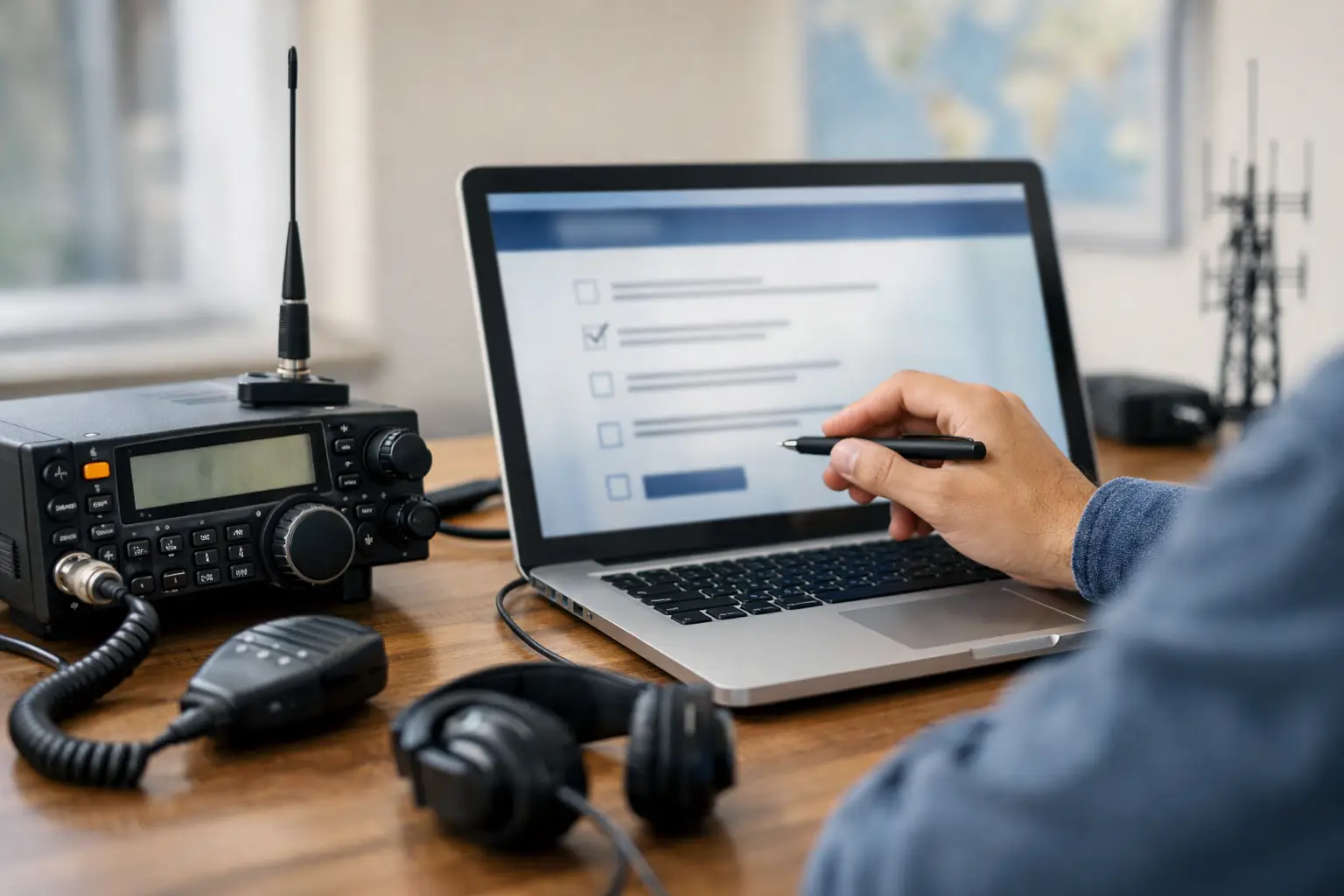
A remote exam can save a long drive, a Saturday afternoon, and a great deal of scheduling frustration. But the question behind the convenience is the right one: do online exams count when you want an FCC amateur radio license? Yes, they can – provided the session is administered by an authorized Volunteer Examiner Coordinator, follows FCC requirements, and is properly submitted after you pass.
An online exam is not a shortcut around the licensing process. It is the same licensing exam, with the same question pool, passing standard, and regulatory expectations as an in-person session. The difference is where you sit while you take it and how the volunteer examiners supervise the process.
Do Online Exams Count With the FCC?
Yes. The FCC permits remote testing for amateur radio license examinations when the testing is conducted through an approved Volunteer Examiner Coordinator, or VEC. A properly administered remote session produces the same type of successful exam result as a properly administered session at a library, club meeting, or testing event.
That means a passed Technician, General, or Amateur Extra examination can be submitted to the FCC for processing. Once the FCC processes the application and grants the license or upgrade in its licensing database, it is valid nationwide. Your operating privileges come from the FCC grant, not from whether you tested at home or in a room with other candidates.
There is one distinction worth keeping clear. Passing an exam and receiving a license grant are related, but they are not the exact same moment. Your volunteer examiners can tell you whether you passed at the end of the session, often immediately. The exam paperwork must then be submitted and processed. For a new license or an upgrade that requires an FCC application fee, you must also complete any required payment step before the FCC can issue the grant.
What Makes a Remote Amateur Radio Exam Legitimate?
A legitimate online exam is built around the same principle as any other amateur radio test: the exam must be fair, secure, and independently supervised. The fact that a candidate is at home does not remove those requirements. It simply changes the proctoring method.
During a remote session, volunteer examiners verify the candidate’s identity, observe the testing environment, and monitor the exam through video conferencing and approved testing procedures. Candidates are typically asked to show their room, desk, and permitted materials before the session begins. The team also confirms that no one else is present and that unauthorized devices, notes, or reference materials are not available.
These procedures are not meant to make the experience intimidating. They protect every licensee who has earned a call sign through honest preparation. They also give the FCC, volunteer examiners, and candidates confidence that a remote pass represents the candidate’s own knowledge.
An online quiz, practice test, or course completion certificate does not count as an FCC license exam. Neither does an unsupervised test sent by email. For the result to count, it must come from an authorized examination session with qualified volunteer examiners following their VEC’s rules.
The Questions and Passing Score Are the Same
Remote testing does not mean an easier version of the exam. Technician, General, and Amateur Extra candidates answer questions from the same published FCC question pools used in traditional exam sessions. The number of questions and the minimum passing score remain the same.
For example, the Technician and General exams each contain 35 multiple-choice questions, while the Amateur Extra exam contains 50. A passing score is 74 percent. The exam team does not decide whether to make the test easier because it is online, and candidates do not receive special operating privileges because they tested remotely.
That consistency matters. Whether someone earns a first license from a kitchen table or upgrades at a hamfest, the credential represents the same demonstrated knowledge and the same responsibility to operate within FCC rules.
How the Online Exam Process Usually Works
Remote testing is structured, but it should not feel mysterious. Most candidates move through a few clear stages: scheduling, preparation, check-in, testing, and result processing.
Before the appointment, you will receive instructions about identification, your testing space, technology requirements, and any forms that must be completed. Read these instructions carefully. A quiet room, reliable internet connection, webcam, microphone, and computer are usually essential. A phone may be used for certain check-in steps if the exam team instructs you to do so, but it should not be within reach during the test unless it is specifically permitted for proctoring.
At check-in, expect to show a government-issued photo ID if required and provide your FCC Registration Number, or FRN. New applicants can obtain an FRN through the FCC before testing. The examiners will explain the session rules, verify your environment, and answer appropriate procedural questions before the exam starts.
Once testing begins, follow the instructions exactly. If you lose your internet connection, need clarification about a process issue, or experience a technical problem, tell the proctors right away. The team may be able to help, but exam security rules still apply. Preparing your equipment and space in advance gives you the best chance of a smooth session.
After you finish, the examiners grade the exam and let you know the result. If you pass and are eligible to take the next license-class exam during the same session, you may be offered that opportunity under the session’s procedures. That can be especially helpful for candidates who arrive prepared for both Technician and General, or General and Amateur Extra.
Why Candidates Choose Remote Testing
For many prospective hams, the largest barrier is not learning the material. It is finding an available test session within a reasonable distance and at a workable time. Local in-person sessions are valuable, but they may be limited by geography, volunteer availability, weather, work schedules, or family responsibilities.
Online testing gives candidates more flexibility without reducing the standards. It can be a practical option for rural applicants, people with mobility limitations, busy professionals, caregivers, and anyone whose nearest session is hours away. It also lets candidates test in a familiar setting, which can reduce the stress that comes with walking into an unfamiliar room.
Convenience is only helpful when it is paired with a process you can trust. A well-run remote session has clear instructions, real people available to guide you, and documented procedures from check-in through result submission. At Middle Tennessee Exams, the goal is to provide that combination: professional ARRL-certified administration and a friendly experience that helps candidates feel ready rather than rushed.
When an In-Person Exam May Still Be Better
Online testing is a strong option, but it is not the best fit for everyone. Candidates without dependable internet, a private room, or a suitable computer may find an in-person session easier. Some people also prefer having an examiner physically present, especially if they are unfamiliar with video conferencing or feel more comfortable asking procedural questions face to face.
A local test session can also be a wonderful introduction to an amateur radio club. You may meet mentors, hear about local nets, and find fellow operators who can help after your call sign appears in the FCC database. Remote testing offers convenience; in-person testing can offer immediate local connection. Both paths can lead to the same license and the same welcoming amateur radio community.
The best choice is the one that allows you to test honestly, comfortably, and in full compliance with the exam requirements.
Prepare for the Session, Not Just the Questions
Study the question pool thoroughly, but do not leave your exam-day preparation until the last minute. Confirm your FRN, photo identification, appointment time, and any FCC fee instructions. Test your camera, microphone, browser, and internet connection before the session. Choose a private, well-lit space with a clear desk, and remove items that could raise questions during the room check.
Most importantly, give yourself credit for getting to this point. The exam is a meaningful step, but it is also the beginning of a hobby built on learning, service, technical curiosity, and conversation. A properly administered online exam counts because the work you put into earning that pass counts too.