If the nearest in-person test session is an hour away, held once a month, and already full, getting on the air can feel harder than it should. That is exactly why the fcc ham radio license exam online has become such a practical option for new operators and experienced hams alike. You can test from home, follow a clear remote proctoring process, and still complete a legitimate, standards-based exam accepted for FCC licensing.
For many candidates, the biggest relief is not just convenience. It is knowing what the process looks like before test day. When people understand how online amateur radio exams work, the experience feels much more manageable.
How the FCC ham radio license exam online works
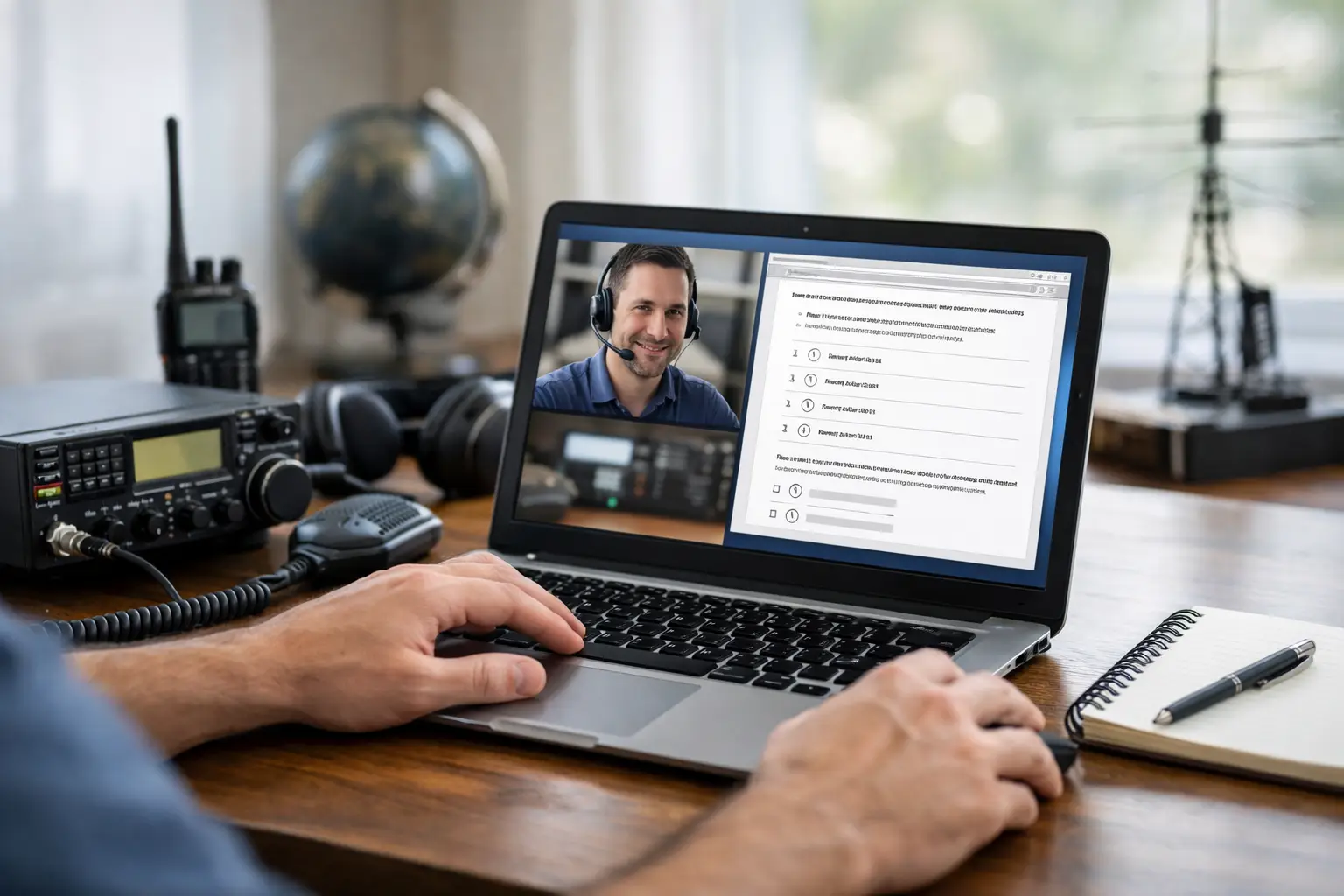
An online amateur radio exam is still a formal volunteer examiner session. The difference is that instead of sitting in a library meeting room or community center, you join a scheduled session from home using video conferencing software such as Zoom. Your exam is administered by qualified volunteer examiners following FCC and coordinating body requirements, with identity checks, room verification, and continuous observation during the session.
That structure matters. A legitimate remote exam is not a shortcut and it is not a casual quiz. It is the same licensing path, delivered in a format that removes the travel burden for candidates who may have busy schedules, limited local options, or physical constraints that make in-person attendance difficult.
Most candidates are testing for one of three license classes. Technician is the entry point and opens the door to VHF, UHF, and limited HF privileges. General expands access to HF bands and is a common next step for operators who want broader operating opportunities. Extra is the highest class and gives access to the full range of amateur privileges, along with a more advanced written exam.
What you need before your online exam session
The setup is usually straightforward, but it needs to be taken seriously. Candidates should expect to use a computer with a webcam and microphone, a stable internet connection, and a quiet room where the proctors can verify that no unauthorized materials or people are present. A phone may also be required as a secondary camera so the exam team can view your screen area and workspace from another angle.
You will also need a government-issued photo ID, or an acceptable alternative if age or circumstances require it, along with your FCC Registration Number. If you are upgrading, you should be ready to provide proof of your current license status as required by the exam team.
This is one of the places where choosing an organized exam provider makes a real difference. Good communication before the session reduces test-day stress. Clear instructions about equipment, room setup, identification, and check-in procedures can prevent small issues from turning into delays.
Why more candidates are choosing online testing
The main advantage is obvious. You do not have to drive across town or across state lines for a scheduled exam. But convenience is only part of the picture.
Online testing often gives candidates more scheduling flexibility. That matters for working professionals, parents, retirees who do not want unnecessary travel, and volunteers involved in emergency communications who need a realistic path to licensing or upgrading. It can also help candidates in rural areas, where local sessions may be infrequent.
There is also a comfort factor. Testing at home does not make the exam easier, but it often makes the experience less intimidating. You are in a familiar environment, following a defined process, with a team that can explain the steps clearly. For many first-time candidates, that alone lowers the temperature.
Still, online is not automatically better for everyone. If your internet connection is unreliable, your home environment is noisy, or you are not comfortable managing a camera and computer at the same time, an in-person session may still be the better fit. The right option depends on your setup and your comfort level.
What remote proctoring actually feels like
Candidates sometimes imagine remote proctoring as something cold or overly rigid. In practice, a well-run session usually feels structured, calm, and professional. The exam team checks your identification, confirms your workspace, explains the rules, and makes sure you know what happens next. Once the exam begins, they monitor the session and remain available if you need procedural guidance.
That human element matters. A serious exam process should protect integrity, but it should also help candidates feel respected and supported. The best remote teams do both. They keep standards high without making the session feel adversarial.
At Middle Tennessee Exams, that balance is a big part of the experience. Candidates are guided through a compliant ARRL-certified remote process designed to be clear, efficient, and low-stress, with quick results and direct support before and during the session.
Preparing for success before exam day
The strongest candidates usually do two things well. They study the question pool thoroughly, and they prepare their testing environment ahead of time.
For studying, use current materials that match the license class you are pursuing. Practice exams are useful because they show you how the questions are worded and help you spot weak areas before the real session. If you are earning your first license, spend extra time on operating practices, basic regulations, electrical principles, and safety. If you are upgrading to General or Extra, expect more depth and more technical detail.
For your test environment, do a simple dry run the day before. Check your webcam, microphone, internet connection, and any required second camera setup. Make sure your desk is clear and your room can be closed off from interruptions. Small preparation steps have an outsized effect on confidence.
It also helps to read every instruction from the exam team carefully. Many candidate problems are not knowledge problems at all. They are setup problems, login problems, or paperwork issues that could have been handled earlier.
Common concerns about taking the exam online
A common question is whether an online exam is really accepted by the FCC. If the session is administered properly by qualified volunteer examiners under recognized procedures, the answer is yes. The delivery method is remote, but the licensing pathway is fully legitimate.
Another concern is whether online testing is harder. The exam content is the same, so the difficulty of the questions does not change. What changes is the environment. Some candidates feel more relaxed at home, while others prefer the simplicity of sitting down in a dedicated testing room. Neither reaction is unusual.
People also worry about technical problems. That concern is fair. Internet issues, camera trouble, or audio glitches can interrupt a session. A good exam team plans for that possibility and gives clear instructions about what to do if a connection drops or a device fails. Even so, candidates should treat the technology side as part of exam preparation, not as an afterthought.
Is an online exam right for your license goals?
If you want to get your Technician license without waiting weeks for a local session, online testing is often an excellent fit. If you have been meaning to upgrade to General or Extra but keep putting it off because of travel or scheduling, remote exams can remove that friction.
The key is choosing a session run by a team that values both compliance and candidate support. You should expect a process that is clearly explained, professionally managed, and respectful of your time. Fast result handling matters too, because once you finish the exam, you want to know where you stand and what comes next.
Ham radio has always been about communication, technical skill, and community. The testing process should reflect those same values. When online exam administration is done well, it widens access to the hobby without lowering standards. That is good for individual candidates, and it is good for amateur radio as a whole.
If you have been waiting for the perfect time to schedule your exam, this may be your signal to stop waiting. A well-run remote session can turn a task you have been postponing into a clear next step, and sometimes that is all it takes to finally get on the air.