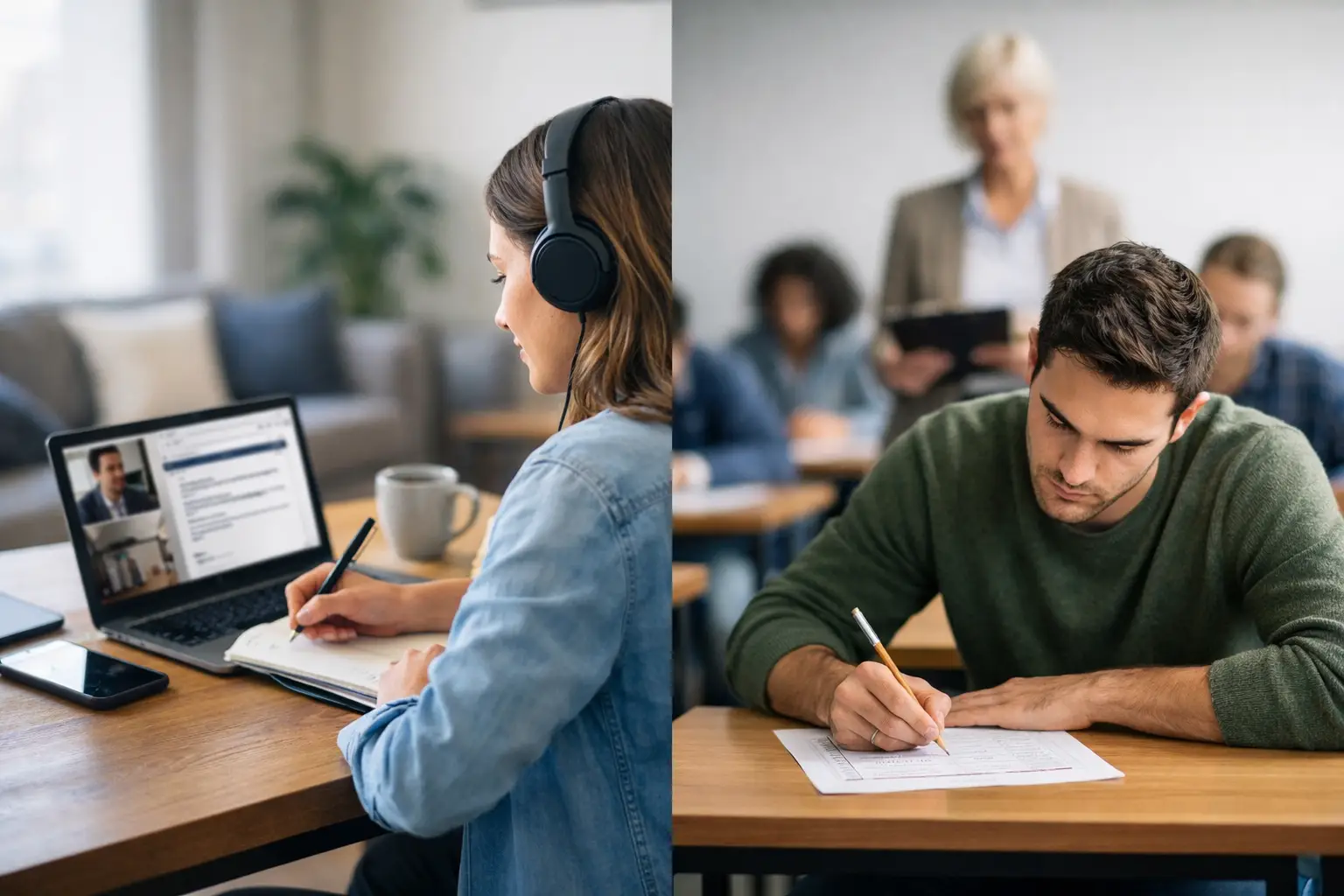
A licensing exam should be the point where your preparation pays off, not the part that becomes difficult because the nearest test site is an hour away or the next available session is weeks out. When comparing a remote exam versus local test session, the right choice usually comes down to your schedule, your testing environment, and the kind of support that helps you feel ready.
Both options can lead to the same goal: earning or upgrading an FCC amateur radio license through a properly administered examination. The difference is not the value of the license. It is the experience of getting there.
What stays the same with either exam format
Whether you test online or sit down at a local exam table, the questions come from the same FCC question pool for the Technician, General, or Amateur Extra class license. You still need to meet the required passing score, follow examination rules, and provide the information needed for your application.
A legitimate remote session is not a shortcut around exam standards. Remote testing uses structured identity verification, live proctoring, and controlled procedures to protect the integrity of the exam. Local sessions accomplish that oversight in person. In either setting, the volunteer examiners are responsible for making sure every candidate receives a fair, compliant testing experience.
That shared standard matters. You should choose the format that removes unnecessary friction without compromising your confidence or the credibility of your result.
Remote exam versus local test session: the practical differences
The biggest advantage of a remote exam is access. Instead of planning a drive, arranging transportation, or waiting for a nearby session, you can test from home or another private, approved location. For working professionals, parents, rural candidates, and operators with limited mobility, that flexibility can turn a delayed goal into an achievable one.
Remote sessions also tend to give candidates more scheduling options. A local team may hold exams monthly or only when enough volunteers are available. That arrangement serves the community well, but it may not match your calendar. Online appointment-based testing can provide more opportunities to choose a time that works after work, on a weekend, or soon after you finish studying.
A local session has benefits of its own. Some candidates simply prefer being in the room with examiners. If technology makes you uneasy, an in-person session removes concerns about internet speed, camera placement, screen sharing, or a quiet testing room. It can also be a welcoming first introduction to local amateur radio clubs and the people you may hear on the air after you receive your call sign.
The best format is not universal. If you have a reliable internet connection and a suitable private space, remote testing may be the more convenient option. If your home environment is busy, your computer is unreliable, or you strongly prefer face-to-face interaction, a local test session may help you focus.
When remote testing is a strong fit
Remote testing works especially well for candidates who have prepared independently and want a straightforward path to the exam. You do not need to live near the testing team administering your session, which gives you more freedom to find a time that fits your schedule.
It can also reduce the pressure that comes with an unfamiliar location. Testing at a familiar desk can help some candidates stay calm and concentrate on the questions rather than the drive, parking, check-in line, or new surroundings. This is particularly helpful for first-time Technician candidates who already have plenty to think about.
The process does require preparation. Remote proctors need to verify that the room and computer setup meet exam rules. You should expect clear instructions before your appointment and follow them closely. A strong remote testing provider will explain what to have ready, answer reasonable questions before the session, and guide you through each step without making the process feel mysterious.
At Middle Tennessee Exams, remote sessions are designed to combine that convenience with an organized, ARRL-certified process and direct human support. Candidates can receive prompt feedback after testing, which is a welcome change from waiting days to learn whether the next step in their ham radio journey is official.
Your remote testing setup matters
A remote exam is easiest when you prepare the space before test day. You will generally need a dependable computer, a working webcam and microphone, stable internet access, and a private room that can be checked by proctors. The specific requirements for a session always control, so read the instructions from your exam team rather than relying on assumptions.
Before your appointment, make time to confirm these essentials:
- Your computer is charged or connected to power, and its camera and microphone work properly.
- Your internet connection is stable enough for a live video call without frequent interruptions.
- Your desk and surrounding area are clear of notes, reference materials, and other prohibited items.
- Your required identification, FCC registration information, and any permitted materials are ready before check-in.
This preparation is not busywork. It protects the integrity of your exam and prevents avoidable stress at the start of the session.
When a local test session may be better
In-person testing remains a valuable choice, particularly for candidates who do not have an appropriate remote setup. A shared household, a weak connection, limited computer access, or frequent interruptions can make online proctoring impractical. There is no benefit in choosing remote testing if the environment will distract you or create compliance problems.
A local session may also be the better fit if you value personal contact with nearby operators. Many local exam teams are connected to clubs, public service groups, and on-air communities. Meeting those volunteers can make it easier to find a mentor, a local net, or a club activity after you pass.
Candidates who need extra reassurance about the mechanics of testing may find the in-person format more comfortable. You arrive, show your identification, receive directions, and complete the exam with examiners in the room. For some people, that familiar structure lowers anxiety.
The trade-off is availability. You may need to travel, work around a fixed date, or wait for the next scheduled event. If you are upgrading to General or Amateur Extra and your study momentum is high, that wait can be frustrating. It is worth checking both local opportunities and remote appointments before deciding.
Exam integrity is not optional in either format
Some candidates wonder whether an online exam is less formal than a local session. It should not be. A properly administered remote exam includes procedures that allow volunteer examiners to verify identity, observe the candidate, inspect the testing area as required, and monitor the session through completion.
That structure benefits honest candidates. It helps ensure that your passing result represents your knowledge, supports the credibility of the amateur radio service, and respects everyone who studied for the same privilege. Remote proctoring may feel more detailed at first because the camera becomes the examiner’s view into your testing space. Once you understand the process, it is simply another way to maintain the standards that matter.
If a provider is vague about security, certification, instructions, or how results are handled, ask questions before booking. Clear answers are a sign of an organized testing program.
How to make your choice with confidence
Start with logistics, not assumptions. Look at your available dates, travel distance, home setup, and comfort with video technology. Then consider how you test best. Do you focus better at your own desk, or do you prefer an examiner in the room? Are you ready to test this week, or does a local date fit your plans just as well?
Also think beyond the exam itself. If you want to meet operators in your area right away, a local session can be a natural community connection. If your priority is earning your license efficiently so you can get on the air sooner, a remote appointment may be the clearer path.
Whichever format you choose, give yourself one final gift before exam day: review the session instructions early, prepare your materials, and arrive with time to spare. A calm, well-prepared candidate is in the best position to show what they know and take the next step into amateur radio.