A ham radio license is earned one question at a time, but passing is about more than memorizing a question pool. Good ham radio exam study guidance helps you understand what the FCC expects, recognize the questions that need extra work, and arrive at your exam session prepared rather than rushed. Whether you are pursuing Technician, upgrading to General, or taking on Extra Class, a steady plan will serve you better than a last-minute cram session.
The encouraging part is that every amateur radio exam is built from a published question pool. You are not walking into an unknown test. With the right study materials, regular practice, and a clear understanding of the testing process, you can prepare with confidence.
Start With the License You Need
For most first-time applicants, Technician is the natural starting point. It introduces operating rules, safety, basic electronics, propagation, station setup, and practical operating knowledge. A Technician license gives new operators meaningful access to amateur radio and a solid base for future learning.
General Class is the next step for operators who want expanded privileges, particularly on HF bands. The material becomes more detailed in areas such as propagation, antennas, operating practices, and electronics. Extra Class is the highest license level and asks for the broadest technical and regulatory understanding.
Choose the exam that matches your current goal, not the one that sounds most impressive. If you are new to amateur radio, building a strong Technician foundation is usually the fastest and least stressful route. If you have been active for years and are ready for broader privileges, a General or Extra upgrade may make sense. Some candidates study for more than one exam at once, but that approach works best when they can give each question pool focused attention.
Build a Study Plan You Can Actually Keep
Long study sessions are not required for most candidates. Consistency matters more. Thirty focused minutes several days a week can be more effective than trying to absorb an entire manual over one weekend.
Begin by setting a target test date. A scheduled appointment creates a useful deadline and lets you work backward. Divide the question pool or study guide into manageable sections, then give yourself time to review weak subjects before exam day. For a Technician candidate, two to four weeks of regular preparation may be enough, depending on prior experience. General and Extra candidates often benefit from a longer timeline because the content is more technical.
A practical weekly rhythm might include reading one topic area, reviewing related questions, and taking a short practice exam. At the end of the week, revisit questions you missed instead of simply moving on. That repetition is where the learning happens.
Avoid treating every topic equally. If FCC rules and station identification come easily but circuit calculations slow you down, shift more time toward the calculations. Your study plan should respond to your results, not just follow page numbers.
Learn the Reason Behind the Answer
Question pools make practice efficient, but pure answer memorization has limits. You may pass that way, yet you will have less confidence when you are operating your own station, responding to an emergency net, or troubleshooting an antenna problem.
When you miss a question, pause and ask why the correct answer is right. If the topic involves band privileges, picture the operating situation. If it involves electrical safety, connect the rule to the risk it prevents. If it involves Ohm’s law or frequency calculations, work through the steps with a calculator and write them down.
This approach also helps with questions that look similar. Amateur radio exams often test related concepts using different wording. Understanding the principle helps you distinguish between answers that are almost right and the one that is correct.
Use Practice Exams the Right Way
Practice exams are one of the most useful tools available, especially when used as a diagnostic rather than a scorekeeping exercise. Take an initial practice test before you feel fully ready. The result tells you where to focus.
After that, take practice exams periodically under realistic conditions. Work through the full number of questions without looking up answers. Review every missed question afterward, along with any correct answer you guessed. A lucky guess is not yet a dependable skill.
Many candidates like to wait until they are scoring comfortably above the passing threshold on several practice exams before scheduling. That is a reasonable approach, but do not let perfection delay you indefinitely. Scores naturally vary with question selection. The stronger sign of readiness is repeated passing performance combined with a clear understanding of your problem areas.
For General and Extra Class candidates, keep a small list of recurring weak topics. It may include resistor networks, decibels, digital modes, antenna feed lines, frequency privileges, or operating procedures. A short, targeted review list is much more useful than rereading everything each time.
Focus on the Topics That Matter on the Air
The exam covers regulations and technical knowledge, but it is also preparing you to operate responsibly. As you study, pay particular attention to rules that will affect your first contacts: station identification, control operator responsibilities, permitted communications, interference avoidance, and basic safety.
Technical concepts deserve the same practical mindset. You do not need to become an electrical engineer before earning a license. You do need to understand enough to use equipment safely, recognize common problems, and make good operating decisions. Grounding, RF exposure, power supplies, antennas, and feed lines are not abstract subjects once you begin building a station.
For candidates who are intimidated by math, take it one formula at a time. Learn what the symbols mean before trying to solve problems quickly. Write out a few examples by hand. Most exam calculations use manageable numbers and straightforward steps. The goal is accuracy, not speed.
Prepare for a Remote Exam Before Test Day
Studying the material is only part of preparing for an online amateur radio exam. A remote session also requires an organized testing space and reliable equipment. Taking a few minutes to prepare in advance can prevent avoidable stress.
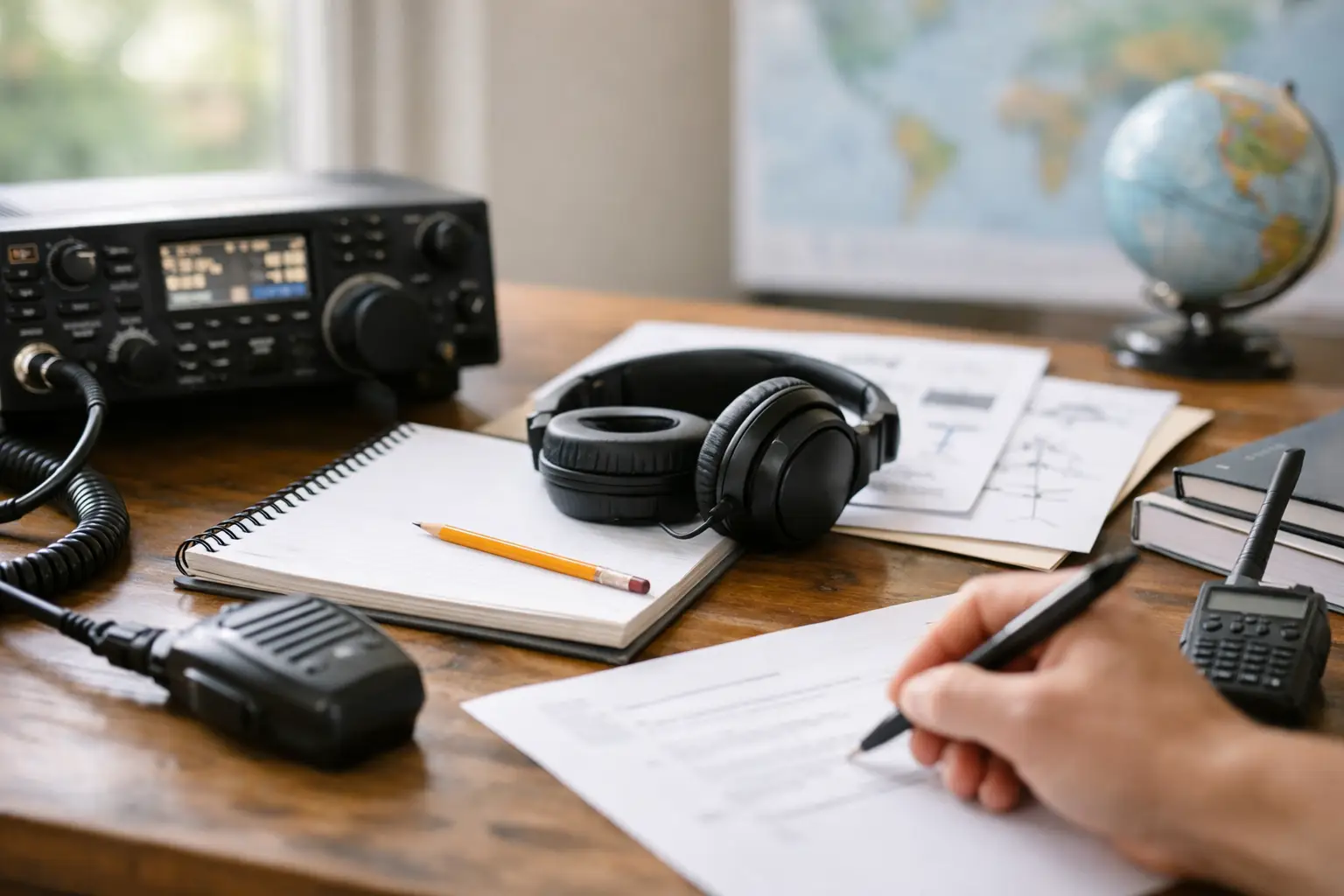
Choose a quiet room where you can test without interruptions. Check that your computer, camera, microphone, and internet connection are working properly. Have the required identification ready, and make sure the desk or table is clear of books, notes, phones, smartwatches, and other unauthorized materials. Your exam team will explain the specific remote proctoring requirements before your session.
It is wise to join the video platform early rather than logging in at the exact appointment time. That gives you room to address an audio setting, camera angle, or connection issue without feeling pressured. If you are unsure about any instruction, ask before the exam begins. A professional volunteer examiner team would rather clarify the process than have a candidate worry silently.
MidTENN Nationwide Testing provides structured remote sessions designed to make this process clear while maintaining the standards required for legitimate amateur radio testing.
Make Test Day Calm and Simple
The night before your exam, do a light review of notes or missed-question topics, then stop. Trying to learn entirely new material late at night usually adds anxiety without adding much retention. Get rest, eat normally, and give yourself time before the session begins.
During the exam, read each question fully. Watch for qualifying words such as “only,” “except,” or “best.” Eliminate answers that are clearly wrong before choosing between close options. If a question makes you pause, use the time available, make your best selection, and continue. One difficult question does not determine the outcome of the exam.
After you finish, you will receive your result promptly. If you pass, take a moment to celebrate the work you put in. If you do not pass on the first attempt, treat the score as useful feedback. Review the sections that caused trouble, study with a narrower focus, and return better prepared. Many successful operators have needed more than one attempt.
Keep Learning After the Exam
Passing your exam is the beginning of your amateur radio education, not the finish line. Once your license is issued, listening to local nets, making contacts, joining a club, and asking experienced operators thoughtful questions will deepen what you studied. The rules and technical concepts become much easier to remember when you hear them applied in real operating situations.
Give yourself permission to start small. Make a first contact, learn how your radio works, and build confidence one transmission at a time. The same steady approach that gets you through the exam will help you become the kind of operator others are glad to hear on the air.