A young person who is ready to earn an amateur radio license should not have to wait for a ride to a distant testing site. So, can minors test remotely for an FCC amateur radio license? In many cases, yes. The FCC does not set a minimum age for an amateur radio license, and qualified minors may take the same exams as adult candidates. Remote testing can make that opportunity far more practical for families, provided the candidate and parent or guardian are ready to follow the testing team’s procedures.
Remote exams protect the integrity of an FCC license exam while allowing candidates to test from home. That means a minor’s session may involve a little more planning than an adult’s, especially when it comes to registration, identification, privacy, and technology. The good news is that a prepared family can make the process straightforward and low-stress.
Can minors test remotely under FCC rules?
The FCC does not require an applicant to be a certain age before earning an amateur radio license. A child, teenager, or adult who passes the appropriate examination can qualify for a license. The entry-level Technician exam is often a natural starting point for younger candidates, but age does not prevent a well-prepared applicant from earning a General or Extra Class license.
The exam itself is not made easier for minors. A Technician exam has 35 multiple-choice questions, and candidates need at least 26 correct answers to pass. General and Extra Class exams also use the official question pools and the same passing standard for every candidate. That consistency matters. It gives young operators the same recognized credential and responsibilities as everyone else in the amateur radio community.
Whether a minor can test remotely with a particular Volunteer Examiner team depends on that team’s current policies and the remote testing platform’s procedures. ARRL-certified remote sessions follow specific security and identification requirements. Before scheduling, a parent or guardian should review the session instructions carefully and contact the testing team with questions about a minor candidate’s situation.
A parent or guardian has an important role
For a minor, the parent or guardian is usually the practical point person before the session. They can help the candidate register, confirm the appointment time, prepare the testing space, and make sure the candidate has the information requested by the exam team.
The candidate will generally need an FCC Registration Number, commonly called an FRN, before the exam. A parent or guardian may help create the account and verify the details, but the applicant information must be accurate. Names, addresses, and identifying information should match the candidate’s official records. Small errors can create delays after a passing exam, when the paperwork is submitted for FCC processing.
Parents should also be mindful of online privacy. If the candidate is under 13, ask how the testing organization handles registration details, consent, and communication. A professional testing team should be clear about what information it needs, why it needs it, and how the remote session will be conducted.
Help with preparation is encouraged. Help during the actual exam is not. Once the testing session begins, the candidate must work independently. A parent may be asked to assist with technical setup or identification beforehand, then leave the testing area unless the proctors give different instructions. Staying in the room, signaling answers, or having study materials available can compromise the session, even when everyone has good intentions.
Preparing a minor for a remote exam session
Remote testing is convenient, but it is still an official examination. Most difficulties can be avoided by treating the appointment like an in-person test and setting up well ahead of time.
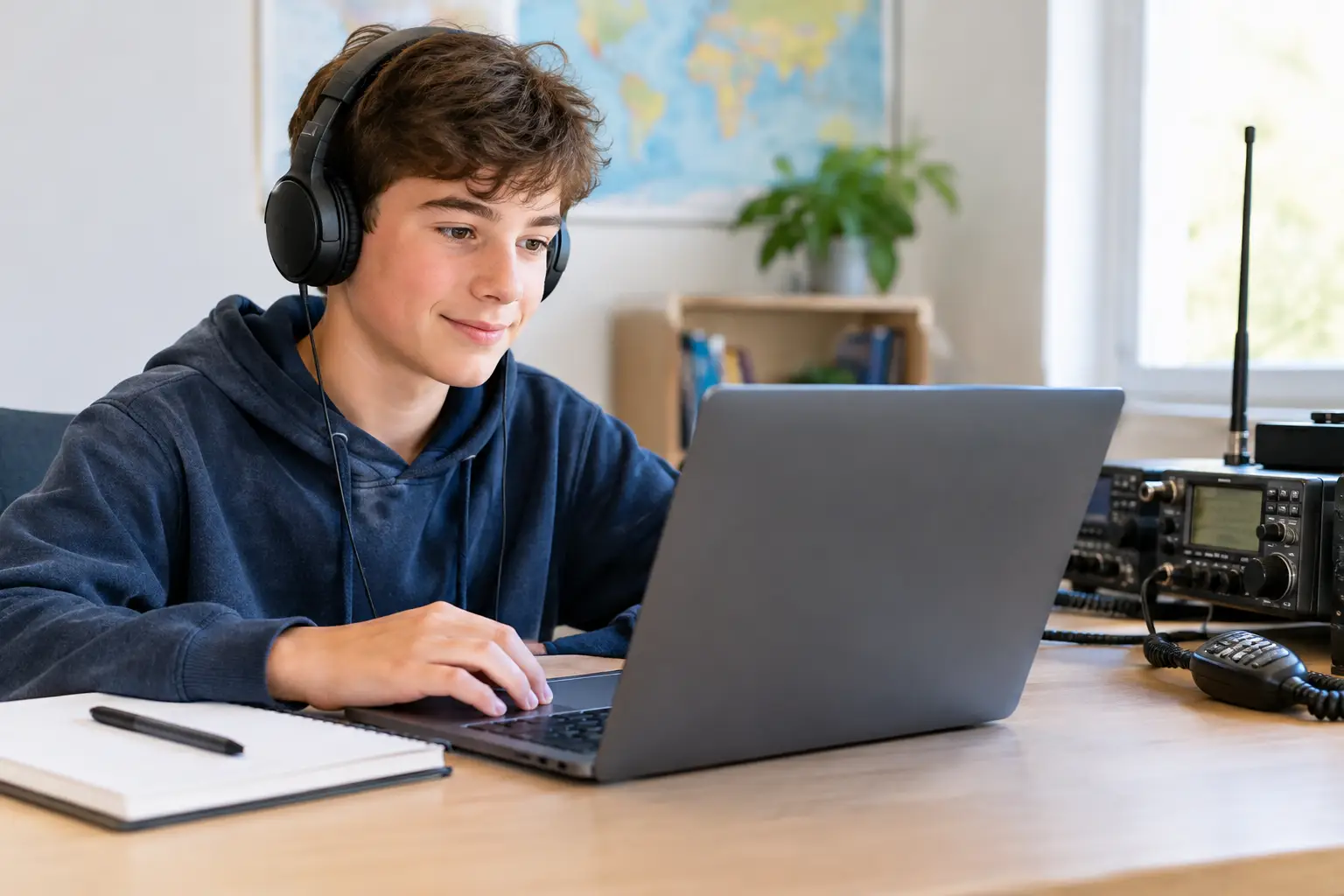
The candidate should have a reliable internet connection, a computer with a working camera and microphone, and the required video meeting software. Many remote exam sessions also require a second camera device, such as a smartphone or tablet, so proctors can view the candidate and testing area from another angle. Read the instructions for the scheduled session rather than assuming every team uses the same setup.
The test space needs to be private, quiet, and clear of prohibited materials. Remove study guides, handwritten notes, extra screens, smartwatches, and other electronics that are not approved for the session. Proctors may ask the candidate to show the desk, the surrounding room, and the computer screen before testing starts. This is a normal part of remote exam security, not a sign that the candidate is under suspicion.
It helps to do a practice run with the technology. Check the camera position, charging cables, microphone level, and internet connection. Younger candidates may be comfortable with devices but still benefit from rehearsing the process of joining a meeting, adjusting a camera, and following proctor instructions without becoming distracted.
A simple checklist is useful before exam day:
- Confirm the candidate’s FRN and registration details.
- Review the testing team’s ID and equipment requirements.
- Prepare a clean, private room with a stable internet connection.
- Charge the computer and any required second camera device.
- Have an approved photo ID or other requested identification ready.
The exact identification rules can vary. A teenager may have a driver’s license, passport, school identification card, or another form of ID accepted by the testing team. A younger child may need a different arrangement. Do not wait until the session begins to discover that identification is missing. Ask in advance if there is any uncertainty.
Helping young candidates feel ready without adding pressure
For many minors, the hardest part is not the material. It is the idea of being watched by proctors over video and taking a formal exam for the first time. A calm explanation of the process can make a real difference.
Explain that proctors are there to administer a fair exam, verify the testing environment, and answer procedural questions. They are not there to make the experience intimidating. Candidates should listen carefully, speak up if they cannot hear an instruction, and ask questions before the exam begins if they are unsure about a procedure.
Study preparation should focus on understanding as well as memorization. Amateur radio gives young people a practical reason to learn about radio waves, electronics, operating practices, public service, and emergency communication. Practice exams are helpful for building familiarity with the question style, but they work best when the candidate reviews why an answer is correct.
Families should avoid creating unnecessary pressure around a first attempt. A passing score is exciting, but an unsuccessful attempt is also useful feedback about what to study next. The amateur radio community has always included people who learn through patience, mentoring, and repeated practice. That welcoming spirit is especially valuable for a young candidate.
What happens after a minor passes?
A passing result is often shared soon after the session, which gives candidates and families immediate clarity. The Volunteer Examiners then submit the required information for FCC processing. The license is not official until it appears in the FCC’s records, so candidates should wait for that confirmation before operating under their new call sign.
Once licensed, a minor has the same responsibility as any other amateur operator to follow FCC rules and operate with good judgment. That includes using the assigned call sign properly, staying within the privileges of the license class, and learning the expectations of good on-air conduct. Parents can be part of that learning process, especially for younger operators who are setting up their first station at home.
A first license can open the door to local nets, school and club activities, public service events, technical projects, and conversations with operators far beyond a candidate’s neighborhood. For a family that has postponed testing because of travel, scheduling, or uncertainty, remote exams remove a meaningful barrier while preserving the standards that make an FCC license valuable.
MidTENN Nationwide Testing encourages families to ask questions before scheduling so the candidate can arrive prepared, supported, and ready to demonstrate what they know. A quiet room, clear instructions, and a little advance planning can turn a young person’s interest in radio into a confident first step in the amateur radio community.