If you have been putting off your license because the nearest test session is across town, booked out, or scheduled at a bad time, the good news is simple: can I take ham exam online? Yes, in many cases you can. Remote amateur radio testing is a legitimate, widely used option for earning your first FCC license or upgrading to a higher class, as long as you test with a qualified remote exam team and follow the required procedures.
That last part matters. Online ham exams are convenient, but they are not casual. A proper remote session still follows FCC and Volunteer Examiner Coordinator rules, uses live proctors, verifies your identity, and protects the integrity of the exam. The result is a process that feels much easier than driving to an in-person session, while still meeting the same standards.
Can I take ham exam online for any license class?
In most situations, yes. Remote testing is commonly available for the Technician, General, and Extra class amateur radio exams. Whether you are brand new to ham radio or coming back after years in the hobby to upgrade, online sessions can cover the same license elements you would take at an in-person exam site.
That means a first-time candidate can sit for the Technician exam from home. A licensed Technician can take the General exam online. An experienced operator can also pursue Extra through a remote session if the exam team offers it. The test content, passing score, and FCC licensing structure do not change just because the session happens over Zoom instead of in a library meeting room or club hall.
The real difference is logistics. You are trading travel time for setup requirements. Instead of finding a location and arriving early, you need the right room, the right device setup, valid identification, and the ability to follow the proctors’ instructions closely.
How online ham radio exams work
A remote ham exam usually starts before the first question appears. After you register, you receive instructions for your session, including what identification to bring, what software or video platform will be used, and how your room and equipment must be arranged.
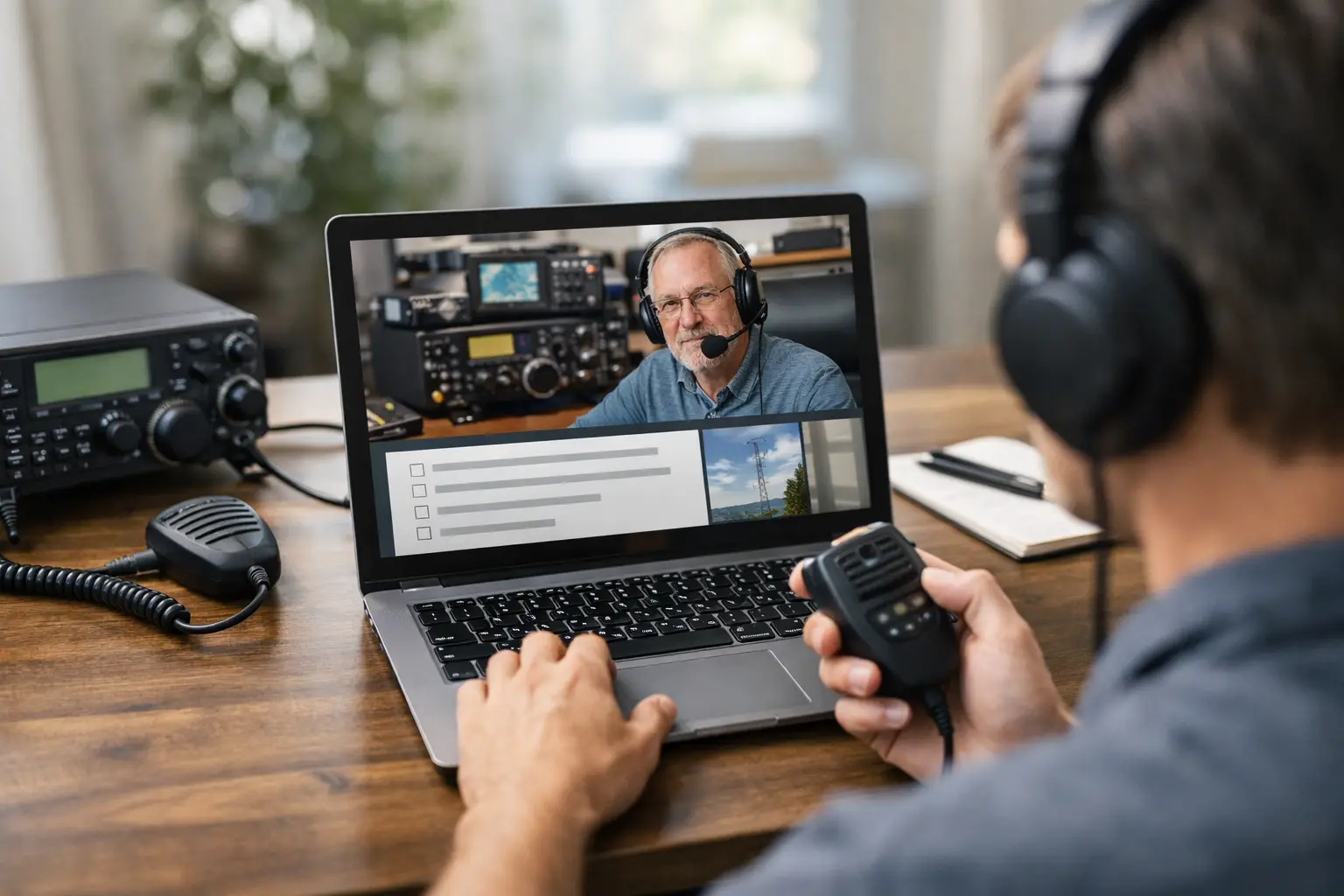
At the start of the session, Volunteer Examiners verify your identity and review your testing area. They may ask you to show your desk, walls, floor, and nearby surfaces with your camera. This is not meant to make the process uncomfortable. It is there to confirm that the exam space is clear and that every candidate is being tested fairly.
Once the room check is complete, the team will explain the rules and begin the exam. During testing, candidates are observed live by remote proctors. Depending on the team’s process, you may use one device or a combination of devices so the examiners can maintain the required camera views.
After you finish, your exam is graded. If you pass, many remote teams can provide immediate feedback and process the paperwork promptly so your result can move through the normal FCC system. If you do not pass, some teams may allow a retest during the same session, depending on examiner availability and their procedures.
What you need before you test
The easiest online exam experiences happen when candidates prepare the technical side in advance. You do not need a complicated home studio, but you do need a stable setup.
Most remote ham exam sessions require a reliable internet connection, a computer or tablet with a camera and microphone, and sometimes a second device such as a phone to show an additional room angle. You also need a quiet, private room where interruptions are unlikely. A kitchen table can work fine. A noisy coffee shop cannot.
You should also have a legal photo ID ready. If you are under 18 or do not have a standard driver’s license, the exam team will usually explain acceptable alternatives. You may also need your FCC Registration Number, especially if this is your first license. If you do not have one yet, it is best to get that handled before test day.
A scratch sheet and simple calculator rules can vary by team, so this is one area where reading the instructions carefully matters. Some items that seem harmless in everyday life are not allowed during a proctored exam.
Why candidates choose the online option
For many people, convenience is the obvious reason. If your nearest in-person session is a long drive away, remote testing can save hours. That matters for working professionals, parents, retirees who prefer not to travel at night, and candidates in rural areas with limited local exam availability.
Online exams also give candidates more flexibility. Instead of waiting for the next monthly or quarterly session hosted by a local group, you may be able to find a date and time that fits your schedule much sooner. That can make a big difference when your study momentum is high and you are ready to test now, not three weekends from now.
There is also a comfort factor. Many people simply test better at home. A familiar environment can reduce some of the stress that comes with formal exams. You still need to follow the rules, but you avoid the extra layer of navigating traffic, finding a building, and walking into a room full of strangers.
For candidates who want a structured but low-stress experience, an organized ARRL-certified remote team can make the whole process feel clear and manageable.
The trade-offs to understand
Online testing is not automatically better for everyone. It is better for many candidates, but there are trade-offs.
If your internet connection is unreliable, remote testing can feel more stressful than sitting in person with paper and pencil. If you live in a busy household and cannot secure a quiet room, meeting the exam conditions may be difficult. And if you are not comfortable using video conferencing tools, the technology itself may add friction.
There is also less room for improvisation. At an in-person session, if you forget something minor, the team may be able to help you sort it out on the spot. In a remote session, missing ID, lacking the right camera angle, or not having the required device setup can delay or prevent testing.
That does not mean online exams are complicated. It means they reward preparation. Candidates who read instructions ahead of time usually find the process straightforward.
How to tell if an online exam session is legitimate
This is one of the most important questions to ask. Because your FCC license matters, you want an exam session that is compliant, recognized, and professionally administered.
Look for a team that is clear about its credentials, its Volunteer Examiner Coordinator affiliation, and its exam procedures. A legitimate provider will explain what platform it uses, how identity is checked, what room setup is required, and what happens after the exam. The process should feel organized, not vague.
It also helps to choose a team that communicates well. Good support matters when a candidate is nervous, new to the process, or unsure about technical requirements. A professional exam team should be able to answer practical questions without making the process feel intimidating.
Middle Tennessee Exams is one example of an ARRL-certified remote exam team that focuses on making online amateur radio testing clear, compliant, and supportive for candidates across the United States.
Can I take ham exam online if I am a first-time candidate?
Yes, and first-time candidates often do very well in remote sessions. In fact, people pursuing their Technician license are some of the biggest beneficiaries of online testing because they are often the ones most affected by uncertainty about where to go, what to expect, and how the exam process works.
A well-run remote session removes a lot of that uncertainty. You know the platform ahead of time. You receive instructions in advance. You test from home. And you typically get clear next steps after your exam is complete.
The key is not to wait until the last minute. Make sure your FCC Registration Number is ready, your ID is acceptable, your study preparation is solid, and your room and devices meet the session rules. When those pieces are in place, online testing can be one of the simplest ways to get started in amateur radio.
If you have been asking yourself, can I take ham exam online, the practical answer is yes – and for many candidates, it is the most convenient path available. The best next step is to choose a qualified remote exam team, read the instructions carefully, and show up ready. Getting licensed does not have to feel complicated when the process is built to support you.