If getting licensed means driving across town, waiting for a monthly session, and rearranging your whole day, it is easy to put the exam off. Convenient online amateur radio testing changes that. Qualified candidates can now take a legitimate, ARRL-certified amateur radio exam from home, with the same standards and oversight you would expect from an in-person session.
For many future operators, convenience is not just a nice extra. It is the difference between getting licensed now and delaying it for months. Local exam teams may only meet occasionally. Work schedules, family responsibilities, transportation limits, and distance to a testing site can all get in the way. Remote testing removes much of that friction while still protecting exam integrity.
Why convenient online amateur radio testing works
The biggest benefit is simple: access. If you are studying for your Technician license, or finally ready to upgrade to General or Extra, you should not have to wait for the right town, right date, and right time to line up. Online sessions make it easier to choose a time that fits your life instead of building your life around the test.
That convenience matters for experienced operators too. Many hams spend years meaning to upgrade, but the process never feels urgent enough to justify travel and scheduling hassles. A remote session lowers that barrier. When the test is available from home, it becomes much easier to turn good intentions into progress.
There is also a comfort factor. Testing in a familiar environment can reduce stress, especially for first-time candidates. You are not walking into an unfamiliar room wondering how the session will run. With clear instructions, a working camera, and a quiet space, the process can feel more manageable than a traditional test setting.
What a legitimate online exam session should include
Not all convenience is equal. The exam still needs to be administered correctly, under FCC and Volunteer Examiner Coordinator standards. That means a proper remote session should never feel casual or improvised.
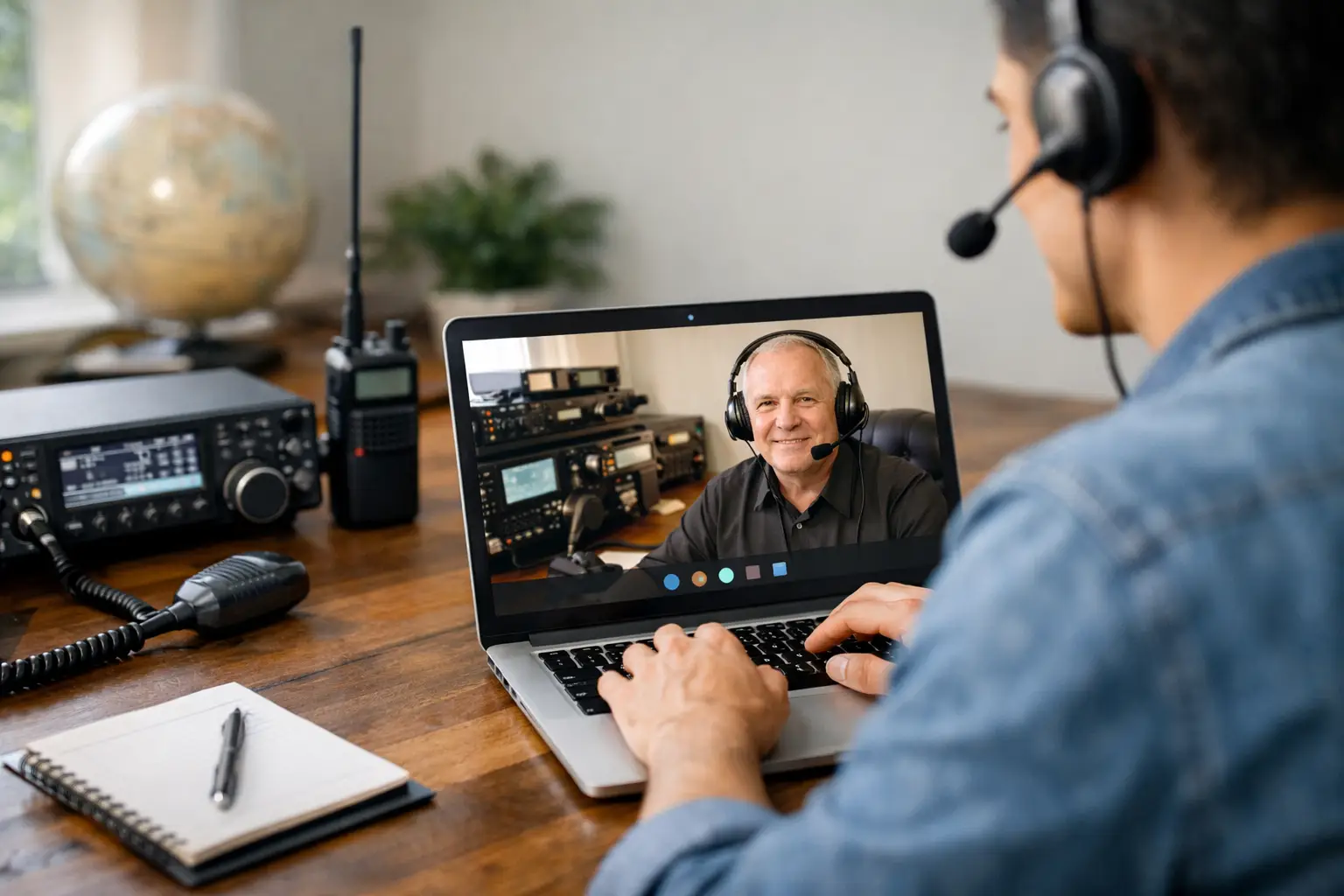
A well-run online exam uses secure identity checks, live proctoring, and a structured process that confirms the candidate is testing fairly. Candidates are typically asked to show their ID, scan the room, and demonstrate that no prohibited materials are within reach. During the exam, proctors observe through video and guide the process step by step.
That balance matters. The experience should be low-stress, but it should also be compliant. Friendly support is valuable, but so is professionalism. The best remote exam teams deliver both.
How the process usually works from home
Most candidates need only a few basics: a reliable internet connection, a computer with camera and microphone, a smartphone for room views if required, and a quiet space where interruptions are unlikely. Before the session, the testing team should provide straightforward instructions so there are no surprises.
On exam day, you join the video session, complete check-in, verify your identity, and follow the proctors through the setup process. Once everything is approved, the exam begins. If you pass, many teams can tell you quickly and help you understand the next step, whether that means waiting for your new call sign to appear in the FCC system or moving directly into the next element for an upgrade.
That immediate feedback is one of the most appreciated parts of remote testing. Instead of wondering what happens next, you leave the session with clarity.
Is online amateur radio testing right for everyone?
Usually, yes, but there are a few practical limits. If your internet connection is unreliable, your home is too noisy for a secure session, or you are not comfortable using basic video conferencing tools, an in-person exam may still be the better fit. Remote testing is convenient, but it depends on a setup that supports both communication and compliance.
It is also worth remembering that convenience does not mean easier questions. The question pools, passing standards, and license requirements are the same. What changes is the delivery. You still need to study, prepare, and demonstrate the required knowledge.
What to look for in an online exam team
Choose a team that is ARRL-certified, explains its process clearly, offers reasonable scheduling options, and responds to questions like real people who want to help. Those details matter more than flashy promises. Candidates need to know the session will be recognized, professionally administered, and supported from start to finish.
Middle Tennessee Exams reflects what many candidates are looking for: a standards-driven remote testing process, flexible online scheduling, direct support, and fast result handling. That combination is especially helpful for busy adults, first-time test takers, and operators returning for an upgrade after years away from formal exams.
Convenient online amateur radio testing is not about cutting corners. It is about removing unnecessary obstacles so more people can join the amateur radio community or continue growing in it. When the process is organized, compliant, and welcoming, getting licensed feels less like a logistical challenge and more like the next practical step.