
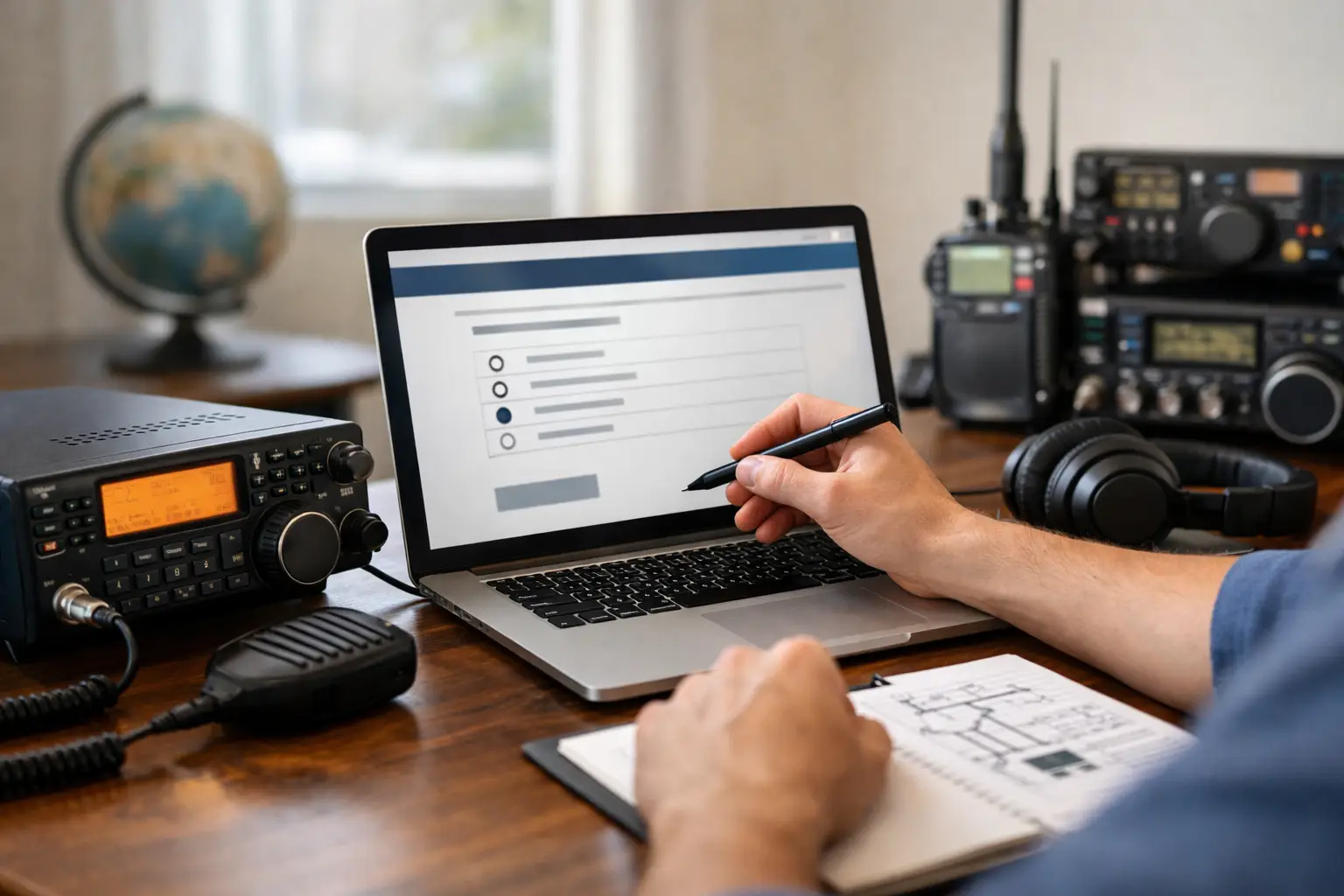
You have the study guide open, practice scores are finally where you want them, and then the old problem shows up – finding a test session that fits your schedule. That is exactly why online testing for ham upgrades has become such a practical option for operators ready to move beyond their current license class. If you are working toward General or Extra, remote testing can remove a major obstacle without lowering the standards of the exam.
For many hams, upgrading is less about getting started and more about getting unstuck. You may already be active on the air, checking into nets, building antennas, or supporting emergency communications. But if your local exam sessions are limited, far away, or booked around your workweek, the upgrade process can drag on longer than it should. A well-run online exam session solves that by bringing the testing team to you while still following FCC and ARRL requirements.
Why online testing for ham upgrades makes sense
The biggest advantage is convenience, but convenience is only part of the story. Most upgrade candidates are balancing radio with jobs, family responsibilities, travel, or volunteer commitments. Driving across town or across counties for a scheduled session may not seem like much on paper, yet it often becomes the reason an upgrade gets delayed for months.
Online testing gives you a way to test from home in a controlled setting. That matters for candidates who already know the material and simply need a legitimate, efficient path to sit for the exam. It also matters for people who test better in familiar surroundings. A quiet room, your own desk, and a clear set of instructions can take some of the edge off an already stressful day.
There is also a practical benefit for candidates moving from Technician to General or from General to Extra. Upgrade exams tend to come with higher expectations and more study time. By the time you are ready, you usually want to capitalize on that momentum. Waiting weeks for an in-person session can interrupt progress. A remote session often helps you test while the material is still fresh.
How the remote exam process works
A legitimate online amateur radio exam is not an informal quiz over video chat. It is a structured, proctored session designed to preserve exam integrity. Candidates typically register in advance, receive instructions for the session, and join at the scheduled time using a platform such as Zoom.
Before the exam begins, the proctors verify your identity and review your testing environment. You may be asked to show your photo ID, scan the room with your camera, and confirm that unauthorized materials are not within reach. The proctoring team explains the rules, answers process questions, and makes sure your setup meets requirements before the exam starts.
Once testing begins, the session is monitored live. That is an important distinction. Good remote exam administration is both candidate-friendly and standards-driven. You should feel supported, but you should also expect the process to be taken seriously. That balance protects both the testing team and every license holder who has earned their privileges properly.
After the exam is completed, results are usually reviewed promptly. One of the most appreciated parts of a strong online process is immediate feedback. Instead of wondering what happens next, you know where you stand and what the next step looks like.
What to expect when testing from home
The best online sessions are organized enough to feel predictable. That starts before exam day. You should receive clear instructions about technology, identification, workspace setup, and any session-specific rules. When those expectations are communicated well, candidates spend less time guessing and more time focusing on the test.
Your equipment matters, but it does not need to be complicated. In most cases, you need a reliable internet connection, a computer or device that supports the testing platform, a working camera, and audio that allows the proctors to communicate with you. Some sessions may require a phone or secondary camera angle depending on the proctoring process.
The room matters too. A private, quiet space is usually the best choice. Kitchen tables can work. Home offices are ideal. Busy coffee shops, shared common rooms, and places with frequent interruptions usually are not. Remote testing is convenient, but it still depends on creating a suitable environment for a monitored exam.
This is where expectations should stay realistic. Online testing is easier in many ways, but not effortless in every circumstance. If your internet is unstable, your home is noisy, or you are not comfortable with basic video conferencing tools, you may need to plan ahead a little more carefully. For most candidates, though, that planning is still far simpler than coordinating travel to an in-person session.
Is online testing accepted for ham license upgrades?
Yes – when the session is administered properly by an authorized team following current amateur radio exam procedures. That is the key point. Candidates should not treat all remote testing options as equal. The value of the experience depends on legitimacy, organization, and compliance.
An ARRL-certified exam team offers an added level of confidence because it signals that the session is being handled within recognized standards. That is especially important for upgrade candidates who do not want any uncertainty about whether their results will be processed correctly. If you are putting in the study time for General or Extra, you want a testing experience that is straightforward, professional, and nationally recognized.
A good exam team also understands that compliance and customer care are not opposites. Candidates need both. You want the session run by the book, and you also want to feel that real people are there to guide you through the process if you have a question before or during the appointment.
Common concerns about online testing for ham upgrades
One of the most common worries is whether remote exams are harder than in-person sessions. Usually, the exam content is the same. What changes is the format and the environment. If anything, many candidates find that testing from home reduces stress because they avoid the rush of travel, unfamiliar meeting rooms, and last-minute logistics.
Another concern is technology failure. That concern is reasonable. Internet problems happen. Device settings can be unpredictable. The good news is that an experienced testing team usually gives detailed setup instructions ahead of time and can help you troubleshoot common issues before the session begins. The process works best when candidates read those instructions carefully and log in prepared.
Some operators also wonder whether remote testing feels impersonal. It depends on the team. A well-run online session can still feel professional, respectful, and encouraging. In fact, many candidates appreciate having direct human support in a focused one-on-one or small-group environment instead of walking into a crowded room not knowing what to expect.
How to prepare for a successful remote upgrade exam
Study habits still matter most. If your practice scores are inconsistent, no testing format will fix that. But once you are academically ready, a few practical steps can make exam day much smoother.
Test your equipment the day before, not five minutes before your appointment. Make sure your camera, microphone, speakers, and internet connection are working. Charge every device you may need. Clear your workspace and remove anything that could create confusion during the room check.
It also helps to treat the appointment like any formal exam. Show up early. Have your identification ready. Read every instruction in advance, even if you think you already know how online sessions work. Different teams may have slightly different procedures, and small details can matter.
Most of all, give yourself a calm testing window. If possible, avoid stacking the exam between meetings, errands, or family commitments. Remote testing saves travel time, but you still want a little breathing room before and after the session.
Choosing the right provider for online ham upgrades
If you are comparing exam teams, look beyond the word online. Ask whether the team is ARRL-certified, how clearly they explain the process, how scheduling works, and how results are handled. Those details tell you a lot about whether the experience will feel orderly or confusing.
Responsiveness matters too. Candidates often have simple but important questions about identification, equipment, timing, or upgrade paperwork. A provider that answers clearly and promptly helps lower anxiety before exam day even begins. That support can make a meaningful difference, especially for first-time remote candidates.
Middle Tennessee Exams is one example of the kind of service many candidates are looking for – structured remote testing, clear instructions, professional proctoring, and a supportive approach that keeps the process low-stress without compromising standards.
Upgrading your license should feel like progress, not a logistics project. If you are ready for more operating privileges, broader HF access, or the challenge of the Extra exam, online testing can be a practical path forward. The best setup is simple: prepare well, choose a qualified team, and give yourself the chance to take the next step from the comfort of home.