If the biggest thing standing between you and your ham radio license is a long drive to a test session, the technician license exam online option can change that quickly. You can complete a legitimate, FCC-recognized amateur radio exam from home, on your schedule, with a remote team that follows the same standards used at in-person sessions.
For many first-time candidates, that convenience matters as much as the exam itself. Local test dates may be limited. Travel can turn a simple 35-question test into a half-day commitment. And if you are already a little nervous, adding traffic, unfamiliar buildings, and a room full of strangers does not help. Online testing removes much of that friction while keeping the process structured and secure.
How the technician license exam online works
Remote amateur radio testing is not an informal quiz or a shortcut around FCC rules. It is a proctored exam session run by certified Volunteer Examiners using a defined process. If you choose to take the Technician exam online, you should expect identity checks, room scans, clear instructions, and live supervision through video conferencing.
In most cases, you will register for a scheduled session, receive instructions ahead of time, and join the meeting a little early. The exam team will verify your identification, confirm that your testing space meets requirements, and walk you through what is and is not allowed during the session. Once the exam begins, proctors monitor the process in real time.
That structure is exactly why online testing has become a trusted option for candidates across the country. It is convenient, but it is also serious. The goal is to make access easier without lowering standards.
Why more candidates choose a technician license exam online
The most obvious benefit is convenience, but that is only part of the story. A remote exam session can also make the experience more manageable for people who are balancing work, family schedules, mobility limitations, or long distances to the nearest in-person location.
Testing from home often feels less intimidating than walking into a room where you do not know anyone. You are in a familiar environment. You know where everything is. You can set up early, take a breath, and focus on the question in front of you. For many candidates, that lowers stress in a real and useful way.
There is also a practical advantage in scheduling. In-person sessions may only happen once a month, or less often depending on your area. Remote exam teams can often offer more dates and times, which means you do not have to put your progress on hold waiting for the right weekend.
The trade-off is that online testing requires a little more preparation on the front end. You need a reliable internet connection, the right device setup, and a quiet testing area that meets proctoring rules. Most candidates find that this is a fair exchange for avoiding travel, but it does mean you should read instructions carefully and prepare in advance.
What you need before test day
A technician license exam online session usually goes smoothly when candidates treat the setup seriously. You do not need a complicated home studio, but you do need basic equipment that works properly.
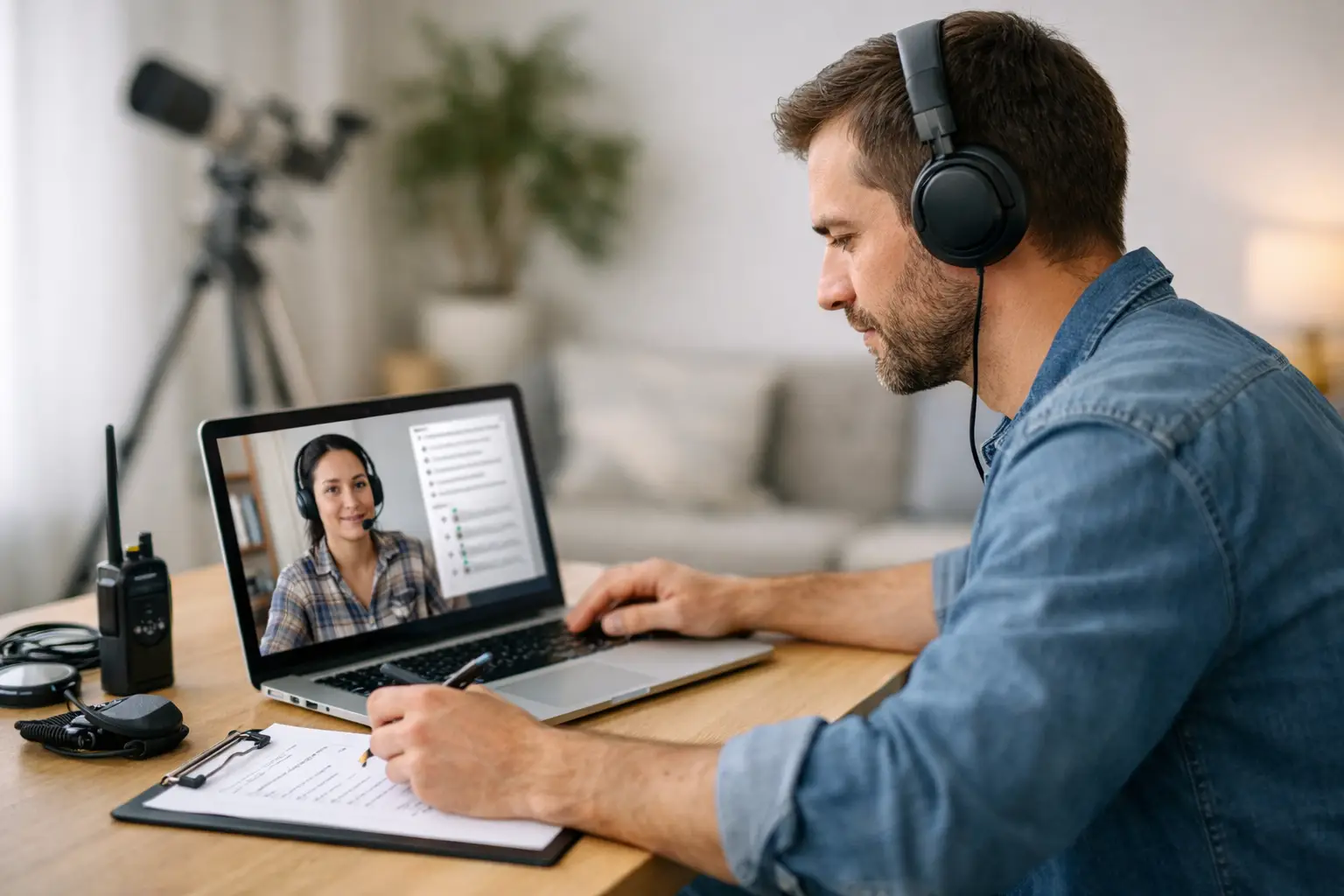
A computer with a camera and microphone is typically the best choice. Some sessions may also require a second device, such as a phone or tablet, so proctors can view your workspace from another angle. You will also need a stable internet connection, a government-issued photo ID, and a clean, quiet room where unauthorized materials are not visible or accessible.
It helps to test your camera, microphone, and meeting software before the session starts. If your internet is unreliable or your device struggles with video conferencing, that can create unnecessary stress on test day. The exam itself is challenging enough without technical distractions.
You should also make sure your desk or table is clear. Remote proctoring rules are designed to protect the integrity of the exam, so expect limits on notes, extra screens, smartwatches, papers, and anything else that could raise questions during the session.
What to expect during a remote exam session
The best remote exam teams make the process feel organized, not confusing. You should know what happens next at each step. That matters because most Technician candidates are not just new to online testing. They are new to amateur radio exams altogether.
A typical session begins with check-in and verification. After that, proctors may ask you to rotate your camera or use a second device to show the room, desk surface, and surrounding area. This is normal. It is part of keeping the session compliant and fair for everyone.
Once your exam is issued, you will answer the same question pool used in any other Technician exam setting. There is no easier online version. Passing still requires preparation and a solid understanding of the material. The advantage of remote testing is access and convenience, not reduced difficulty.
When you finish, results are often available quickly. That immediate feedback is one of the most appreciated parts of a well-run online session. You are not left wondering how you did or what happens next.
Is the technician license exam online legitimate?
Yes, when it is administered by qualified Volunteer Examiners following approved procedures. That distinction matters. Candidates should always look for an exam team that is operating within recognized amateur radio testing standards and can clearly explain its process.
A legitimate remote session will not feel vague or improvised. It will include scheduling details, identity verification, proctoring requirements, and post-exam procedures. If any provider seems casual about compliance, that is a reason to ask more questions before you register.
For candidates who want both convenience and confidence, ARRL-certified remote testing offers a strong middle ground. It keeps the exam accessible while preserving the credibility of the licensing process.
How to improve your chances of passing
The Technician exam is very achievable, but it still rewards preparation. The strongest approach is to study consistently, take practice exams, and get comfortable with the style of the question pool before test day.
Some candidates do well with a traditional study guide. Others prefer online practice tools or video lessons. It depends on how you learn best. If you already have a background in electronics, emergency communications, or RF topics, some sections may feel familiar. If you are completely new to radio, you may need a little more repetition, especially in operating rules and basic technical concepts.
Practice under realistic conditions if you can. Sit down, limit distractions, and work through a full sample exam in one session. That will help you measure more than just recall. It will show you how you handle pacing and concentration.
It also helps to avoid cramming the night before. Candidates often retain more when they review over several days or weeks instead of trying to force everything into one sitting.
Choosing the right remote exam team
Not all testing experiences feel the same, even when the rules are the same. Some teams are technically compliant but leave candidates confused, rushed, or unsupported. Others combine high standards with clear communication and a calm process that helps candidates do their best.
That is where service matters. A good remote exam team explains what to expect, answers questions before the session, starts on time, and treats candidates with respect. If you are taking your first technician license exam online, that support can make a meaningful difference.
Middle Tennessee Exams is one example of a team built around that kind of experience, with ARRL-certified remote testing, straightforward instructions, and a process designed to reduce stress without compromising exam integrity.
Who benefits most from online testing
Remote testing is a strong fit for busy professionals, retirees, rural candidates, and anyone whose nearest in-person session is inconvenient. It is also a good option for people who simply prefer a more private and predictable environment.
That said, it may not be ideal for everyone. If your internet service is unreliable, your home is noisy, or you are uncomfortable using video conferencing tools, an in-person session could still be the better choice. The right format depends on your setup and comfort level, not just what seems easiest at first glance.
For many people, though, the online path removes the exact barriers that were delaying the exam in the first place. When the process is clear and the proctors are professional, taking your Technician exam from home can feel less like a workaround and more like the sensible modern option.
Earning your first amateur radio license is a practical step into a larger community of operators, learning, and service. If you are ready to move forward, a well-run online exam session can help you do that without the extra obstacles.