If the phrase arrl certified online exam sounds reassuring but still leaves you with questions, that is completely normal. Most people are not worried about the ham radio material alone – they also want to know whether the remote process is legitimate, what the proctors will ask them to do, and whether testing from home is actually easier than showing up in person. Those are smart questions, and the answers matter.
For many candidates, online testing removes the biggest obstacles to getting licensed or upgrading. You do not have to drive across town, wait weeks for a local session, or rearrange your day around a short testing window. At the same time, convenience only matters if the exam is administered correctly. That is where ARRL-certified remote testing stands apart.
What an ARRL certified online exam actually means
An ARRL certified online exam is a remote amateur radio exam session administered by a Volunteer Examiner team that follows ARRL VEC procedures for online testing. In practical terms, that means the session is not casual, improvised, or loosely supervised. It follows established standards for identity verification, exam security, proctoring, scoring, and submission.
That certification matters because candidates want two things at once. They want the comfort of testing from home, and they want confidence that the exam will be recognized and handled properly. An ARRL-certified team is trained to protect both.
This is especially important for first-time Technician candidates who may not know what is normal, and for General or Extra candidates who do not want delays or paperwork problems. When the process is structured well, you can focus on the exam itself instead of wondering whether the session is being run the right way.
Why candidates choose online testing
The biggest reason is simple. Life is busy, and in-person sessions are not always easy to reach.
Some candidates live in areas with limited exam availability. Others have jobs, family obligations, or mobility concerns that make travel harder than it needs to be. Even experienced operators upgrading to General or Extra often put the exam off because finding a local session is inconvenient.
Online testing changes that. You can schedule a time that fits your week, take the exam from home, and avoid the friction that keeps many people stuck in planning mode. For a lot of applicants, that convenience is the difference between saying, “I should get licensed someday,” and actually doing it.
There is also a comfort factor. Testing in a familiar space can reduce nerves. That does not make the exam less official. It just removes some of the extra stress that comes with driving somewhere new, walking into a room full of strangers, and trying to settle in quickly.
How an arrl certified online exam works
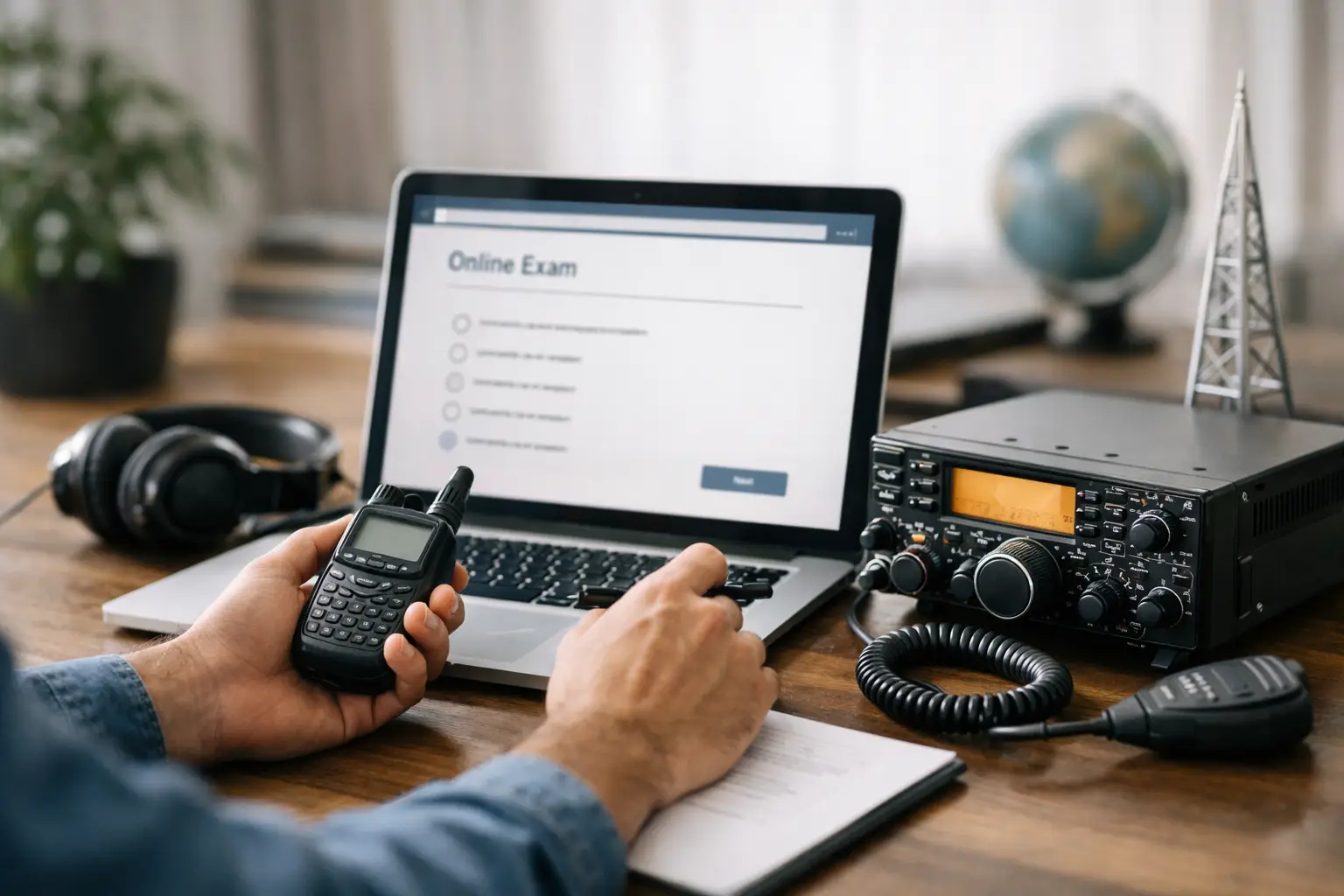
While each exam team may have its own scheduling workflow, most ARRL-certified online sessions follow a similar path. You register for a time slot, receive instructions ahead of the session, and join the exam using a video platform such as Zoom. Before the test begins, the proctors verify your identity and ask you to show your testing area to confirm it meets exam requirements.
That room check is a normal part of remote testing. The proctors may ask to see your desk, walls, computer setup, and nearby space. They are making sure the area is clear of prohibited materials and that the session can be monitored appropriately. This is not meant to be intimidating. It is how the team protects exam integrity for every candidate.
Once the session begins, you will be guided through the process step by step. A well-run team gives clear instructions, answers procedural questions, and keeps the session organized. After you complete the exam, the Volunteer Examiners score it and let you know the result. If you pass and want to continue to the next license element, you may have the option to do that in the same sitting, depending on the session structure and team procedures.
What you need before exam day
Preparation is not only about study materials. For an online session, it is also about your setup.
You will usually need a reliable internet connection, a computer or device with a camera and microphone, a quiet room, and the required identification or FCC registration details. Some sessions may have specific instructions about allowed equipment, screen sharing, or secondary camera views. That is why it is worth reading every pre-exam email carefully rather than assuming all online tests work the same way.
It also helps to test your technology in advance. A camera that works during a casual video call may still create problems if the lighting is poor or the microphone cuts out. Taking ten minutes to check your setup can save a lot of last-minute stress.
The best candidates treat the technical side of the appointment the same way they treat the question pool. They prepare for it.
Common concerns about remote ham radio exams
One common concern is whether online exams are harder than in-person exams. The question pool is the same, and the standards are the same. What changes is the format and the environment. For some people, testing at home feels easier because they are more relaxed. For others, the room scan and camera requirements feel unfamiliar at first. Usually, that uncertainty fades once the session starts and the proctors explain what to do.
Another concern is privacy. Candidates sometimes worry that remote proctoring will feel intrusive. The reality is that online exam teams do need to inspect the testing space and observe the session, but reputable teams do this professionally and only to the extent needed to maintain compliance. The goal is not to make the process uncomfortable. The goal is to administer a valid exam fairly.
A third concern is speed. People often ask whether remote testing slows down licensing. In many cases, it does the opposite. With a responsive ARRL-certified team, you can receive prompt scoring and fast submission of your paperwork, which helps move the process along.
The trade-off between convenience and control
Online testing is convenient, but it does ask a little more from the candidate on the front end. In an in-person session, the team controls the room, seating, and setup. In a remote session, you help create the testing environment yourself.
That means your experience depends partly on your preparation. If your internet is unstable, your room is noisy, or you join without reading the instructions, the appointment can feel more stressful than it needs to be. On the other hand, if you prepare your space and follow the guidance provided, the process is often smoother than traveling to a physical session.
So which is better, in-person or online? It depends on your situation. If you prefer face-to-face interaction and have a local test site nearby, in-person may still be a good fit. But if flexibility, accessibility, and time savings matter most, an arrl certified online exam can be the better option without sacrificing legitimacy.
How to prepare for an ARRL certified online exam
Start with the obvious part: know the material for your license class. Technician candidates should be comfortable with the full current question pool, while General and Extra candidates should be ready for a wider technical range and more detailed operating knowledge.
Then prepare your testing space. Choose a quiet room with a clear desk and good lighting. Make sure the device you will use is fully charged or plugged in, and confirm that your camera and audio are working properly. Have your identification and any required registration information ready before the session begins.
Just as important, give yourself margin. Do not plan to join one minute before the appointment. Log in early, read all instructions carefully, and expect a few administrative steps before the exam starts. A calm beginning sets the tone for the whole session.
If you are nervous, remember this: a professional exam team wants you to succeed within the rules. They are there to administer the session correctly, but they are also there to help you understand the process. That mix of standards and support is what makes a good remote exam experience.
Why the exam team matters
Not all testing experiences feel the same, even when the exam element is identical. Organization, communication, and professionalism make a real difference.
A strong team provides clear scheduling instructions, responds to candidate questions, starts sessions on time, and handles the process in a way that feels orderly rather than confusing. That matters for every candidate, but especially for first-timers who may already be dealing with test anxiety.
Middle Tennessee Exams is one example of how remote testing can be both standards-driven and welcoming. Candidates do not just need a valid exam session. They need a team that respects their time, communicates clearly, and treats the moment with the seriousness it deserves.
Earning or upgrading your amateur radio license should feel achievable. If you choose an ARRL-certified online session and prepare well, you can take a meaningful step forward from the comfort of home – with confidence that the process is being done right.